API 500 Series
We’ve compiled the essential API 500 Series modules that’ve shaped professional audio since 1968. These modules and especially this developer was here to create the amazing 500 series experience for all of us, so we cannot go by without mentioning them. Actually, we decided to dedicate a complete article to their 500 series products.
Of course, they’ve been known for the pioneering and quality of this modules. When it comes to components, each module centers around API’s legendary 2520 op-amp delivering +30dBu headroom. Below, we’ll break down what makes each one indispensable.
Key Takeaways
- API’s 500 Series includes preamps like the 512v, 512c, and 312, all built around the legendary 2520 op-amp.
- The 550A and 550b EQs feature proportional-Q design with exceptional headroom up to +30dBu.
- The 527A compressor offers variable dynamics control with a THRUST filter to prevent low-frequency pumping.
- The 565 Filter EQ provides surgical frequency control through three sweep-filterable stages for precise subtractive processing.
- The 529 Stereo Compressor features true parallel mix blend control, ideal for mix bus processing applications.
Brief History of API Manufacturer
Automated Processes, Inc. (API) was founded in 1968 by Saul Walker and Lou Lindauer, establishing what would become one of pro audio’s most influential console manufacturers.
Walker’s engineering vision drove API to pioneer modular console design, centering every signal path around the proprietary 2520 op-amp, a discrete analog amplifier delivering extraordinary headroom and transient response.

Brief Buyers Guide for Getting API 500 Series Modules
Now that we’ve covered API’s heritage, let’s break down what you’ll need to actually build out a 500 series rig.
Your analog lunchbox rack chassis must deliver adequate power supply current, typically 130-160mA per slot at ±16VDC. Exceeding rail capacity causes voltage sag, degrading headroom and transient response.
Here’s your critical checklist:
- Signal flow order: Route preamp → EQ → compressor for ideal gain staging and noise floor management
- Tracking channel strips: Pair a 512c with a 550b and 527A for a complete front-end chain
- Mix bus processing: Deploy matched 529 stereo compressors across subgroups for cohesive dynamics control
- Slot planning: Budget dual-width slots for modules like the 529, which occupies two positions
Prioritize VPR Alliance-certified chassis for guaranteed compatibility across all API modules.
Now, we are going to dive in the modules that API produces. Below you will find an extensive list of modules by them.
The list is big and not ordered from best to worst unit, but the order is randomized. We are writing a brief info for each module here and we are going to update this list everytime they release a new module. Let’s dig in!
API 512V 500 Series Discrete Microphone Preamp
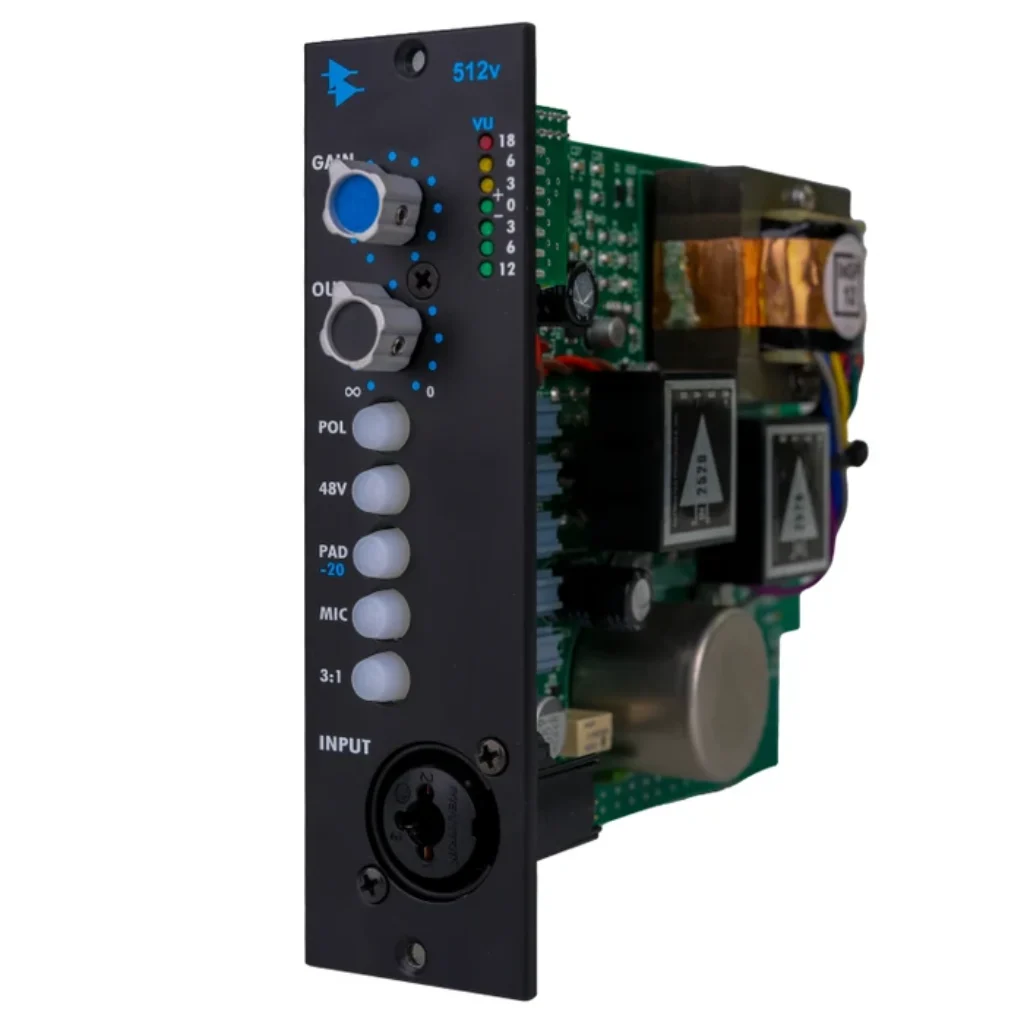
The 512v builds on API’s classic preamp topology, centering on the 2520 discrete op-amp and 2503 multi-tap output transformer, but adds two critical workflow improvements that separate it from the 512c.
First, the continuous output level control knob lets you drive the API op amp hard for harmonic saturation while attenuating the final audio output, protecting downstream converters from clipping.
Second, the switchable 3:1 output transformer tap button reconfigures the 2503’s winding ratio, letting you push the microphone preamp circuit hotter without exceeding converter headroom, a filter-like safeguard for aggressive gain staging.
The API 512v’s front combo jack accepts both XLR and Hi-Z sources directly, streamlining input routing.
You’re getting 65dB of gain with precise output level control and transformer-driven tonal shaping in a single-slot format.
You Can Buy This Unit On The Links Below:
API 512C 500 Series Microphone Preamp
The 512c’s explosive transient punch makes it a benchmark preamp for snare drums, electric guitars, and aggressive rock vocals, sources that demand forward midrange bite and tight low-end authority.
While the microphone preamp lacks a built-in output attenuator, that fixed-output topology preserves maximum headroom and signal integrity, keeping the 2520/transformer chain uncompromised at every gain setting.

You Can Buy This Unit On The Links Below:
Check Full Review Here!
API 550b 500 Series 4-band Equalizer
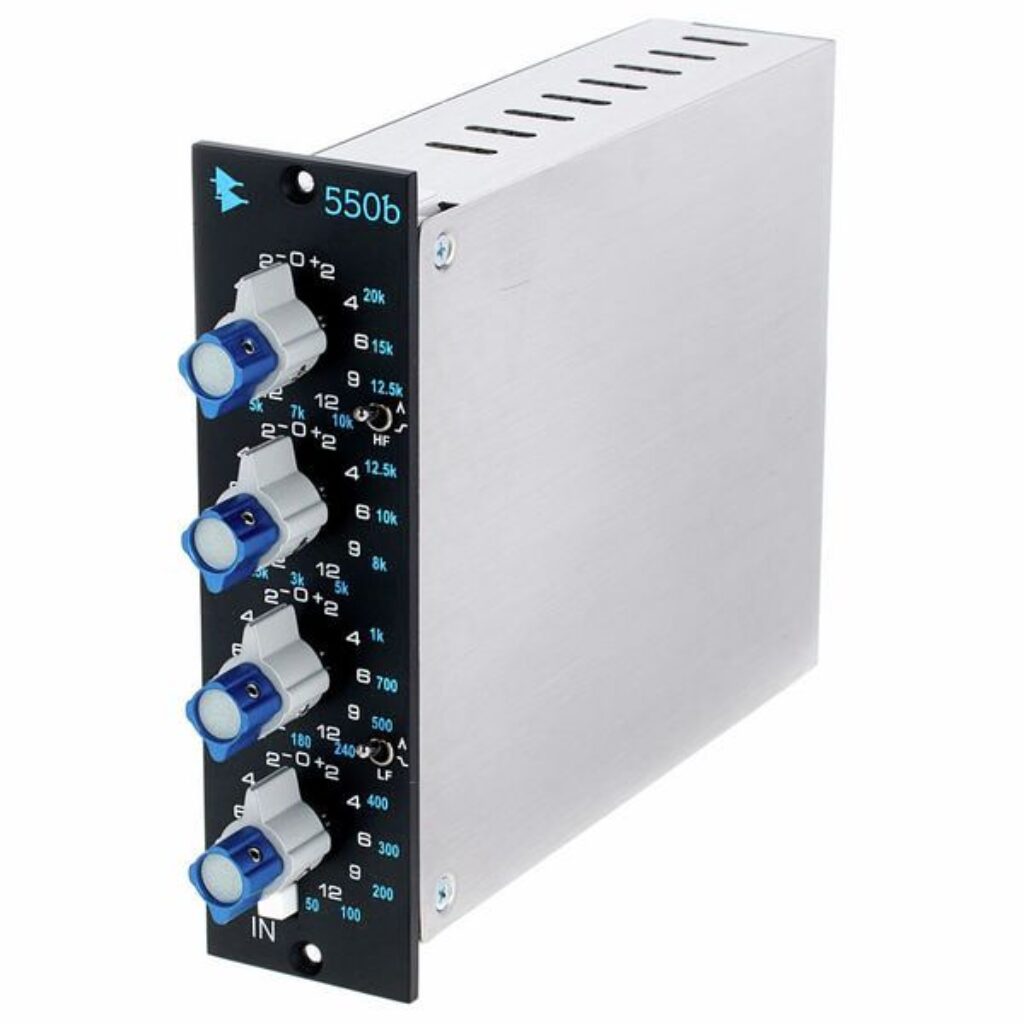
Moving from preamp gain staging to tonal sculpting, API’s 550b packs four overlapping bands of proportional-Q equalization into a single 500 series slot, built around the same discrete op-amp and transformer architecture that defines the API sound.
This classic API 550b 4-band EQ delivers musical tonal shaping through:
- Proportional-Q design: filter bandwidth narrows automatically as boost/cut increases, maintaining precision at extreme settings.
- 7 selectable frequencies per band: four overlapping bands with 28 total frequency options for surgical or broad strokes.
- High headroom: +30dBu clipping threshold guarantees clean gain structure on drums, guitars, and mix buses.
- Overlapping band architecture: adjacent bands share frequency ranges, enabling additive contouring unavailable in fixed-band designs.
Every parameter serves the signal path, zero compromise, maximum impact.
You Can Buy This Unit On The Links Below:
API 550A 500 Series 3-band Equalizer
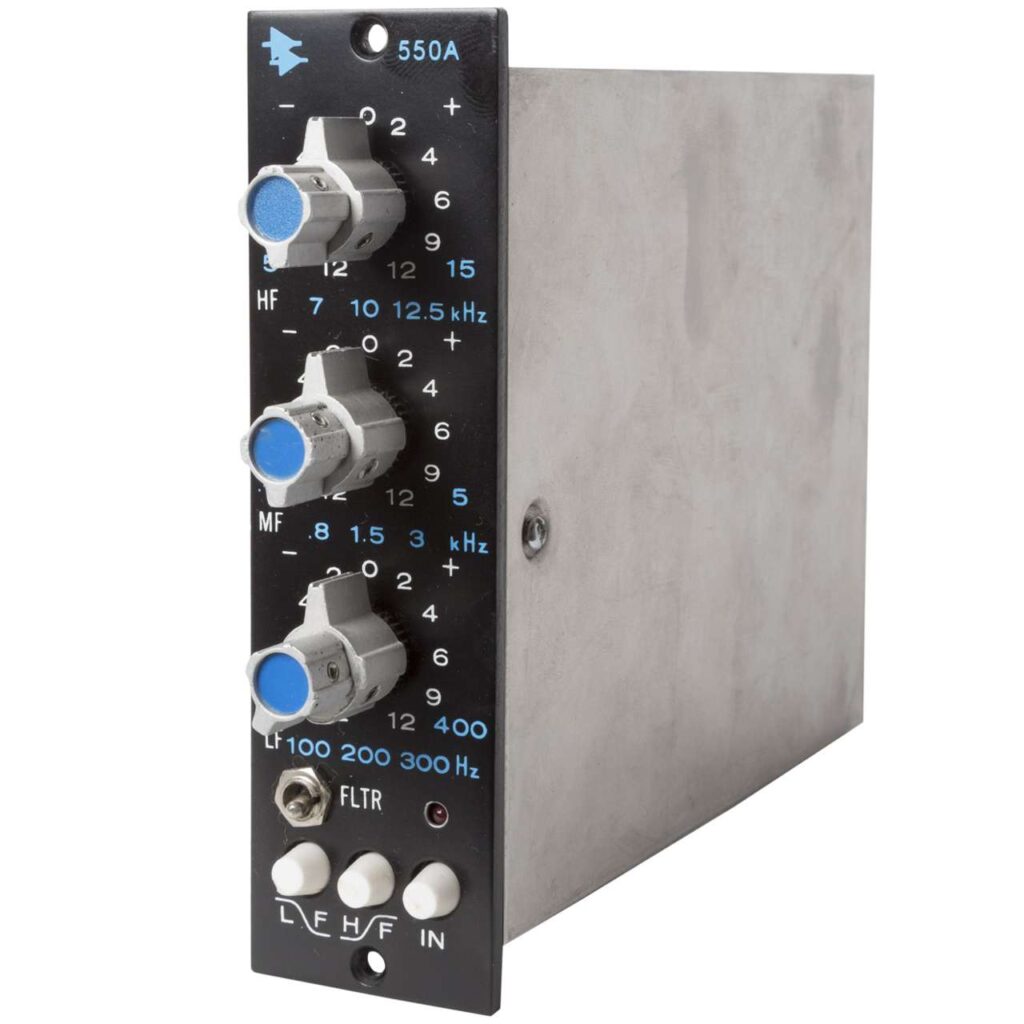
Saul Walker’s API 550A remains one of the most revered 3-band equalizers ever built, delivering API’s signature proportional-Q topology through an elegantly simple dual-concentric switching architecture.
This legendary 3-band eq utilizes dual-concentric switches to select frequency and boost/cut simultaneously, keeping the signal path pristine. The proportional-Q design automatically narrows bandwidth at extreme settings, preserving musicality under aggressive moves.
Key features of the API 550A include:
- Switchable peak/shelf modes on low and high bands for tonal versatility
- Dedicated bandpass filter spanning 50Hz-15kHz for surgical frequency isolation
- 2520 discrete op-amp and RE-115K/2503 transformer topology delivering unmistakable analog warmth
- +30dBu headroom ceiling ensuring explosive transient integrity under heavy processing
The 550A defines EQ precision without compromise.
You Can Buy This Unit On The Links Below:
API 312 500 Series Microphone Preamp
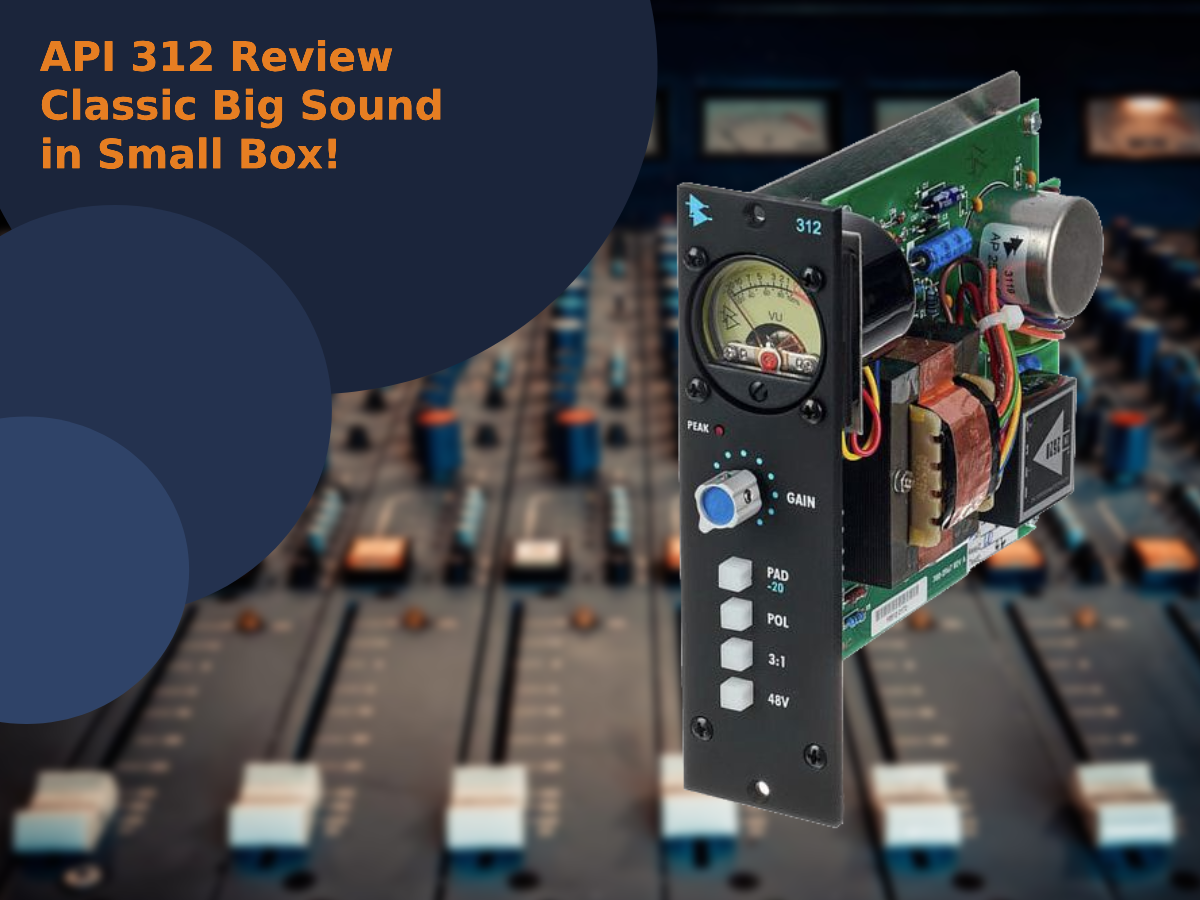
API’s 312 faithfully resurrects Saul Walker’s original 1970s console preamplifier circuit in a true 500 series format, retaining the exact 312 PCB layout that defined countless classic recordings.
At its core, the API 312 preamp deploys the legendary op-amp paired with an AP2516 input transformer, delivering 65dB of pure analog gain with API’s signature transient punch and forward midrange authority.
We’re talking vintage signal path integrity, no modern compromises. The onboard analog VU meter provides real-time visual monitoring of output levels, critical for managing headroom across hot tracking sessions.
Every stage preserves the explosive dynamics and tight low-end weight that made the original 312 console card indispensable. For engineers chasing authentic 1970s API tone, this module delivers the exact circuit topology without reservation.

You Can Buy This Unit On The Links Below:
Check Full Review Here!
API 527A 500 Series Compressor/Limiter
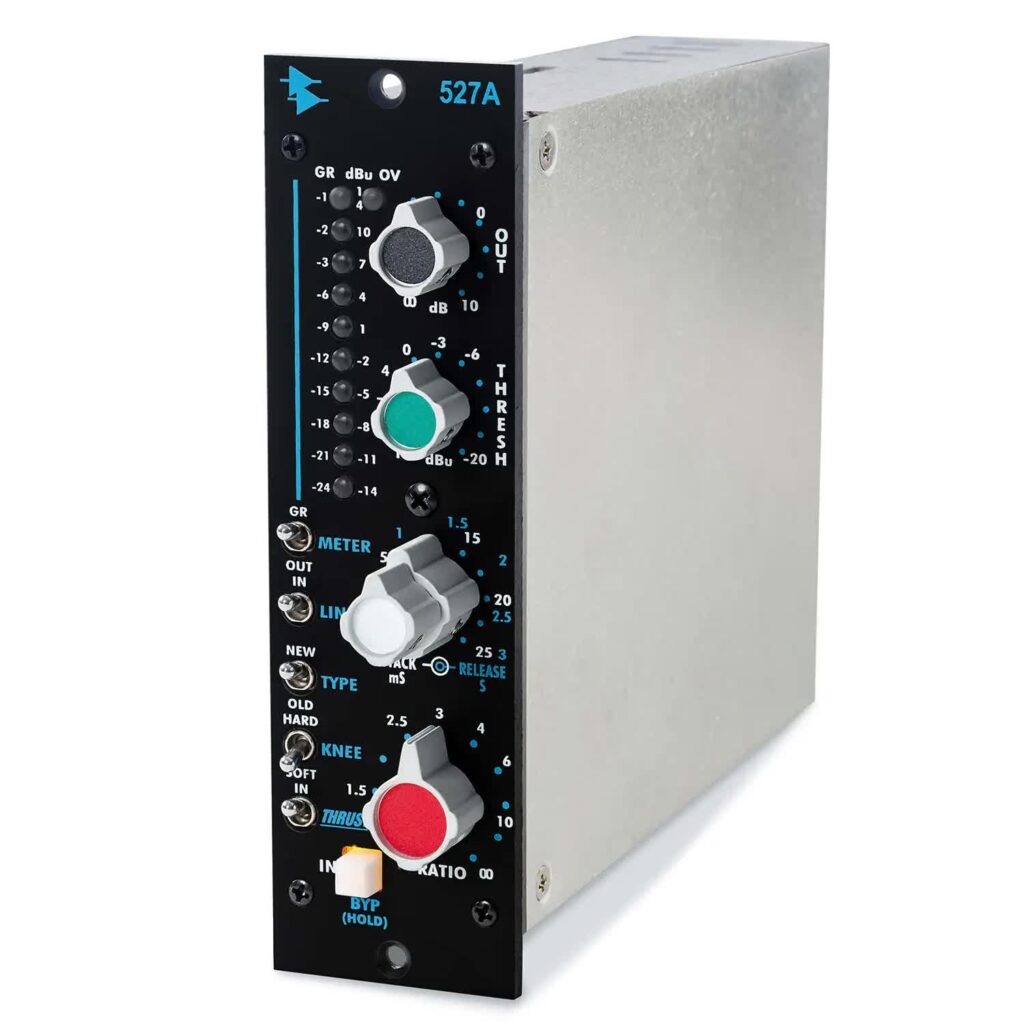
Dynamics control reaches a new tier with the API 527A, a single-slot 500 series VCA compressor/limiter built around API’s 2520 and 2510 discrete op-amps with custom-wound transformer output staging.
Among API 500 series modules, the API 527A compressor delivers variable threshold, attack, release, and ratio controls with surgical precision for any mic or stereo bus chain.
Key circuit features include:
- Patented THRUST filter: Prevents low-frequency content from pumping the detector, maintaining punch without artifacts
- Switchable Old/New modes: Feed-Back (Old) for vintage response versus Feed-Forward (New) for transparent, predictive compression
- Hard/Soft knee selection: Tailors the compression curve from aggressive limiting to gradual gain reduction
- 10-segment LED gain reduction meter: Provides real-time visual monitoring of dynamic attenuation
You Can Buy This Unit On The Links Below:
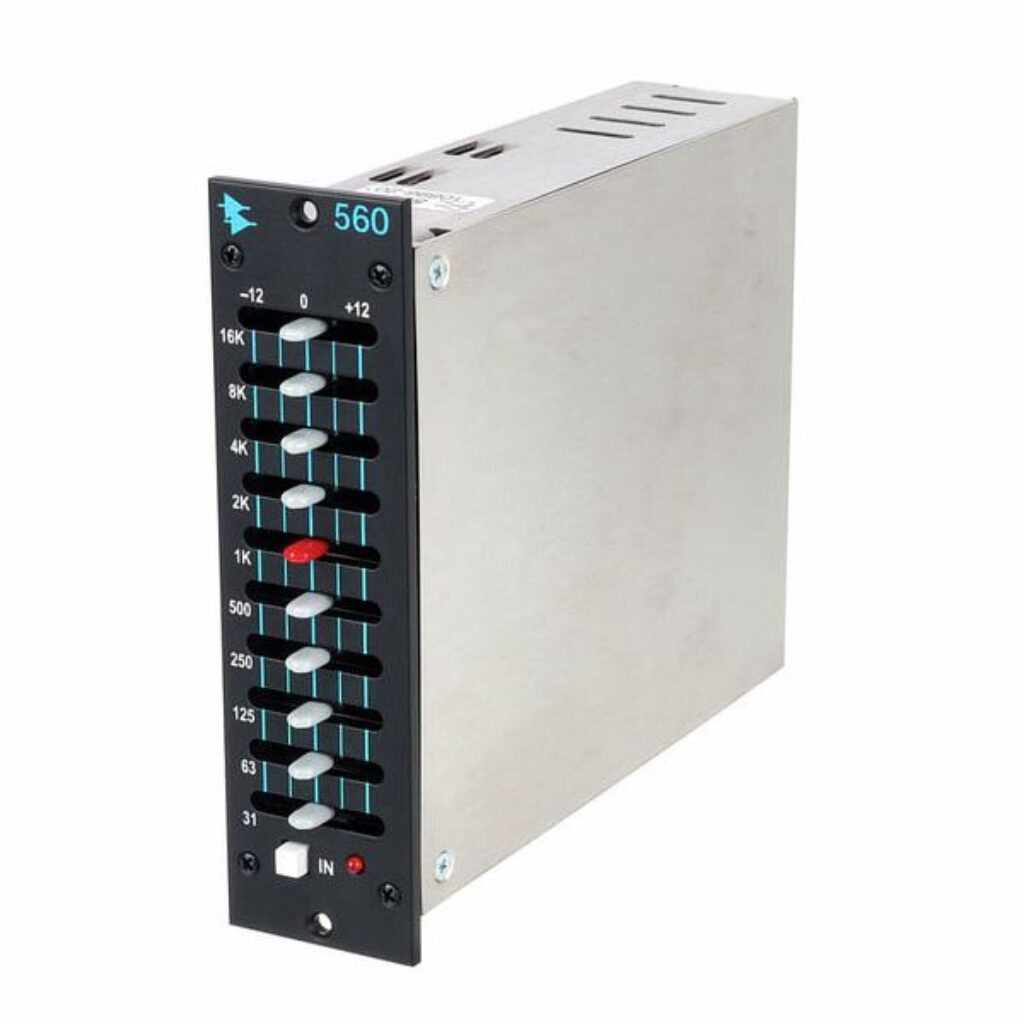
API 560 500 Series Graphic Equalizer
Another beautiful 500 series EQ by API that you can get for a nice price. Some of the features on this EQ are already known on other units, but let’s go over them briefly:
- Proportional-Q slider response enables precise notching without collateral frequency damage.
- Drum tuning benefits from targeted low-mid cuts and top-end presence shaping.
- Electric guitars gain aggressive midrange definition via the 1kHz–4kHz sliders.
- +30dBu headroom guarantees clean operation even under aggressive boost settings.
We’ve found no other graphic EQ matches its transient integrity.
You Can Buy This Unit On The Links Below:
API 565 Filter 500 Series Equalizer
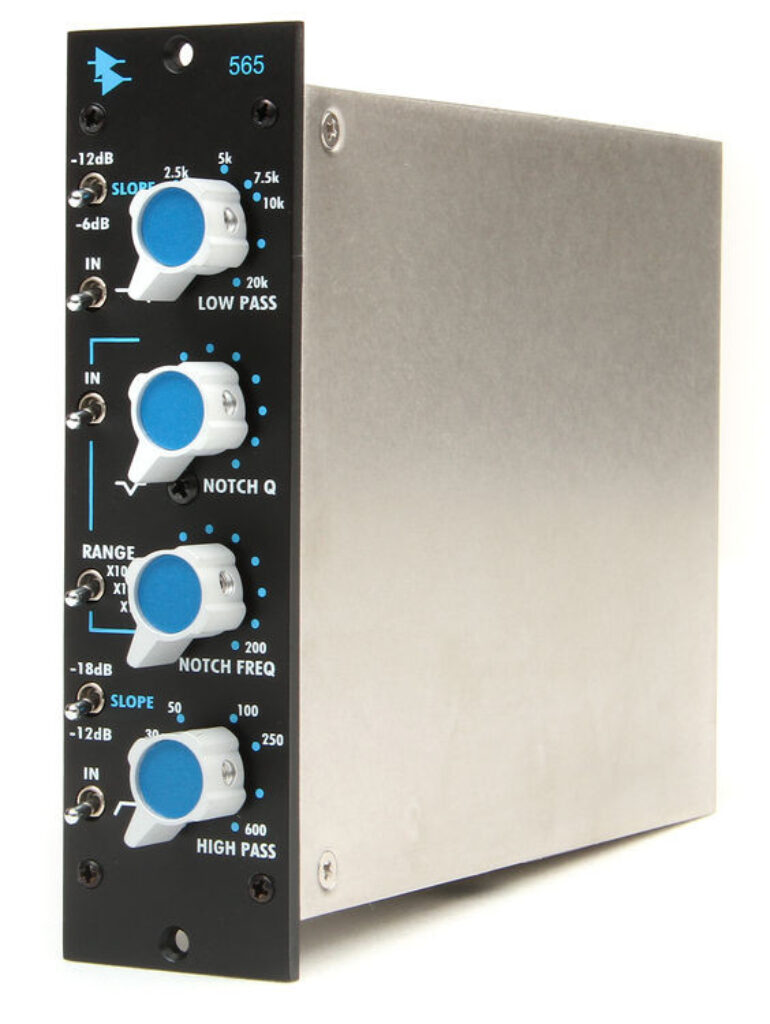
API’s 565 Filter module delivers three dedicated sweep-filterable stages, High-Pass, Low-Pass, and Notch, in a single 500 series slot, giving engineers surgical frequency control that standard EQs can’t replicate.
The HPF sweeps 14Hz-2kHz, the LPF covers 500Hz-20kHz, and the fully parametric Notch band spans 20Hz-20kHz with variable Q for precision resonance removal.
Unlike broader tools such as the API Select SV14 parametric or API 512c review-praised preamp coloration, the 565 excels at subtractive problem-solving, clearing mud, taming harsh highs, and notching mechanical resonances before signal hits your API 525A FET compressor or API 535-LA line amp stage.
Built to VPR Alliance 500 series standards, it integrates seamlessly across any compatible rack, delivering transparent corrective filtering without compromising API’s hallmark transient integrity.
You Can Buy This Unit On The Links Below:
API Select SV14
Rooted in the vintage 1970s APSI 562 circuit that API originally distributed, the Select SV14 packs a fully parametric 4-band EQ into a single 500 series slot, delivering continuously variable frequency selection and ±12dB boost/cut per band via dual-concentric controls.
Key specifications worth noting:
- Fully parametric topology with continuous frequency, gain, and bandwidth adjustments across all four bands
- Dual-concentric potentiometers enabling simultaneous frequency/gain manipulation without panel clutter
- Transformer-balanced output maintaining API’s signature transient integrity and headroom standards
- Accessible price point positioning studio-grade parametric EQ within reach of project-level budgets
We’re looking at a module that bridges API’s legacy circuit philosophy with modern workflow demands, giving you surgical tonal sculpting without sacrificing the harmonic weight API’s transformers and discrete amplifiers are known for.

You Can Buy This Unit On The Links Below:
API 525 500 Series Compressor
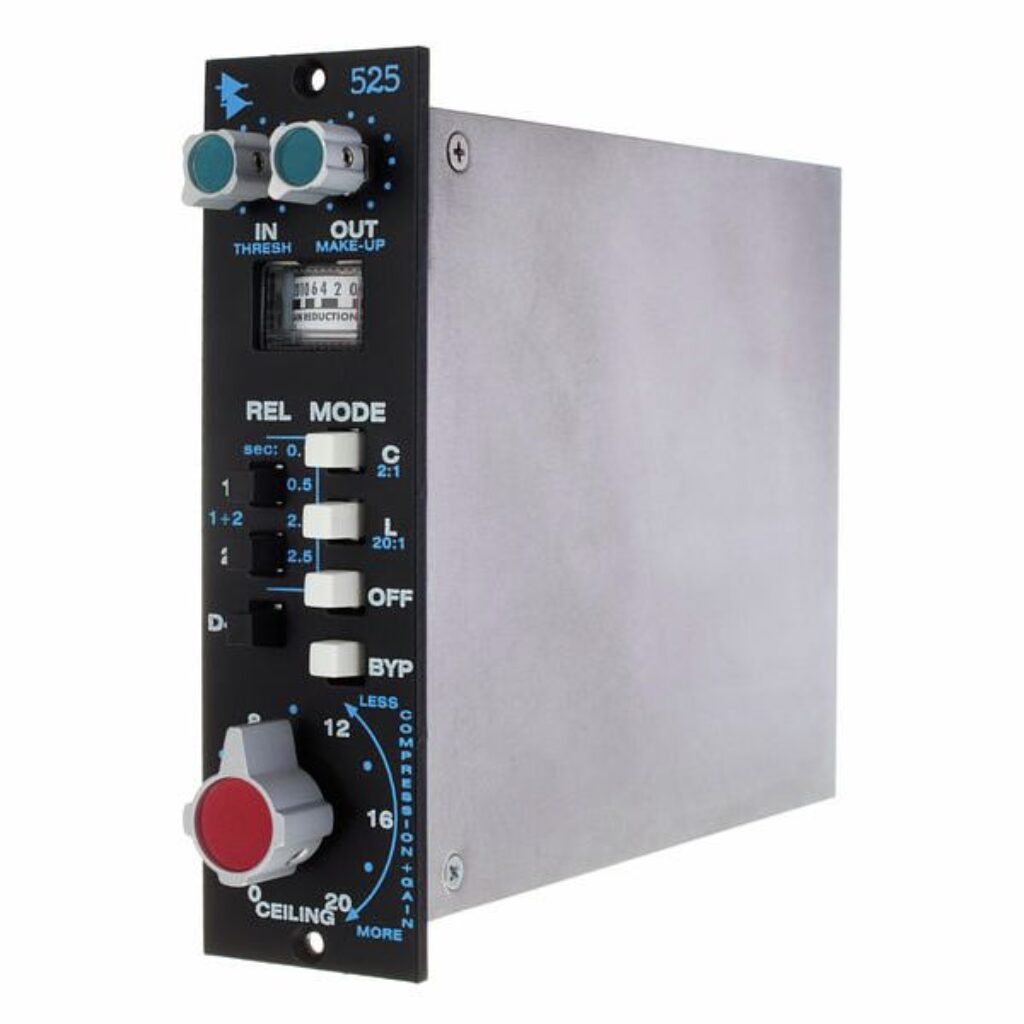
We decided to build a neat table for this compressor. With this way, we are connecting the features and the specificaions of this compressor that you need to know before purchasing it.
| Feature | Specification |
|---|---|
| Ceiling Control | Simultaneous threshold + makeup gain adjustment |
| Release Modes | Multiple preset release time constants |
| De-Emphasis Filter | High-frequency detector rolloff to reduce sibilance triggering |
The vintage analog VU meter displays gain reduction in real time, giving you immediate visual feedback on compression depth. We’d call this pure 1970s analog dynamics engineering.
You Can Buy This Unit On The Links Below:
API 535-LA 500 Series Line Amplifier
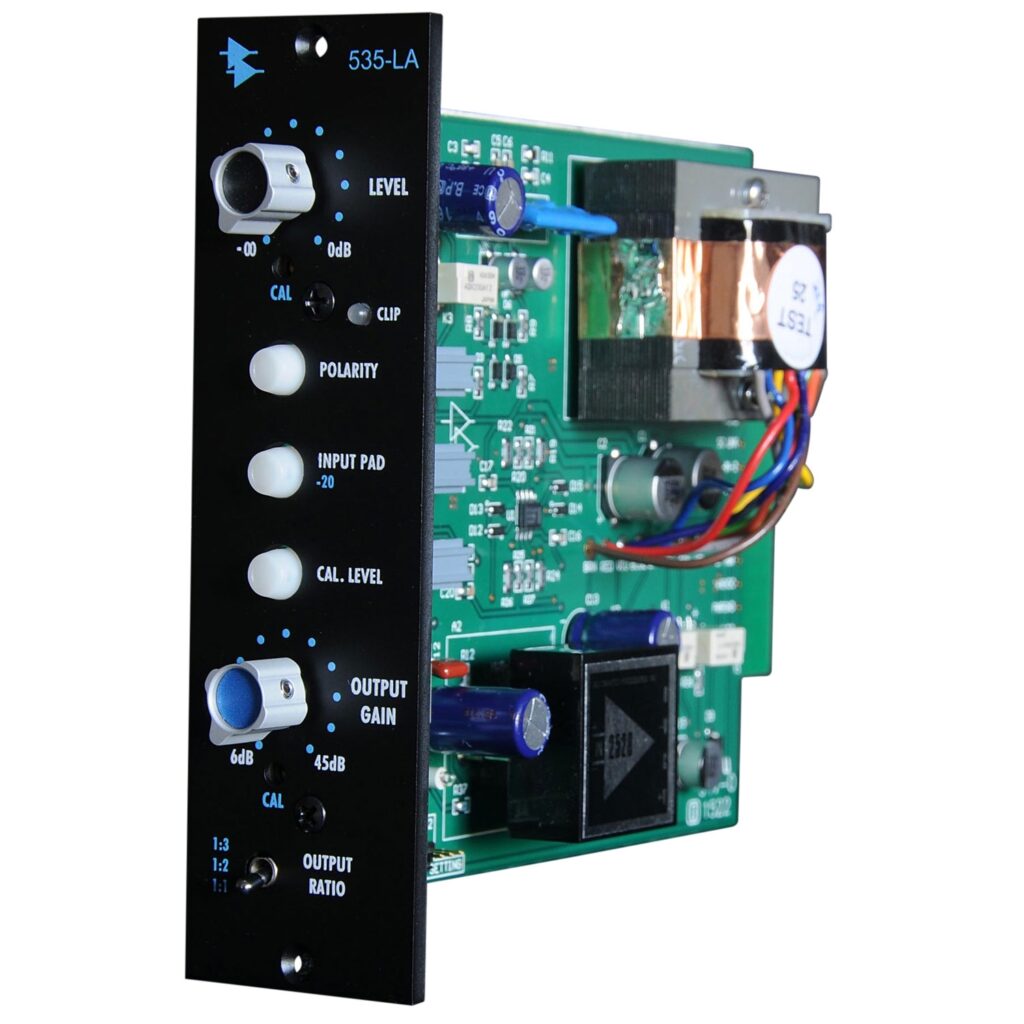
The 535-LA drops API’s classic 325 console booster card circuit into the 500 series format, giving you a dedicated line amplifier built around the 2520 amp, 2510 surface-mount amp, and custom 2503 multi-tap output transformer.
Key specifications include:
- Variable output gain for precise level management across mix stems and digital-to-analog signal paths.
- 3-position transformer output ratio switch (including 3:1 tap) enabling creative gain staging and harmonic saturation control.
- -20dB pad for hot signal attenuation without compromising headroom.
- Full API iron-path topology imparting analog weight, transient punch, and forward midrange presence to sterile digital sources.
We’re looking at a purpose-built tool for injecting transformer color and controlled gain into any 500 series rack workflow.
You Can Buy This Unit On The Links Below:
API 525A 500 Series Compressor/Limiter
API’s 525A drops a modernized FET compressor into the 500 series format, retaining the original 525’s discrete iron-path signal chain, 2520 op-amp, 2510 surface-mount amp, and 2503 multi-tap output transformer, while greatly expanding dynamic control.
Where the classic 525 offered fixed timing, the 525A introduces variable attack times spanning 15 microseconds to 15 milliseconds, giving you surgical control over transient shaping.
Seven selectable release modes further refine recovery behavior, letting you dial in program-dependent responses across diverse source material.
The FET gain-reduction topology preserves that signature 525 compression character, smooth, musical limiting with API’s trademark punch and headroom.
You’re getting a fully modernized dynamics processor that doesn’t compromise the original’s core topology, just extends its reach into contemporary workflow demands.

You Can Buy This Unit On The Links Below:
Frequently Asked Questions
Q: Why is my API 500 Series rack causing crosstalk or signal leakage?
A: This is usually a grounding, power-supply, or chassis-design issue rather than the module itself. In forum discussions, users often trace it back to poor isolation or a rack that isn’t behaving cleanly under load.
Q: Is the API 500 Series power supply strong enough for all modules?
A: It depends on the rack and the total current draw of your modules. Users commonly worry that a weak or cheap PSU can create noise, instability, or inconsistent performance.
Q: Is the API 500 Series worth it?
A: For many users, yes, but mostly if you value compactness, modularity, and a curated workflow. Others feel it’s only worth it when the sonic result and rack quality justify the cost.
Q: Why are API 500 Series specs so confusing or incomplete?
A: This is a frequent frustration because users want clear current draw, fit, and performance details before buying. When those specs are vague, people end up relying on forum reports and compatibility lists instead.
Q: What’s the safest way to build an API 500 Series setup?
A: Start with a reputable chassis, check module current requirements, and avoid mixing in questionable or out-of-spec gear. That’s the most common advice users give when someone wants the classic API sound without troubleshooting headaches.
Conclusion
We’ve tested the theory that API’s topology is the secret sauce behind every module’s characteristic punch, and it holds up. From the 512c’s transformer-coupled gain staging to the 525’s feed-forward VCA compression, each unit utilizes that proprietary discrete architecture to deliver consistent harmonic saturation and headroom.
We’re confident that building your rack around these modules isn’t just nostalgia, it’s sonically justified engineering that’s proven across five decades of professional tracking and mixing.
Related Articles
- Rupert Neve 542 Review: Legacy Tape Emulator!
- Radial Workhorse Cube Review: Amazing 500 Series Chassis!
- Pultec EQP-500X Review: Huge 500 Series Program Equalizer!
- SSL Six 500 Series Review: Big Channel Strip in 500!
- Rupert Neve Designs 511 Review: Amazing Mic-Pre!
- API 512c Review: Great Mic Preamp by Pioneers!
- Maag Audio EQ4 Review: Unique Modern EQ!
- 500-Series Mistakes: Common Mistakes By New Users!