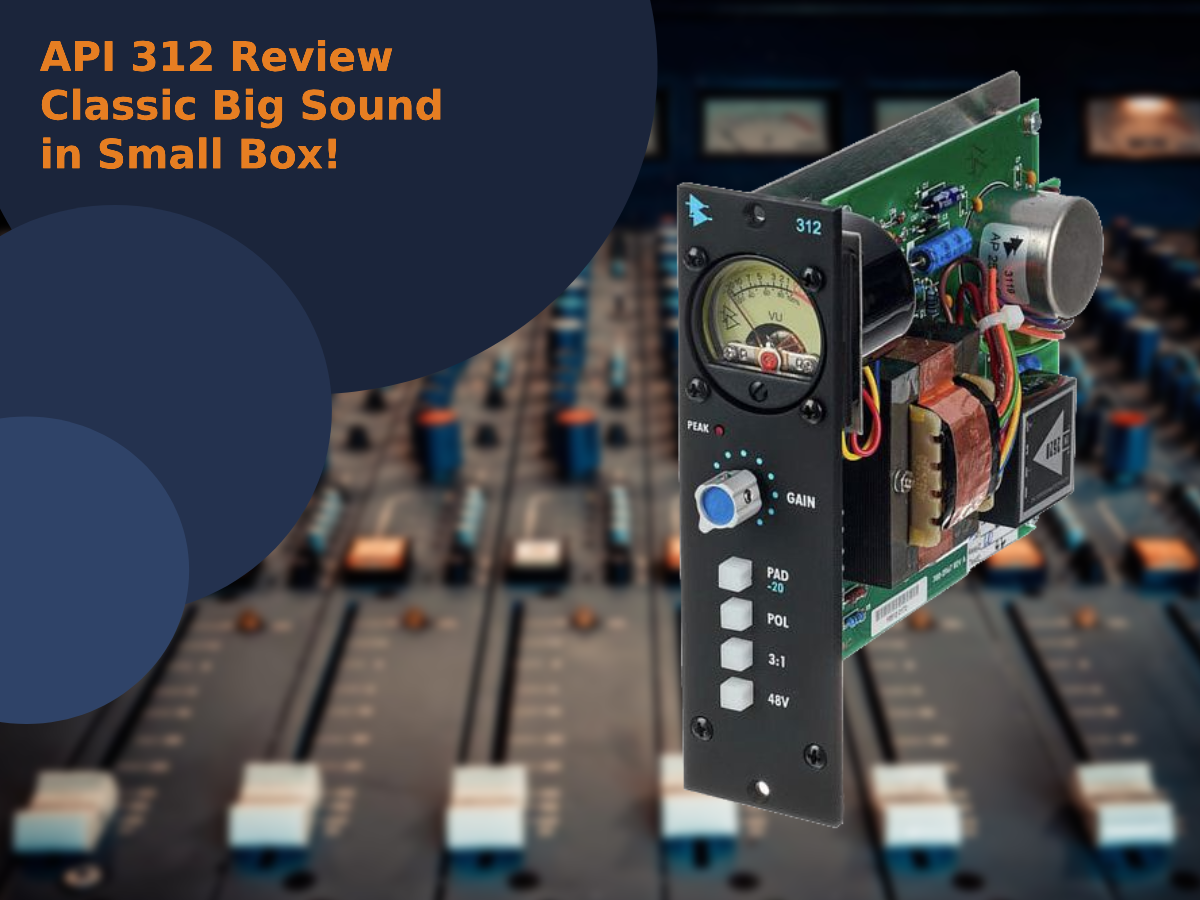
API 512c Review

- 65 dB gain
- Microphone input on the front and back
- Line / instrument input jack
- 20 dB pad-switch
Here we have one of the most used preamps around the globe, and we are going to deep into checking it put. The API 512c is a 500 series mic preamp built around the API 2520 discrete op-amp, delivering 65dB of gain and a +30dBu clipping threshold through its RE-115K input transformer.
We’ve found its aggressive, mid-forward character excels on snare, electric guitars, and rock vocals. It lacks a built-in output attenuator, which can challenge gain staging into modern converters. Below, we’ll break down its sound, signal flow considerations, and how it stacks up against the 512v.

What’s Inside the API 512c 500 Series Preamp?
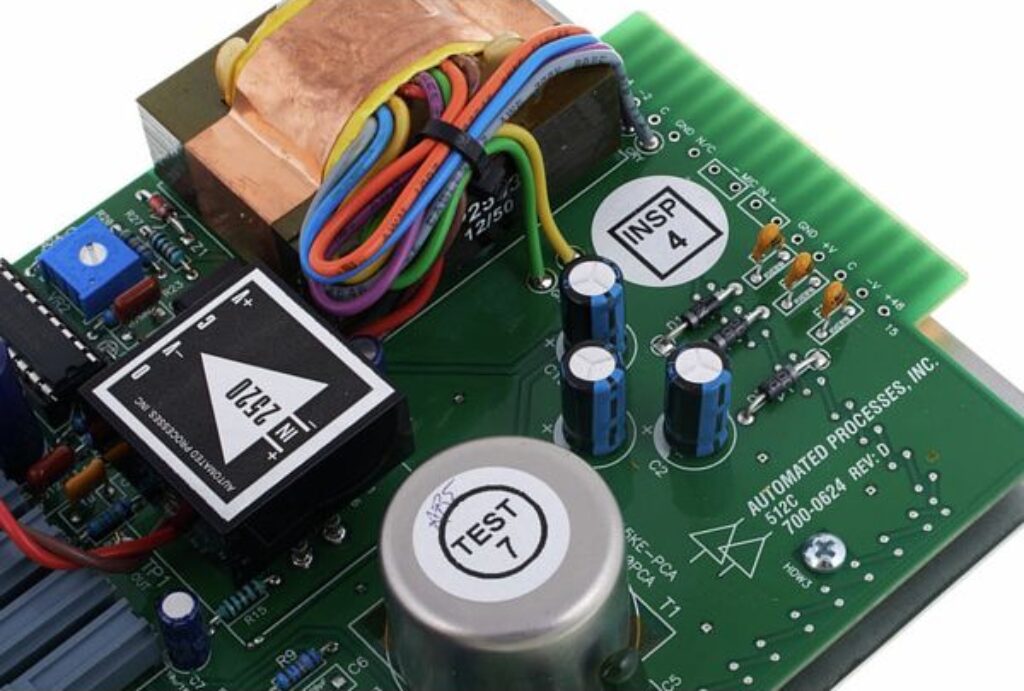
At its core, the API 512c builds its entire signal path around the legendary API 2520 discrete op-amp, a Class A/B bipolar transistor design that’s remained virtually unchanged since Saul Walker’s original topology.
This mic preamp delivers 65dB of gain through an RE-115K input transformer and the proprietary API 2503 output transformer, achieving a clipping threshold of +30dBu. A switchable 20dB pad tames hot sources across mic, line, and instrument inputs.
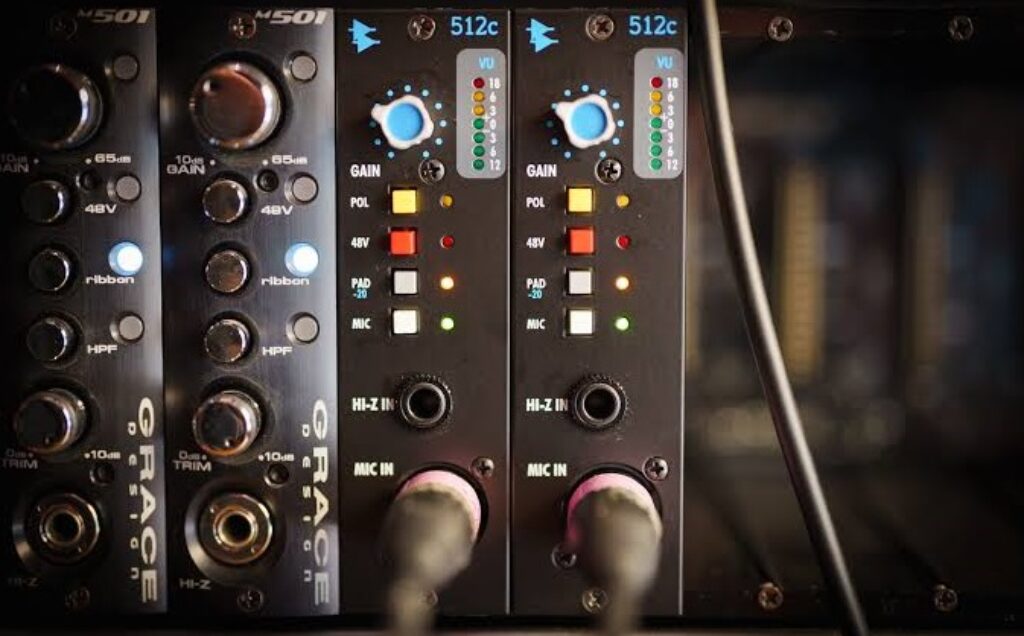
Dual front-panel XLR and 1/4-inch Hi-Z connectors give you immediate access without rear-panel routing. A 7-segment LED meter tracks levels from -12 to +18 dBu.
The API 512c draws only 40mA per rail, making it one of the most efficient 500 series modules you’ll rack.
How Does the API 512c Sound?
How exactly does the API 512c earn its reputation as a tracking benchmark? This mic preamp delivers an aggressive, mid-forward sonic character that cuts through dense mixes without EQ intervention. Fast transient handling, driven by the 2520 op-amp’s slew rate captures snare hits and pick attacks with explosive immediacy, preserving every micro-dynamic detail.
The tight low end never bloats, giving kick drums and bass cabinets defined weight rather than mud. On electric guitar cabinets, the 512c’s midrange presence adds bite and urgency. For punchy rock vocals, it imparts thickness and forward energy that sits naturally against driven instrumentation.
With +30dBu headroom, the API 512c handles extreme SPLs cleanly, solidifying its position as an industry-standard benchmark for transient-heavy, high-energy tracking sessions.
Navigating Hot Output Levels: The Gain Staging Challenge
Because the API 512c lacks a built-in output attenuator, its +30dBu clipping threshold means the preamp can deliver signal levels that overwhelm most audio interface converters, many of which clip between +18 and +24dBu.
When you drive the 2520 op-amp hard, the API 2503 transformer enters saturation, generating harmonic richness, but that heightened output gain will redline your converters, degrading audio quality through digital clipping.
Proper gain staging is essential. We recommend engaging the front-panel 20 dB pad to lower input signal before amplification, effectively reducing output levels.
Alternatively, placing an external in-line XLR pad between the API 512c’s output and your converter provides precise level control without sacrificing the transformer-driven saturation character.
Either approach preserves transient integrity while protecting your conversion stage.
API 512c vs. API 512v: What Are the Key Differences?
The gain staging workaround we just described is exactly the problem API addressed when they released the 512v. The most critical addition is a dedicated output level control knob, letting you drive the 2520 op-amp hard for saturation while attenuating the signal before it hits your converter.
The 512v also introduces a 3:1 output transformer tap switch, dropping the output by approximately 9.5dB for additional headroom management.
Connectivity gets an upgrade too, the 512v replaces the API 512c’s separate mic XLR and instrument jack with a single front-panel combo jack, streamlining patching.
You’re choosing between classic simplicity and modern flexibility. If you want pure, uncompromised signal path, the api 512c delivers. If you need integrated gain staging control, the api 512v is the smarter workflow choice.
Who Should Buy the API 512c?
Rock and pop producers chasing immediate transient punch without post-processing. The 2520 op-amp and 2503 output transformer deliver that explosive attack on snare hits and aggressive vocal takes right at the source, no plugin chain required.
Studio owners building dedicated drum tracking racks should prioritize the 512c. Stack eight of these mic preamps across a kit, and you’ve got consistent API tonality with +30dBu headroom on every channel.
That’s critical when close-miking high-SPL sources like kick and snare.
Engineers who value a fixed-gain, no-frills preamp topology will appreciate the 512c’s streamlined signal path. Fewer components mean fewer phase artifacts, just clean, punchy gain from input transformer to output.
- 48V phantom and phase switchable
- LED-VU meter
- Lownoise preamp (-129dB)
- Circuit design with the API2510 and 2520 operational amplifiers
- Traditional API fully discrete circuit design
Is the API 512c Worth It? Final Verdict
Honestly, does a preamp without a built-in high-pass filter or output attenuator deserve its street price?
We’ll cut straight to it, yes. Those limitations are real, but they’re easily solved with external processing. What you can’t replicate is the API 512c’s analog tone: that punchy, transformer-saturated character that’s defined countless records.
Consider what you’re actually getting:
- Indestructible build quality backed by decades of proven reliability
- High resale value that protects your investment long-term
- Record-defining mic preamp tone via the 2520 op-amp and 2503 transformer
- +30dBu clipping headroom for transient-heavy tracking
- -129dB EIN delivering studio-grade noise performance
The API 512c isn’t just worth it, it’s a benchmark investment.
Frequently Asked Questions
Q: Does the API 512C Require a Specific 500 Series Chassis to Operate?
A: Yes, the API 512c requires a compatible 500 series chassis (lunchbox) to operate, as it draws approximately 40mA per rail from the standard +/-16V DC supply.
We recommend any VPR Alliance-compliant rack to guarantee proper power delivery and connector alignment.
You’ll get the full benefit of that 2520 op-amp’s explosive transient response and +30dBu headroom only when the chassis meets these specifications consistently.
Q: Can the API 512C Be Used for Recording Bass Guitar?
A: Yes, we can absolutely use the API 512c for recording bass guitar. Its 1/4-inch Hi-Z front-panel input handles unbalanced instrument signals with up to 50dB of gain, while the tight low-end response and +30dBu clipping headroom preserve transient integrity without unwanted saturation.
We’ll want to engage the -20dB pad for hot active basses to maintain clean signal staging into our converters, ensuring maximum dynamic range throughout the signal chain.
Q: How Much Current Does the API 512C Draw From the Lunchbox?
A: The API 512c draws approximately 40mA per supply rail on the standard +/-16V DC bus.
That’s a remarkably modest current footprint, meaning you’ll pack multiple 512c modules into your lunchbox without stressing the power supply‘s total current budget.
We recommend verifying your chassis’s per-slot and aggregate current ratings before fully populating it, especially if you’re mixing high-draw modules alongside the 512c.
This efficient design keeps your rack running cool and reliable.
Q: Is the API 512C Compatible With Non-Api 500 Series Enclosures?
Q: Yes, the 512c is compatible with any VPR Alliance–compliant 500 series enclosure.
It draws approximately 40mA per rail from standard +/-16V DC supplies, making it efficient enough for virtually every third-party lunchbox on the market.
We’d recommend verifying your enclosure’s per-slot current capacity before loading multiple modules, but you won’t encounter compatibility issues with brands like Radial, Cranborne, or Purple Audio alongside your 512c.
Q: What Is the Warranty Coverage for the API 512C Preamp?
A: We can’t pull back the curtain on API’s warranty details since our specs don’t cover that territory.
We’d recommend contacting Automated Processes, Inc. directly or checking their official documentation for coverage terms.
What we can confirm is the 512c’s rock-solid build quality, featuring the proprietary 2520 op-amp, RE-115K input transformer, and 2503 output transformer, which delivers a -129dB EIN and +30dBu clipping threshold, ensuring long-term reliability for demanding tracking sessions
Conclusion
We’ll keep it simple: the 512c delivers API’s signature transformer-coupled punch in a single-width 500 series format. With +26 dBu maximum output and 65 dB of gain through that iconic 2520 op-amp, it handles everything from delicate vocals to transient-heavy percussion without flinching. If you’re chasing that mid-forward, harmonically rich signal path that’s defined countless records, the 512c remains our go-to recommendation.
Related Articles
- Rupert Neve 542 Review: Legacy Tape Emulator!
- Elysia xfilter 500 Review: Pro Audio Stereo Equalizer!
- Chandler tg2 500 Review: 500 Series Microphone Preamp!
- SSL G Bus Review: Great 500 Series Compressor Module!
- Radial Workhorse Cube Review: Amazing 500 Series Chassis!
- Pultec EQP-500X Review: Huge 500 Series Program Equalizer!