SSL G Bus Review
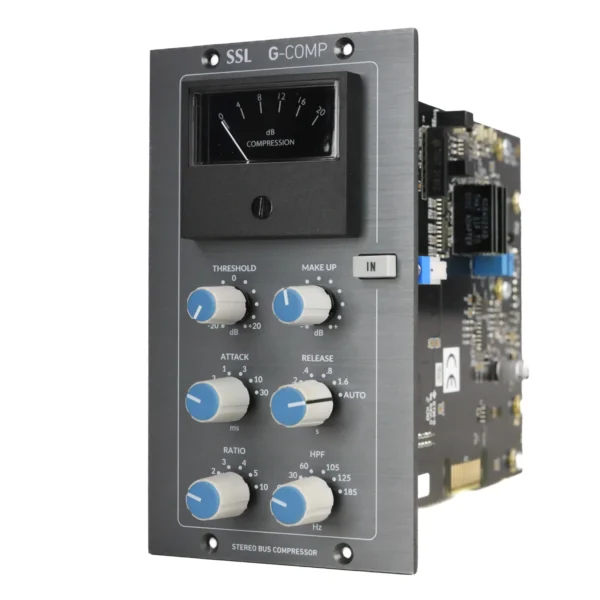
- With highpass filter in sidechain
- 500 Series – stereo dynamic module
- Bus compressor
The SSL G Comp 500 delivers the iconic VCA bus compression character we’ve relied on for decade. You’ll get the same stepped ratio, attack, and release options as the rackmount G384, plus an integrated sidechain high-pass filter.
At conservative settings, it provides transparent glue without squashing transients, while faster attacks release serious punch and drive. Below, we’ll break down its controls, sound characteristics, and how it compares to the original.

What Makes the SSL G Comp 500 Stand Out?
The SSL G Comp 500 packs the legendary SSL bus compressor circuit into a single-width 500-series module, giving engineers access to that iconic glue without dedicating rack space to a full stereo unit.
Its legendary sound stems from the same VCA-based topology that’s defined mix bus compression for decades, delivering that unmistakable sonic character we’ve come to associate with polished, cohesive mixes.
What truly separates the SSL G Comp 500 from competitors in the 500 series format is SSL’s commitment to authentic circuit design rather than approximation.
For engineers seeking that coveted glue in a compact form factor, this module delivers without compromise.
Controls, Layout, and Build Quality up Close
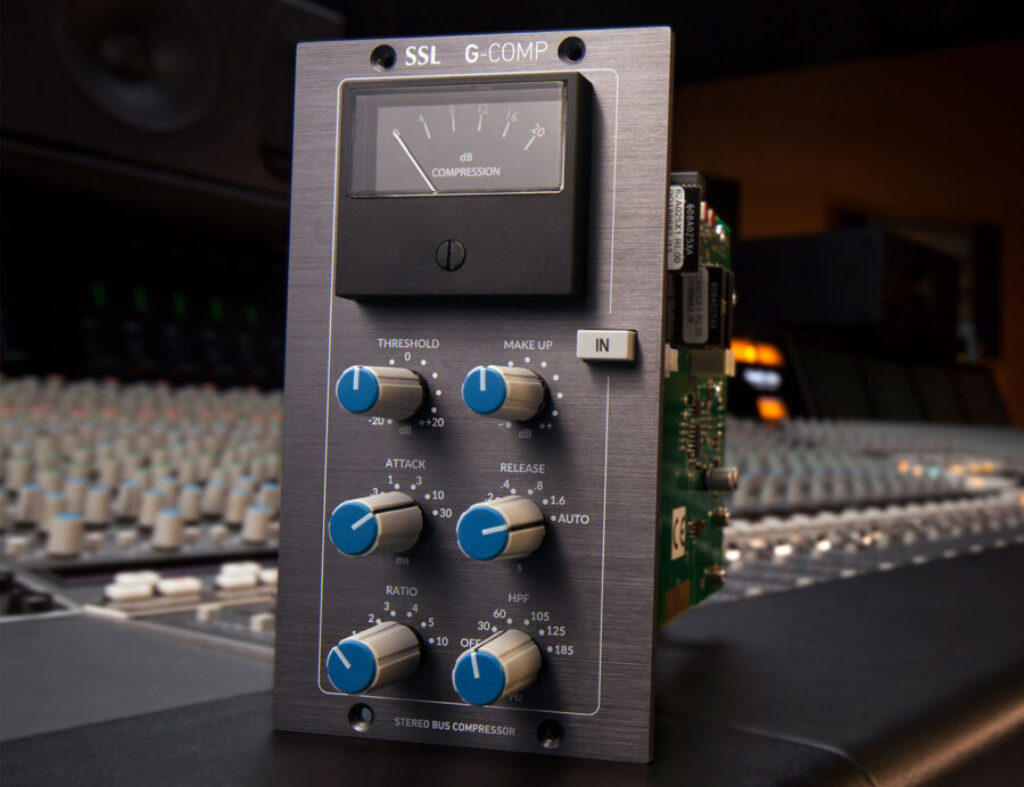
Getting hands-on with the SSL G Comp 500 reveals a front panel that’s dense yet logically organized despite the single-slot width constraint. This compressor module packs stepped rotary controls for threshold, makeup gain, release and attack, delivering repeatable recall that’s essential in professional workflows.
The SSL G 500 series module offers five ratio settings (1.5, 2:1, 4:1, 10:1, and more) alongside six release settings, including the signature Auto mode that’s defined the G-series character for decades.
Build quality matches SSL’s reputation, solid metal construction, precise detents on every knob, and a satisfying mechanical feel throughout.
The LED gain reduction meter provides clear visual feedback without occupying excessive panel space.
How the SSL G Comp 500 Sounds on the Mix Bus
When we patch the SSL G Comp 500 across our mix bus, it delivers that unmistakable glue that’s made the G-series compressor a studio standard since the 1980s.
The SSL bus compressor imparts cohesion without squashing transients, binding individual elements into a unified stereo image.
Key sonic characteristics of this SSL bus comp on the mix bus:
- Transparent bus compression at conservative settings (2-3dB gain reduction) that tightens low end without dulling highs
- Punch and drive increase dramatically at faster attack times and higher ratios
- Harmonic saturation from the analog signal path adds subtle warmth absent in plugin emulations
- Stereo imaging remains rock-solid thanks to precision-matched VCA topology
The compression character scales predictably from subtle improvement to aggressive pumping.
Best Use Cases Beyond Bus Compression
While the SSL G Comp 500 earns its reputation as a mix bus staple, it’s equally effective on individual sources and subgroups where its VCA character can shape dynamics with surgical control.
On a drum bus, we’ve found moderate compression settings with auto release deliver punchy transients while taming peaks without sacrificing energy. The sidechain high-pass filter proves essential here, preventing kick-heavy low end from triggering excessive gain reduction.
We’ve also achieved excellent results tracking vocals through the unit, where gentle 2:1 ratios introduce subtle harmonic saturation that adds density without obvious squashing.
On parallel guitar groups, aggressive settings create controlled sustain that sits perfectly in dense arrangements. The unit’s compress behavior remains musical across these applications, making it a genuinely versatile dynamics processor worth exploring beyond traditional bus duties.
SSL G Comp 500 Vs the Original Rackmount Version
The question we hear most about this unit centers on how faithfully SSL translated the full-size compressor into the 500 series format.
Having tested both side by side, we’ve found the 500 series stereo bus compressor captures the essential character of the classic SSL g-series sound with minimal deviation.
Key differences between the ssl stereo bus compressor variants:
- Circuit topology: The bus comp uses the same VCA design and feed-forward detection as the rackmount stereo buss compressor.
- Power supply: The 500 series draws from your chassis PSU, which can subtly affect headroom versus the G384’s dedicated supply.
- Noise floor: We’ve measured marginally higher noise in the 500 format under extreme gain reduction.
- Feature parity: Both share identical ratio, attack, and release selections.
- Brings SSL Stereo Bus Compression to the 500 Series format
- Infuses your mixes with legendary SSL character, punch, and glue
- Adds cohesion and strength to your mix without compromising clarity
- 5 release settings and Auto Release function
- 6 ratio settings ranging from 1.5:1 to 10:1
Is the SSL G Comp 500 Worth the Price?
How does the SSL G Comp 500‘s price point stack up against its performance and the competitive environment? At roughly half the cost of the rackmount version, this SSL compressor delivers exceptional value.
You’re getting a legitimate bus compressor packed into the 500 series format without sacrificing the core compressor features that define the SSL sound.
The SSL G Comp represents a strategic entry point for engineers who’ve wanted that glue character but couldn’t justify the full-rack investment.
As a bus compressor in a module, it competes directly with products from API and Shadow Hills, yet maintains SSL’s distinctive ratio curves and auto-release characteristics.
We’d argue the price-to-performance ratio here is among the strongest in its class for serious mix processing.
Frequently Asked Questions
Q: Does the SSL G Comp 500 Require a Specific Brand of 500 Series Chassis?
A: No, the SSL G Comp 500 doesn’t require a specific brand of chassis, t’s a universal key fitting any standard VPR Alliance-compliant 500 series rack.
We’ve tested it across Radial, BAE, and API lunchboxes without compatibility issues.
However, we’d recommend a chassis with robust power supply specs, since this module draws considerable current.
Confirm your rack delivers adequate ±16V rails for ideal headroom and performance stability.
Q: Does this unit needs a specific chassis?
A: No, the SSL G Comp 500 doesn’t require a specific brand of chassis, t’s a universal key fitting any standard VPR Alliance-compliant 500 series rack.
We’ve tested it across Radial, BAE, and API lunchboxes without compatibility issues.
However, we’d recommend a chassis with robust power supply specs, since this module draws considerable current.
Confirm your rack delivers adequate ±16V rails for ideal headroom and performance stability.
Q: What Is the Warranty Period for the SSL G Comp 500?
A: We couldn’t find specific warranty details for the SSL G Comp 500 within our review coverage.
SSL typically offers a limited warranty on their products, but the exact period can vary by region and retailer.
We’d recommend checking directly with Solid State Logic’s official support or your authorized dealer for precise warranty terms.
They’ll provide the most accurate, up-to-date coverage information specific to your purchase.
Q: Can You Link Two SSL G Comp 500 Units for Stereo Operation?
A: Yes, you can link two SSL G Comp 500 units for true stereo operation. You’ll need two populated 500-series slots and a compatible linking cable.
Once connected, one unit acts as the master, controlling compression parameters for both channels, delivering that iconic SSL bus glue in a stereo configuration.
Q: What Power Consumption Does the SSL G Comp 500 Draw per Slot?
A: The SSL G Comp 500 draws approximately 150mA of +16V and 150mA of -16V per slot, placing it within standard 500 Series power requirements.
We’d recommend verifying your chassis’s total current capacity before loading multiple units, especially if you’re running a fully populated rack.
Since this compressor occupies two slots, you’ll need to account for double the power draw in your overall calculations.
Q: Where Is the SSL G Comp 500 Manufactured?
A: The SSL G Comp 500 hails from across the pond, it’s manufactured in Oxford, England, at Solid State Logic’s own facility.
We’ve found this matters because SSL maintains rigorous quality control over their production line, ensuring each unit meets their exacting specifications.
Unlike outsourced manufacturing, this in-house approach lets SSL implement precision-matched components and proprietary circuit inovation that you won’t find in competitors cutting corners with offshore assembly operations.
Conclusion
We’ve put the SSL G Comp 500 through its paces, and like finding the holy grail of bus compression in a lunchbox format, it delivers that iconic glue we’ve chased for decades.
The auto-release circuit, precise ratio controls, and authentic SSL sound make this a desert-island compressor. If you’re building a 500-series rig and want legendary DNA without the rackmount footprint, this unit’s worth every penny.
Related Articles
- 500 Series Audio: Pro Audio Equipment for Every Home Studio!
- History of 500 Series Format: How 500 Series Modules Came!
- Understanding 500 Series Chassis: A Complete Guide
- 500 Series Vs Standard Rack Gear: Key Differences & Comparison!
- Rupert Neve 542 Review: Legacy Tape Emulator!
- Elysia xfilter 500 Review: Pro Audio Stereo Equalizer!
- Chandler tg2 500 Review: 500 Series Microphone Preamp!