Introduction in 500 Series Vs Standard Rack Gear
When we’re considering 500 series modules versus standard rack gear, it’s not just about size or style; it’s about how we want to shape our studios and workflows. Every producer knows what he needs the best, and the focus on the gear that he has, he believes that it’s the best. For that reason, this article will share our insights in the topic of comparison between these two types of outboard gear and see what exactly you can pick and get for your studio.
Each format brings its own strengths and compromises, from power and portability to sound quality and expansion options. If we want to pick the right tools for our needs, we need to weigh these differences carefully. Let’s break down what truly sets these formats apart.
Key Takeaways
- 500 Series offers modular, space-saving flexibility and easy customization, while standard rack gear provides larger, fixed units with more controls and headroom.
- Standard rack gear supports higher voltage rails, delivering cleaner signals and more headroom, whereas 500 Series modules may introduce desirable saturation and color.
- The portability of the 500 Series makes it ideal for mobile and space-constrained studios, while rack gear suits permanent, professional studio setups.
- 500 Series facilitates rapid swapping and experimentation, enabling tailored signal chains, while rack gear offers robust, dedicated solutions with less flexibility.
- 500 Series allows scalable, cost-effective upgrades by filling slots, while standard rack gear involves higher upfront costs and less modularity.
What Is 500 Series Gear?
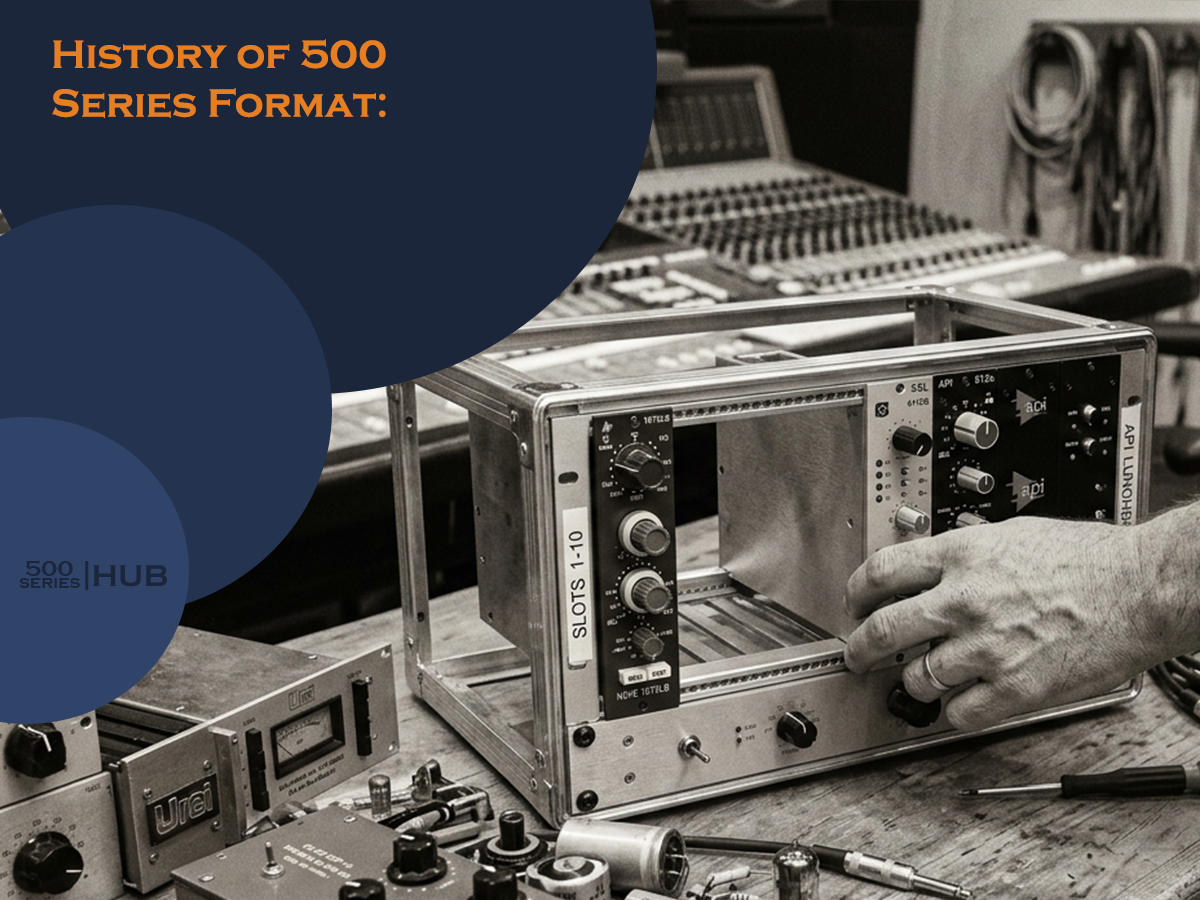
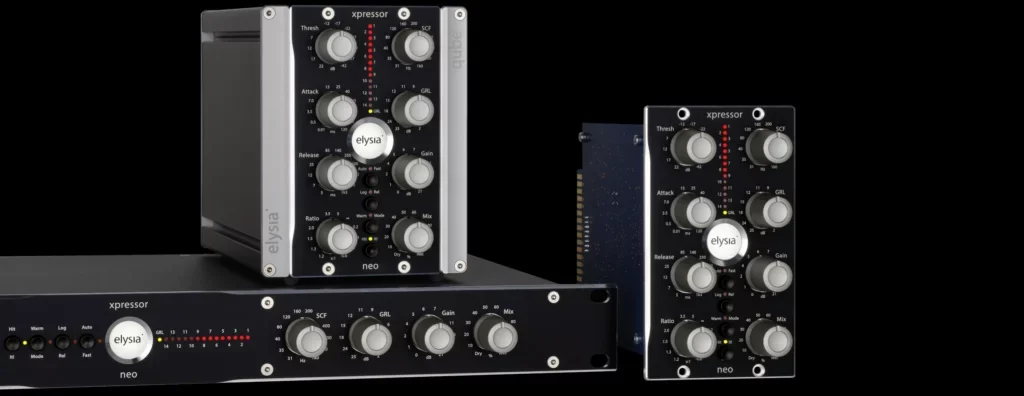
While many audio engineers are familiar with standard rack gear, the 500 Series offers a unique, modular approach to signal processing. With the 500 series, we can combine multiple audio modules, such as preamps, EQs, and compressors into a single chassis.
Each module slides into its own slot, making it easy to customize our studio’s signal chain on the fly. This 500 format not only saves essential rack space but also encourages us to experiment with innovative combinations of gear. You can create your own signal flow that will be suited for your type of music, and later on change it if you need to record something else.
We’re no longer locked into fixed setups; instead, we can swap modules effortlessly, adjusting to any creative or technical demand. For forward-thinking studios, the flexibility and compact design of the 500 series mean we can achieve professional results without sacrificing versatility or workflow efficiency. Great for mobule producers and beatmakers that are on the road.
What Is Standard Rack Gear?
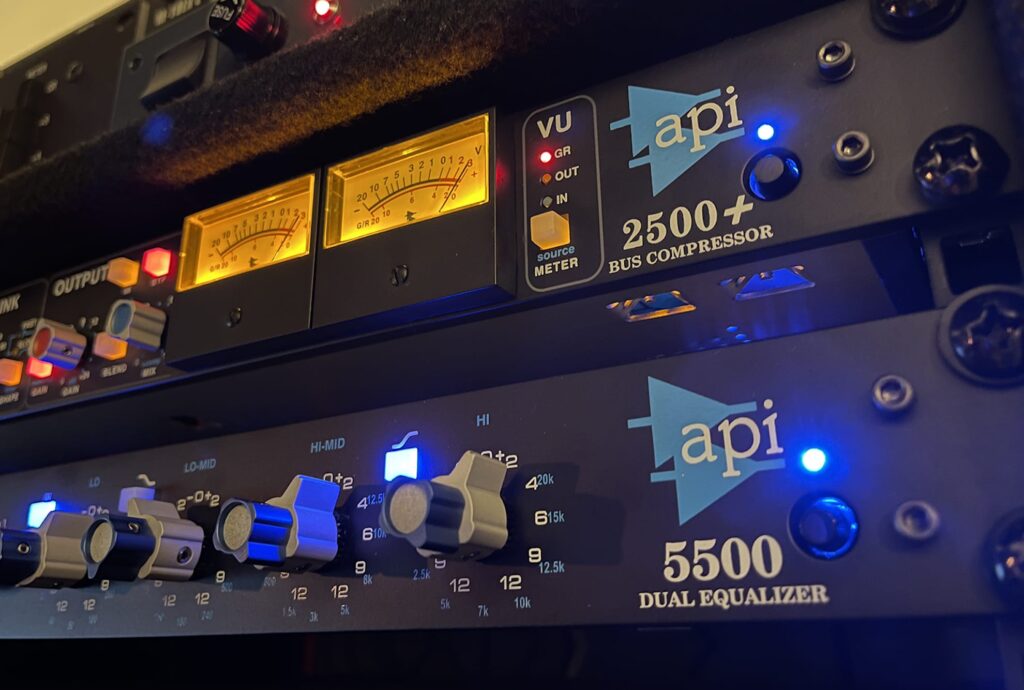
Of course, before the 500 Series gained popularity, most studios relied on standard rack gear for their outboard processing needs. Standard rack mount hardware, typically in 19-inch form factor, became the backbone of analog signal chains.
These units house full-featured circuits, often modeled after classic console designs, offering robust performance and flexibility. We see compressors, EQs, preamps, and effects processors all built as dedicated outboard gear, designed for seamless integration into studio racks.
This traditional format allows us to mix and match high-quality analog hardware, stacking units as our sonic ambitions demand. While the footprint is larger than modular alternatives, rack gear often provides additional controls, metering, and connectivity.
In simple words, the racks behind the producers in the enormous studios is mainly with this type od gear. For innovators, standard rack mount gear still represents a reliable, expandable platform for building a custom, analog-driven workflow.
Sound and Performance: Is There a Difference?
So, how much does the form factor really affect what we hear? When we compare 500-series modules to standard rack gear, it’s not just about size; it’s about sonic character. The voltage rails in traditional rack gear often supply more headroom, letting a preamp or transformer breathe and deliver cleaner signals with less distortion and more dynamic range.
In contrast, 500-series modules sometimes have limited voltage, possibly introducing earlier saturation or subtle color, especially when we push EQ settings.
Let’s break down what this innovation means for our sound:
- More headroom in racks can preserve clarity and punch.
- 500-series might introduce pleasing saturation and warmth.
- Transformers react differently under each format’s voltage.
- EQ response and distortion characteristics can shift between formats.
Ultimately, the format shapes our creative palette. With that being said, we can conclude that both types will improve the signal we work on, depending on what we are after. After all, the outboard gear is there to ease our work and give us that little something that we are lacking in the digital domain.
Flexibility and Workflow: Modular vs Dedicated Units
How do our choices between 500-series modules and standard rack gear shape the way we work in the studio? When we lean into modular designs like the 500 series rack, we unlock flexibility that’s hard to match with traditional dedicated units.
Slot racks let us curate a chain of outboard gear tailored to each session, swapping modules in minutes, not hours. This modular workflow encourages experimentation and rapid iteration, which is essential for innovative producers and engineers.
In contrast, dedicated units offer a focused, sometimes more robust solution, but they confine us into fixed configurations. By embracing the adaptability of modular systems, we’re not just saving space; we’re building a workflow that evolves with our creative needs.
This approach empowers us to shape sound without constraints. Again, in terms of workflow, we are having that needed creative freedom with both types. But in terms of flexibility, we believe that the 500 series are more flexible and compact compared to the rack gear.
Cost, Value, and Upgrade Paths
While both 500-series modules and standard rack gear can demand a substantial upfront investment, the long-term value they offer differs in important ways. With 500 series units, we’re not just buying gear but we’re investing in a format that encourages experimentation and future upgrades.
The ability to fill empty slots as our needs change gives us unmatched scalability and cost efficiency. Standard rack gear often comes with higher individual costs and less flexibility, but sometimes offers unique sonic signatures.
Let’s consider what drives our choices:
- The thrill of filling empty slots with innovative modules
- The satisfaction of stretching our budget for maximum value
- The freedom to upgrade without replacing entire systems
- The excitement of true portability, taking our setup anywhere
For innovators, these factors shape our creative journey and long-term investment. This will probably be the factor that many engineers will consider – getting a bit more expensive rack gear or get the cheaper 500 series models.
For beginners that wanna try out the analog domain, 500 series are amazing starting place. Even after you become more experienced and your appetites grown, you can still use them – but at this point you might wanna try the rack modules. The choice is yours but the value is there!
Power, Reliability, and Technical Considerations
Although both 500-series modules and standard rack gear can deliver professional-grade performance, the technical demands of each format can impact our workflow and reliability. When we use a 500 rack, we need to stay mindful of power limitations. Most racks provide 24v, which can restrict the circuitry designers use. Some high voltage designs simply aren’t possible in this format, potentially affecting headroom and sonic character.
In contrast, standard rack gear often allows for higher voltage rails, giving designers freedom to push boundaries and innovate. Reliability can also differ: a crowded 500 rack may experience power distribution issues if modules draw more current than the chassis can supply. This is a crucial factor when choosing the chassis and the units you wanna use, but more on that later on in some other articles.
As we push for new sounds and advanced processing, these technical details can make a big difference in our setups. In our opinion, this is probably the point where you need to give most thought and decide which path you wanna go. If you decide the 500 series, be prepared to read bunch of technical stuff in order to mix and match the right units to avoid headaches.
Space, Portability, and Live Use
Technical demands shape our options, but the physical footprint and portability of our gear can be just as influential. When we’re optimizing for space and versatility, 500 modules really shine. Their compact format lets us fit multiple processors in a single lunchbox, giving our home studio or live rig a touchy touch feel.
Portability becomes a game-changer when we’re moving between locations or touring, lugging around bulky standard rack gear just isn’t practical. For those of us pushing boundaries, the right format sparks creativity and freedom.
- Save precious studio space for creative energy, not clutter
- Enjoy effortless live use by traveling with a compact, reliable setup
- Swap and customize 500 modules quickly to suit each project
- Embrace versatility without sacrificing professional sound quality
Not that this is not possible with full rack modules, but simply this is the point where 500 format really outshines them. The portability, and space occupancy really is amazing with this form.
Best Use Cases: Which Format Suits Which User?
Depending on your workflow and priorities, choosing between 500-series modules and standard rack gear comes down to how you use your studio or perform live.
If we’re chasing maximum flexibility and portability, 500‑Series makes sense. Engineers who love swapping preamps, compressors, or EQs on the fly will appreciate its modular functionality. Compact setups, mobile rigs, or hybrid environments all benefit from the 500‑Series footprint.
On the other hand, standard rack format gear appeals when we need full-featured controls, dedicated power, or integrated audio interface options.
For those of us running larger studios, demanding high headroom, or requiring specialty processing, traditional rack units often deliver the robust performance we need.
Ultimately, both formats have their place; the right choice depends on how we innovate within our workflow.
Future Trends: Hybrid, Digital Control, and Format Longevity
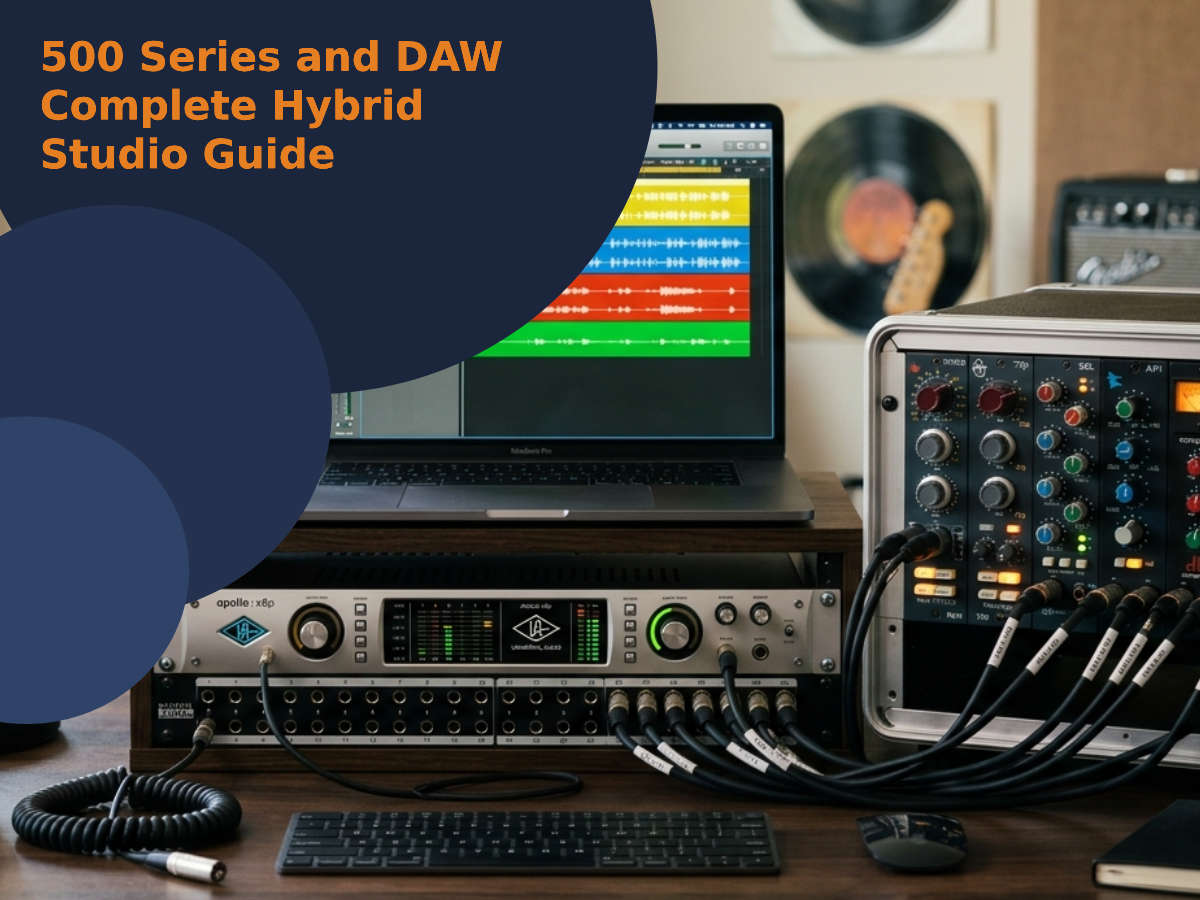
As technology continues to reshape studio workflows, we’re seeing both 500-Series and standard rack gear evolve in exciting ways. Hybrid systems are blurring the boundaries between analog warmth and digital precision, while digital control is breathing new life into classic hardware.
Modern gear often integrates plugin-style recall, automation, and remote access, making high end equipment more flexible than ever. When we look at format longevity, it’s clear both 500-Series and rack units are adapting to future demands.
- Experience the thrill of analog tone with the convenience of digital control
- Seamlessly blend plugins and outboard gear in a unified hybrid workflow
- Invest in formats that promise lasting relevance and upgradability
- Embrace innovation without sacrificing the high end sound we crave
The future is bold, connected, and inspiring.
Frequently Asked Questions
Q: Does 500 Series have less headroom than standard rack gear, and does it matter for recording?
A: Although many engineers debate the pros and cons of 500 Series modules versus standard rack gear, one of the main technical differences is headroom. 500 Series units often run on lower voltage rails, typically ±16V compared to the ±24V found in most rack gear, which can result in slightly less headroom.
When you perform a headroom comparison, you’ll notice this can affect how the gear responds to hot signals. For most modern recording applications, however, the practical recording consequences are minimal unless you’re consistently pushing gain to extremes.
If you want innovative tones or aggressive processing, understanding this difference lets you make intentional, creative choices.
Q: Are 500 Series modules noisier or prone to crosstalk between slots?
A: When comparing 500 Series modules to standard rack gear, you might wonder if noise or crosstalk between slots poses a real problem. Modern 500 Series chassis are engineered with innovations that minimize noise concerns and crosstalk issues.
Still, not all chassis perform equally, quality matters. Lower-end racks may introduce more interference, but premium models often rival or surpass traditional rackmount gear in isolation and performance.
If you’re passionate about modular flexibility, don’t let outdated myths deter you. With careful selection, you can enjoy modular creativity without worrying about excessive noise or crosstalk problems hampering your signal clarity or workflow.
Q: What happens to sound quality when the same unit (e.g., a preamp) comes in 500 Series vs rackmount?
A: A direct comparison reveals subtle but important differences between a 500 Series module and its rackmount counterpart, even when they share the same core circuitry. You’ll notice that 500 Series units sometimes exhibit minor differences in headroom and noise due to power supply variations.
Rackmount gear often feels more robust, sometimes offering slightly better shielding and bigger transformers, which can subtly improve depth and warmth qualities prized for vintage aesthetics. However, 500 Series modules enable you to experiment with custom configurations, stacking flavors and functions to suit your workflow.
If you’re seeking innovative sonic options, the 500 Series format offers unmatched flexibility.
Q: Can 500 Series racks handle power-hungry modules without distortion or failures?
A: While 500 Series racks offer impressive versatility, not all of them deliver enough power for demanding modules. If you’re integrating innovative, power-hungry modules, you’ll need to scrutinize your rack’s power consumption specs.
Some budget racks can’t provide clean, consistent current, which may lead to distortion or even module failures under heavy loads. Always check module compatibility, manufacturers often publish maximum current draw.
High-end 500 Series racks now feature robust power supplies and improved distribution, but you can’t assume all racks are equal. If you want to push sonic boundaries, invest in a rack that guarantees ample, reliable power delivery.
Q: Is 500 Series actually cheaper long-term, or just hype for project studios?
A: Power considerations aren’t the only factor to weigh when deciding between 500 Series and standard rack gear. You might be drawn to the vintage aesthetics and modular flexibility of 500 Series, but it’s smart to ask if the savings are real.
At first glance, 500 Series modules seem cheaper, especially when you compare the cost per channel. However, you’ll need to factor in the price of a quality chassis and potential limitations on power or compatibility.
Over time, the flexibility to swap modules can save money, but only if you’re strategic. Otherwise, hype may outweigh the long-term financial benefit.
Q: What’s the best budget chassis for reliable 500 Series power and no issues?
A: Even on a tight budget, you don’t have to settle for unreliable power or noisy interference in your 500 Series setup. Look for a chassis that pairs robust engineering with modular expandability—this lets you customize your rig as your needs evolve.
Some budget-friendly options deliver surprisingly clean power and vintage aesthetics, offering both style and substance. Prioritize models with solid build quality, internal shielding, and enough current per slot to guarantee stability. Don’t ignore the importance of accessible rear panel connections and user-friendly layouts.
Q: Do 500 Series PSUs cause problems if multiple modules draw too much current?
A: Selecting a solid chassis is only part of the equation. What happens when you load it up with power-hungry modules? If your 500 Series power supply can’t deliver enough current, you’ll encounter noise, instability, or even failure to power all your gear.
Module compatibility isn’t just about fitting in the slots; it’s about ensuring the power supply matches the current draw of every module combined. Always check each module’s specs and total your current needs before installation.
Cutting-edge setups demand reliable power; exceeding your chassis’s capacity risks compromising your workflow and the performance you expect from innovative audio gear.
Conclusion
When it comes to choosing between 500 Series modules and standard rack gear, there’s really no one-size-fits-all answer. As the old saying goes, “horses for courses” each format shines in the right setting. If we’re after flexibility, portability, and easy upgrades, the 500 Series is a winner. But for maximum headroom and dedicated performance, rack gear pulls ahead. Ultimately, our workflow, space, and sonic goals will guide us to the best fit.
In case you are having any questions or concers in regard to this topic, please let us know and we will try to answer you and give you more detials!