What Is 500 Series: Intro and Format Explained
Welcome to our first ever article on our brand new website! As per the search you performed, you ended up on a website that is dedicated to 500 series audio gear, meaning you wanna learn more about it and get the best out of it. In the first articles that will be presented on this website, you will be able to find all the necessary details on this format and learn what you need.
Firstly we are going to go in the basics where every beginner will get all the proper info, and after that we are going to dive deep into the more specific and technical topics to cover every aspect for this format.
Much like assembling the perfect toolkit, understanding the 500 Series lets us shape our studio workflow with precision and flexibility. We’re talking about a modular system where preamps, EQs, and compressors slot into a standardized chassis, allowing for endless customization.
It’s a popular choice among audio professionals and that is for a good reason. Particularly for its integration with the studio standards. But what exactly makes the 500 Series so versatile and appealing? Let’s break down the essentials before we investigate why it’s become a studio staple.
Key Takeaways
- The 500 Series is a modular system for analog audio gear, commonly used in recording studios.
- It consists of individual modules like preamps, EQs, and compressors that fit into a standardized chassis or rack.
- The format enables flexible, customizable signal chains by allowing users to mix, match, and swap modules easily.
- 500 Series racks supply power and manage connections for all installed modules through a common back panel.
- This compact, space-saving format supports professional-quality setups and imrpoves the workflow for both studios and home environments.
What Is 500 Series Audio Gear?
Although audio technology evolves rapidly, 500 Series audio gear remains a popular choice for producers and engineers seeking flexibility and high-quality sound.
When we talk about the 500-series format, we’re referring to a compact format that accommodates various audio processors into a modular system of analog audio equipment designed for versatility in the modern recording studio.
Each 500 series module, no matter if it is a preamp, EQ, or compressor, fits neatly into a dedicated slot within a modular channel strip. compatible chassis or rack.
This modular approach lets us customize our signal chain, swap out units as needed, and experiment with new sonic possibilities without overhauling our entire setup, especially when utilizing a channel strip.
By investing in a few high-quality modules, such as mic preamps and equalizers, we can build a portable, streamlined rig that delivers professional results and keeps our workflow agile and innovative.
Besides all the technical aspects covered, we are able to find unique models that are clones of their full rack counterparts for a smaller price, but performing the same tasks.

Why Do Audio Engineers Choose 500 Series Modules?
With a clear understanding of what channel strips can offer, every amateur and professional can unlock new creative potential. This is one of the reasons why we see so many engineers gravitate toward these modules. The 500-series module offers unmatched flexibility and customization, letting us build a signal chain tailored to our creative vision.
Unlike traditional outboard gear, the modular format means we can swap or upgrade components quickly, keeping our workflow lean and versatile. The compact 500 series format saves essential studio space and encourages experimentation without sacrificing professional sound quality.
As audio engineers, we appreciate how these tools streamline our process, letting us focus on innovation rather than wrestling with bulky equipment, especially when using bigger modules. Ultimately, 500-series modules enable us to design unique sonic signatures and adjust swiftly as our projects evolve, especially when incorporating stereo processors.
Aside from the technical perks, we are also very movable with these modules. We can create a channel strip or a recording signal flow with 4 one-slot models that will greately improve the outcome. This can be taken in your car and you’ll be able to move around studios and record. No limits and no restrictions. Awesome, right?
How Does the 500 Series Format Work?
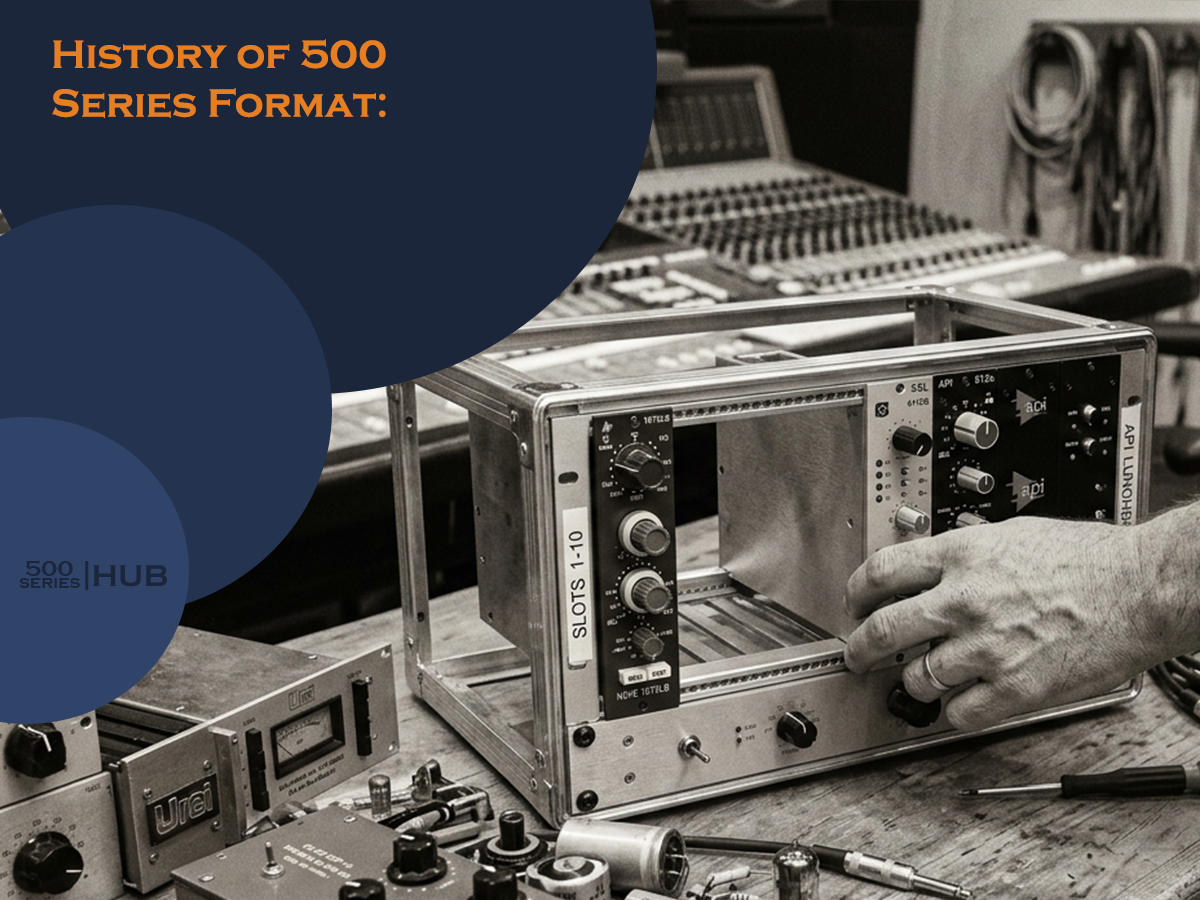
Because the 500 Series format centers on modularity, it relies on a combination of individual modules and a specialized chassis called a rack or lunchbox. We insert our choice of modules; EQs, compressors and preamps into the slots for a channel strip experience. 500 series modules within the 500-series chassis.
Each 500 series rack contains its own power supply, distributing the necessary voltage to every slot. The standardized format guarantees that any 500 Series module, regardless of manufacturer, fits the physical dimensions and electrical requirements of the chassis.
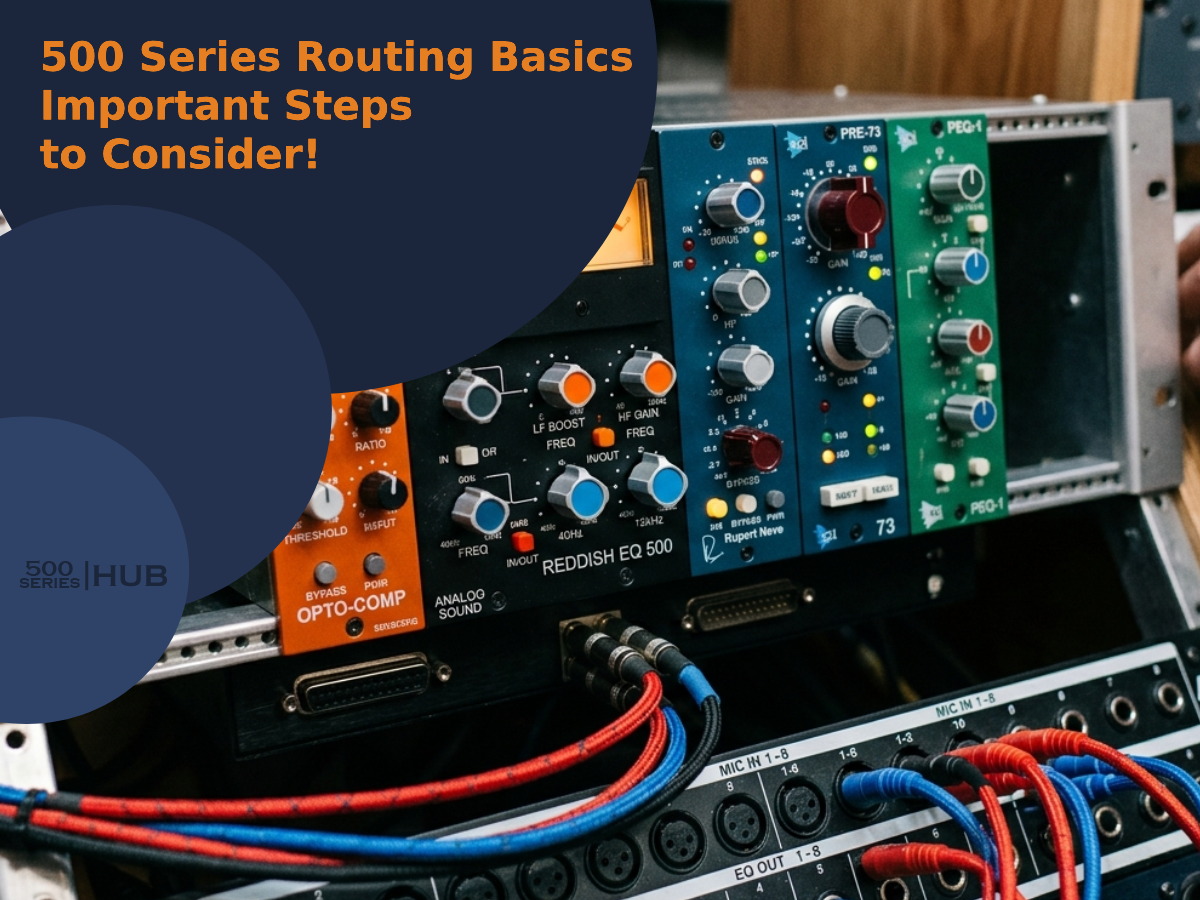
Input and output connections are handled through the back panel of the rack, with cable management and integration. This approach lets us mix, match, and swap gear seamlessly, encouraging a flexible and innovative workflow without compromising compatibility or performance.
Later on, when we engage with various different chassis, you will be able to see that there are many various models and ways that you can use to connect and switch flows in the chassis. But more on that in some other articles.
Benefits Of The 500 Series Format
As we’ve seen, the 500 Series format’s modular structure makes it easy to customize and expand our audio setup. One of the biggest benefits is flexibility. We can mix and match 500-series modules from different manufacturers in a single rack, tailoring our studio workflow to our creative needs.
The compact format saves precious space while still delivering high-quality sound for recording and mixing. A single power rack can house multiple modules, reducing cable clutter and simplifying our signal path.
This efficiency not only imrpoves our process but also encourages experimentation with new gear combinations. By using the 500-series format, we gain access to a wide range of innovative tools, future-proofing our studio and ensuring our setup evolves as technology advances.
How to Build Your 500 Series Signal Chain
Before we explore building a 500 Series signal chain, let’s break down the essential steps that guarantee both creativity and functionality. First, we select a reliable 500-series rack or power rack. This forms the backbone for all our 500 series equipment.
Next, let’s choose the right individual modules: a preamp for tone, an EQ for sculpting, and a compressor for dynamics. The order of each module in the signal chain is vital; experimenting here with the modules can inspire unique sonic results.
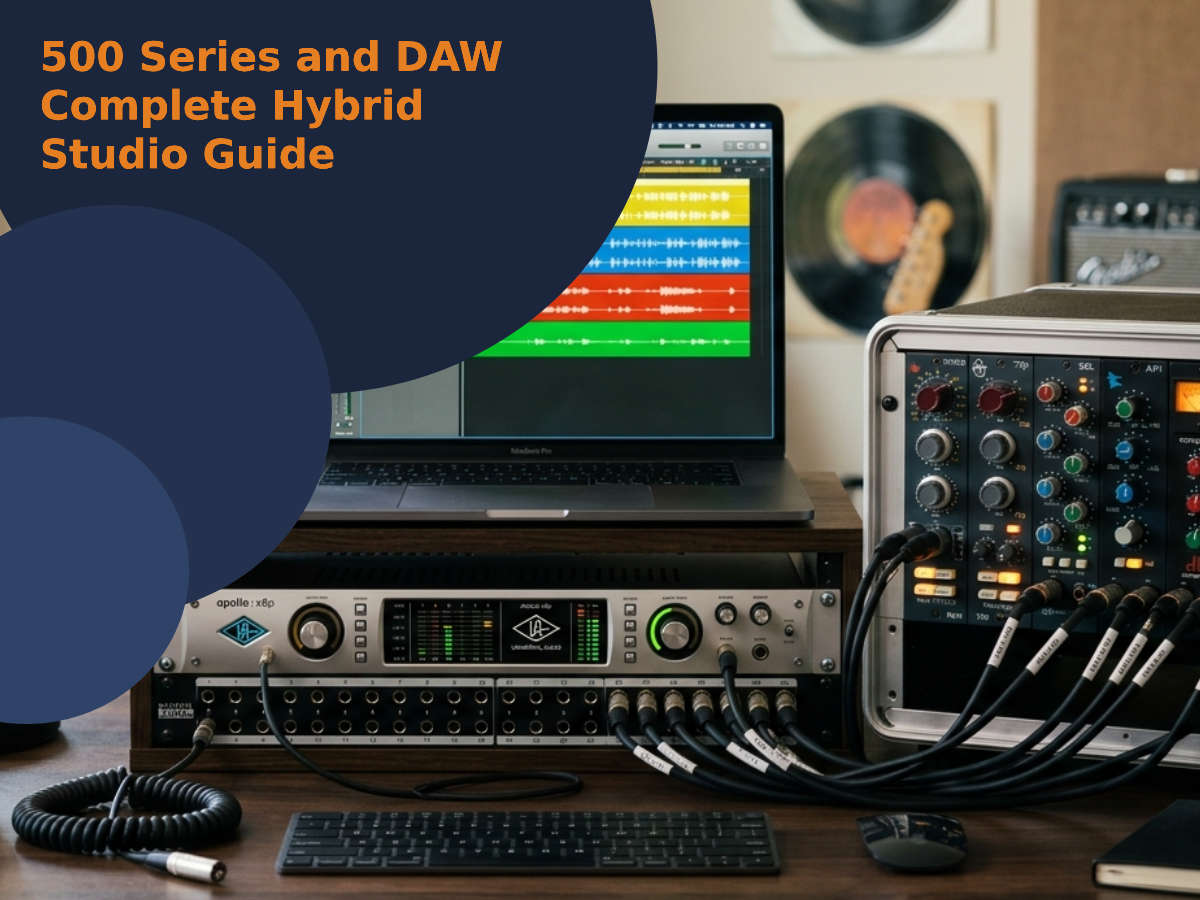
We’ll connect our source using reliable connectors to ensure optimal signal flow, then route the output to our mixing console or audio interface. By understanding the interplay between these components, we unleash total control over our audio and tailor our chain for any creative vision.
Again, we will check many various posibilities later on and give you in depth analysis on chassis and units for you to pick from to create what will be the ultimate signal chain for your desired signal.
How Does it Revolutionize the Home Studio?
With a solid grasp on building a 500 Series signal chain, let’s look at how this format transforms what’s possible in a home studio, particularly with the inclusion of mic preamps and equalizers. By getting into 500 series gear, we unlock a world of flexibility and quality once reserved for larger studios.
The 500 Series format brings pro-level flexibility and sound quality into any home studio, unlocking possibilities once limited to larger spaces.
The 500 series power rack allows us to mix and match modules and racks, letting us completely customize our signal path. With an API 500-series rack, we can harness legendary sound without sacrificing space or budget.
Because manufacturers are constantly producing modules for this popular format, we’re never trapped by outdated tech. We can swap in cutting-edge preamps or EQs as our needs evolve, keeping our studio and live setups at the forefront of audio innovation.
Ultimately, 500 series gear makes high-end audio truly accessible.
Frequently Asked Questions
What is 500 Series, and why is everyone divided on whether it’s worth it?
The divide in opinion comes from the balance between innovation and tradition. Some celebrate the space-saving, affordable, and creative aspects, while others question if the format sacrifices anything essential.
We’re left weighing convenience, quality, and the excitement of tailoring our setup for unique sonic adventures.
Is 500 Series gear worse than full‑size rack units in terms of sound and reliability?
Of course, the excitement of building a custom 500 Series setup naturally leads us to a big question: does this compact format really measure up to traditional full-size rack units in sound and reliability?
Let’s be clear, many modern 500 Series modules match their rackmount counterparts in sonic quality, thanks to advances in miniaturized circuitry and engineering. We’re not compromising innovation for convenience here.
However, reliability can depend on the quality of the chassis and power supply. If we invest in reputable brands and robust enclosures, 500 Series gear can absolutely stand shoulder to shoulder with classic rack units in both arenas.
Why are 500 Series setups so tricky to integrate with my DAW/interface?
Although 500 Series gear has a devoted following among audio engineers, we don’t see nearly as much coverage online compared to other studio equipment. Part of the reason is the niche nature of the format, it’s embraced mostly by professionals and serious enthusiasts, not hobbyists.
Fewer units in circulation means fewer reviews, tutorials, and user-generated content. Also, 500 Series modules can be intimidating; their modular approach isn’t as plug-and-play as typical gear, which discourages casual experimentation.
As a result, innovative minds like us often need to dig deeper, seek out specialized forums, or learn firsthand through hands-on experience.
What are the most common 500 Series setup mistakes people rage about on forums?
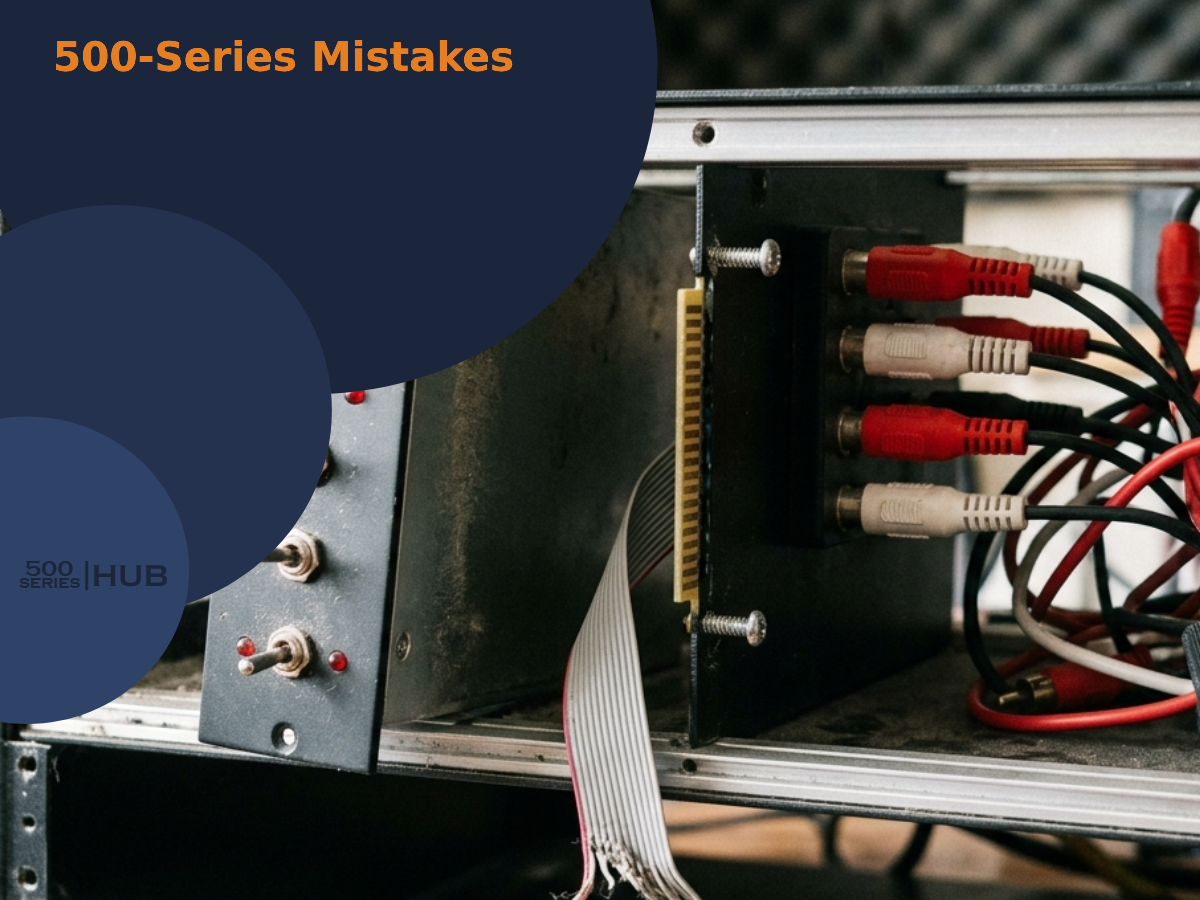
If you’ve spent time browsing audio forums, you’ll notice certain 500 Series setup mistakes come up again and again, sparking frustration among users. The big ones? Mismatched power supplies, overloading racks, and poor module compatibility.
We see people skipping module orientation checks or ignoring manufacturer specs, resulting in hum, noise, or fried gear. Another common gripe: not securing modules properly, causing intermittent connections.
Finally, we often underestimate heat management. Cramming too many high-draw modules into a single chassis.
Let’s learn from these pitfalls, investigate innovative solutions, and keep our 500 Series rigs running smoothly, efficiently, and ready for creative breakthroughs.
Conclusion
With 500 Series gear, we’re no longer tied to bulky racks or static setups. We can sculpt our perfect signal chain like painters mixing colors on a palette. Imagine sliding in a new preamp, swapping an EQ on the fly, or packing a world-class studio into a compact lunchbox.
The 500 Series format hands us the flexibility to integrate various processors into our setup. creative freedom to shape our sound, whether we’re in a high-end studio or crafting tracks at home. The possibilities are endless. And officially welcome to the new home of 500 series – where you will learn every thing possible about this format!