Introduction
Like the complex gears inside a finely crafted watch, the anatomy of 500 series module reveals a world of purpose beneath its surface. When we look beyond the familiar front panel, we find a careful orchestration of design choices shaping both sound and workflow.
Each component, connection, and circuit tells a story about sonic character and reliability. If we want to truly understand how these modules define our signal chain, there’s more to uncover just beneath the faceplate.
In this article we are going to cover what you will need to know about the 500 series modules in terms of how they are built, what can you expect from a single unit and some stuff around the anatomy of the modules.
What a 500‑series module actually is
So, what exactly is a 500-series module? At its core, it’s a compact audio processing unit, rooted in vintage inspiration but driven by modern innovation. We’re talking about a standardized format that lets us mix and match different modules, creating a customizable signal path tailored to our sonic goals.
The magic lies in thoughtful component selection, every resistor, capacitor, and op-amp is chosen for tone, reliability, and performance. During the manufacturing process, precision matters, as even tiny inconsistencies can affect acoustic considerations and overall sound quality.
We can’t forget the user interface; clear, tactile controls allow us to shape audio intuitively and efficiently. Ultimately, a 500-series module delivers classic sounds with cutting-edge flexibility, enabling us to push creative boundaries.
Physical layout and front‑panel design
While the internal circuitry defines a 500-series module’s sonic character, its physical layout and front-panel design shape how we interact with it every day. As innovators, we understand that thoughtful rack mounting guarantees every module sits flush and secure, making swapping units efficient and hassle-free.
The arrangement of front panel controls must prioritize ergonomic design; tactile knobs, switches, and buttons should invite intuitive operation, even in low-light conditions. Visual indicators such as LEDs, meters, or backlit labeling, provide instant feedback, keeping us in command during fast-paced sessions.
Material selection isn’t just about durability; it’s about feel and aesthetics, too, inspiring confidence every time we reach for a control. Ultimately, an innovative front-panel design transforms utility into a creative, seamless workflow experience.
Depends on the unit you are looking, there will be different knobs, switchesh and buttons. What you need to know that each manufacturer finds the balance between maintaining their brand outfit and compatibility for user interface, which in our opinion is really importat.
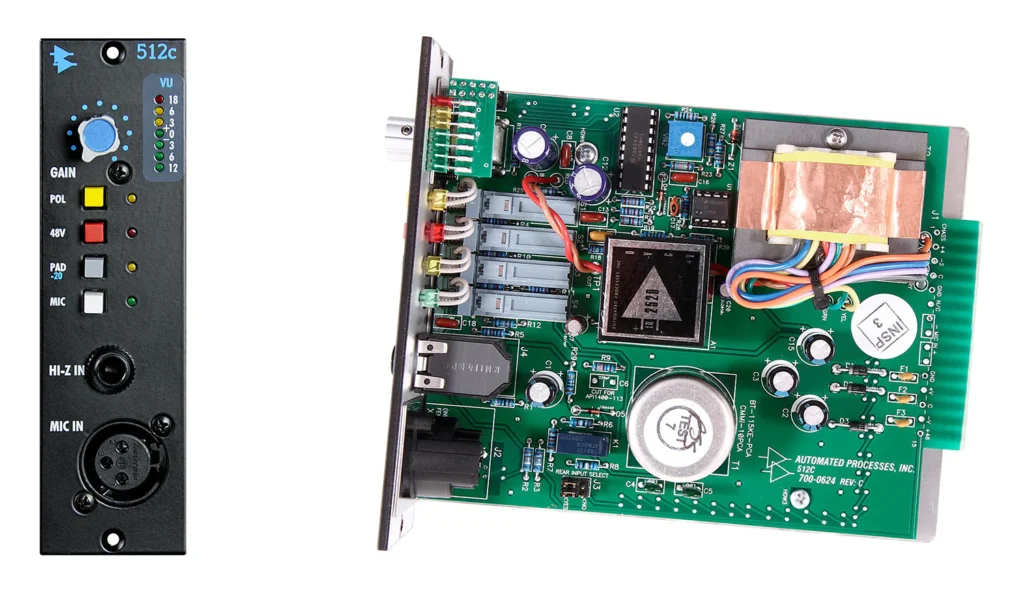
Internal circuitry and signal path
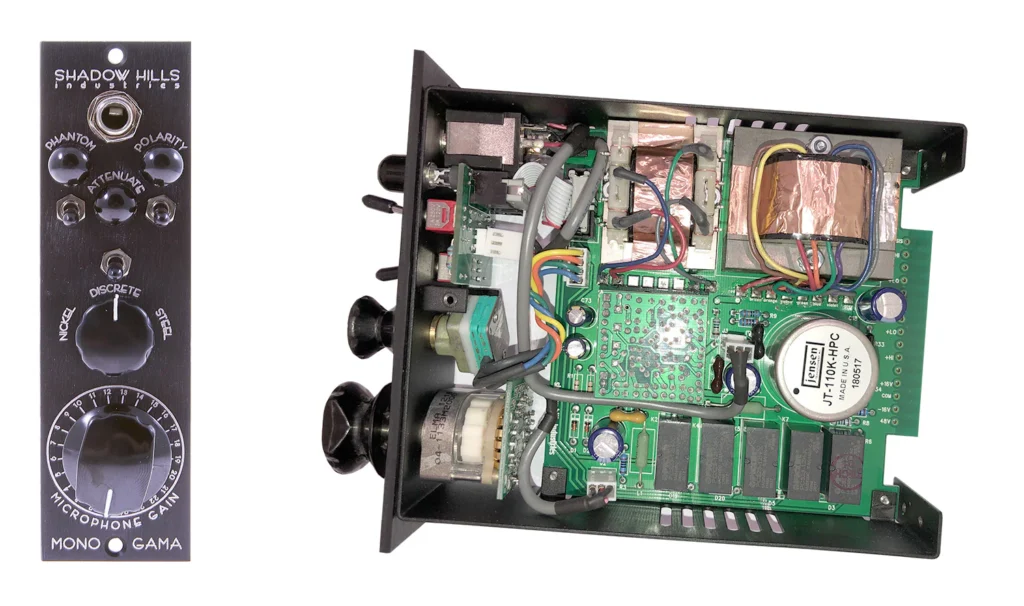
What sets a 500-series module apart at its core is the design of its internal circuitry and signal path. When we investigate innovation in audio gear, we’re looking at how analog circuitry is sculpted for maximum fidelity, flexibility, and sonic character.
Every detail matters, from component selection, where we choose resistors and capacitors for their unique tonal fingerprints, to the sophistication of signal filtering that guarantees clarity without losing musicality. Smart voltage regulation keeps the module stable, allowing dynamic signals to pass cleanly even when the rack is loaded.
We’re also attentive to noise reduction, integrating shielding and layout techniques that minimize interference. By refining these elements, we reveal new creative possibilities and set our modules apart in the ever-evolving world of audio technology.
Again, each manufacturer wants its unit to be compatible with many varous chassis models, so they are doing their best to make it optimal and work properly based on the unit they are creating.
Power, grounding, and the 500‑series bus
Although the sonic character of a 500-series module often gets the spotlight, its reliability and performance depend heavily on how we handle power distribution, grounding, and the shared 500-series bus. Let’s innovate from the ground up, literally.
Effective circuit topology starts here, shaping how modules interact and how clean our audio remains. We aim for noise reduction by designing robust ground planes and meticulous power rails, ensuring each module gets stable, isolated power.
Smart component selection matters; low-noise regulators and capacitors can make or break a design. This is truly the stape that each developer follows in order to make optimal units for every user.
We can’t ignore thermal management, either, compact racks demand efficient heat dissipation to avoid drift or failure. Ultimately, attention to these details in power and grounding lets us push boundaries without sacrificing sonic integrity or reliability.
This is something that each buyer needs to look when shoping for a new 500 series gear. We will dedicate full article on this, but at this stage we cannot write a text without mentioning this point.
I/O, connectors, and inter‑module routing
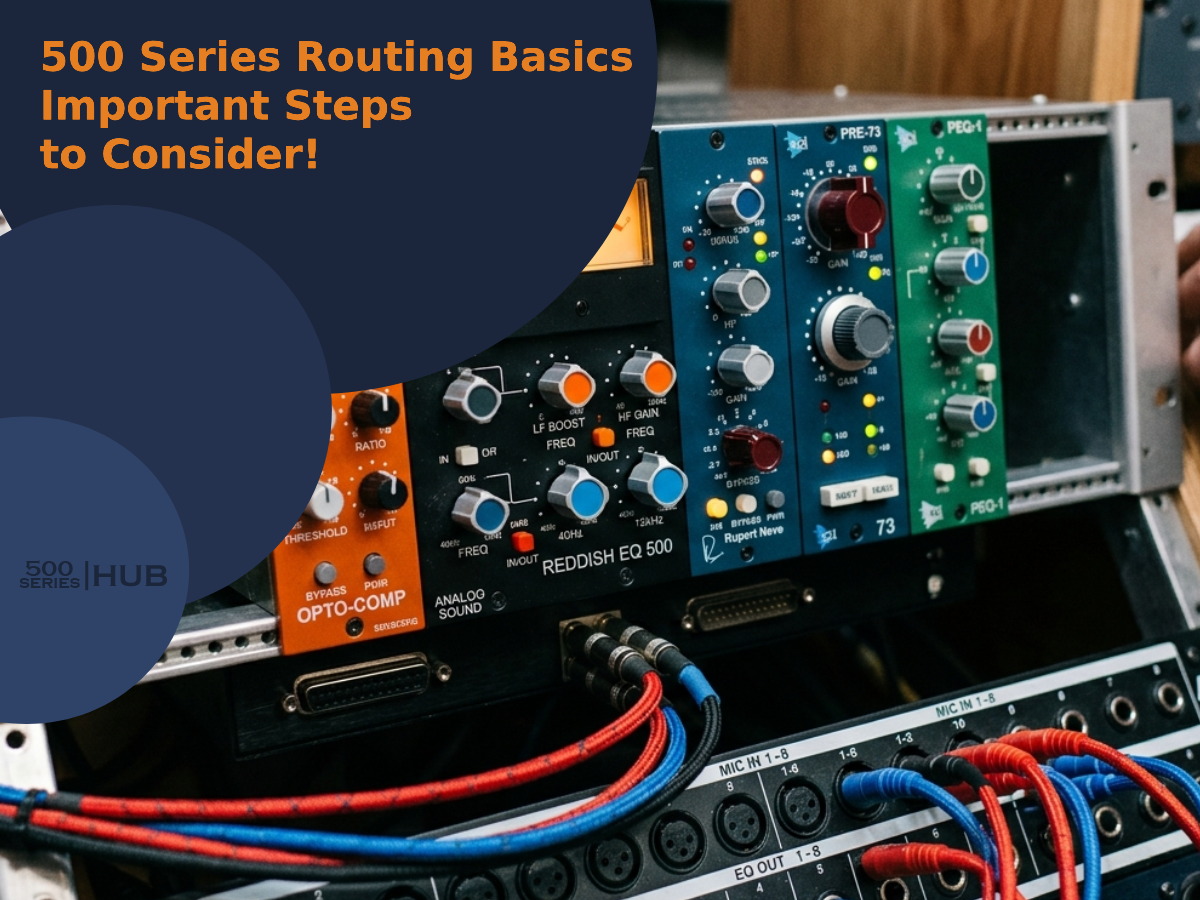
Because every signal starts and ends at a connector, the I/O design is critical to a 500-series module’s usability and performance. When we innovate, we consider not just the connector types, XLR, TRS, DB25, but also how cable compatibility influences workflow flexibility.
We need connectors robust enough to handle pro-level signal levels without introducing noise or crosstalk. Module spacing is another design factor; tight layouts can limit access or restrict certain cable types, so we aim for a balance between density and practicality.
Inter-module routing intricacy also shapes our approach, especially as signal chains become more sophisticated. By prioritizing efficient I/O, we enable users to experiment, reconfigure, and push sonic boundaries, all while maintaining ideal audio integrity and system reliability in any creative environment.
How the module fits into a larger 500‑series rig
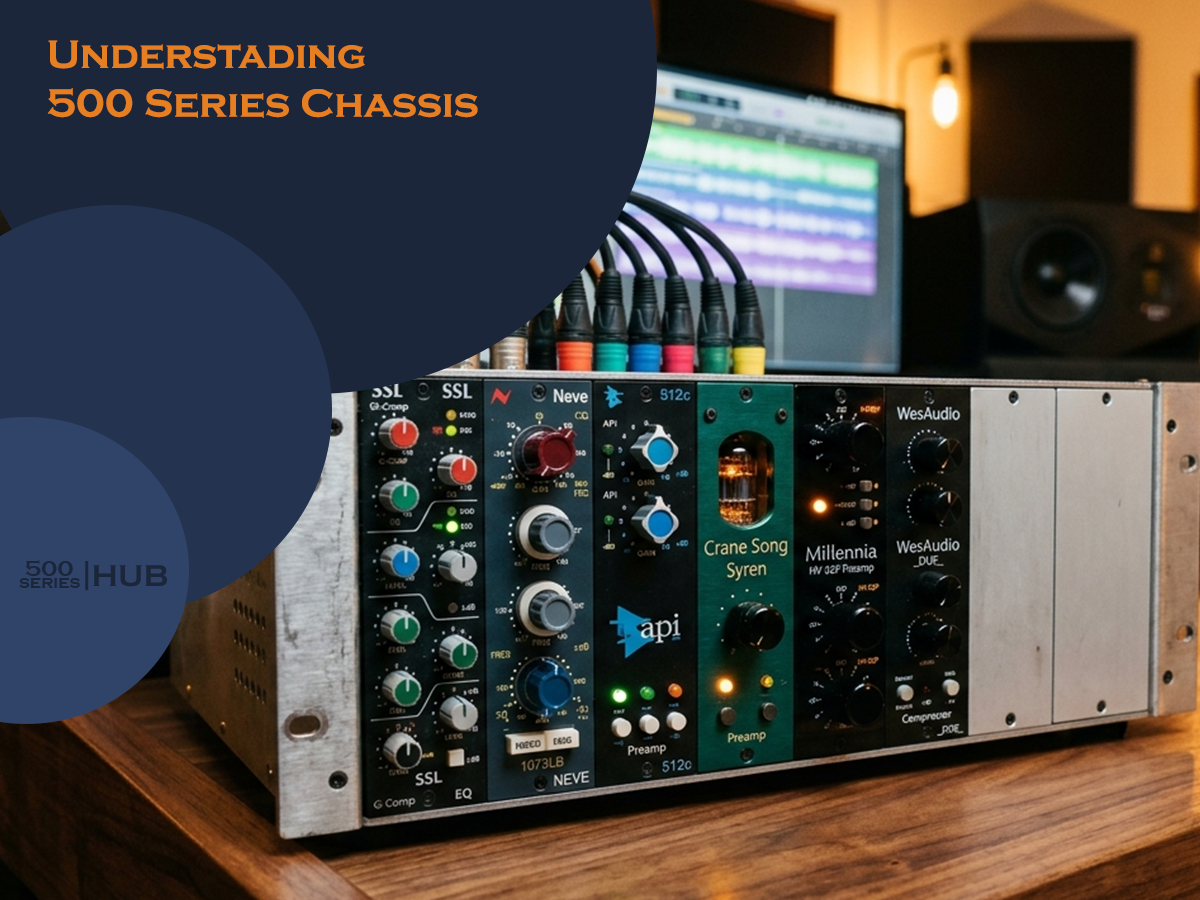
When we slot a module into a 500-series chassis, we’re not just adding another processor, we’re integrating it into a modular, customizable ecosystem. Every module introduces a new layer of sonic potential, but it’s the synergy with other modules that release true innovation.
We prioritize module customization, seeking units that play well with diverse signal chains and offer flexible routing. Aesthetic considerations also matter; a visually cohesive rack not only inspires us but eases navigation during high-pressure sessions.
The user interface must be intuitive, allowing for quick, precise adjustments without interrupting our creative flow. Module durability is non-negotiable; these devices need to withstand constant swapping and rigorous use.
Ultimately, modular compatibility guarantees that our evolving rig remains future-proof and ready for bold new workflows.
Frequently Asked Questions
Q: Why do 500-series racks get so hot?
A: So, why do 500-series racks tend to run hot? When we pack multiple modules, each with its own circuitry, into a compact frame, heat becomes a byproduct of innovation.
Vintage aesthetics often mean denser layouts and traditional components, which weren’t always designed for today’s demands. Modular customization lets us swap and stack, but more modules draw more power, pushing power management to its limits.
Maintaining signal integrity requires precise electronic design, yet tighter spaces can trap heat around critical parts.
Q: How does crosstalk happen between modules?
A: Although each 500-series module is designed to operate independently, the close proximity of their circuits can allow unwanted electrical signals to leak from one module to another, a phenomenon known as crosstalk.
Proximity effects make signal coupling more likely, especially when modules carry high-gain or high-frequency signals. Electromagnetic interference can radiate between adjacent modules, further increasing the risk.
Effective grounding techniques are vital to minimize shared return paths that can inadvertently carry audio signals. By understanding these interactions, we can design smarter layouts and shielding strategies, reducing crosstalk and preserving audio integrity in our signal paths.
Q: Can faulty modules damage the chassis?
A: While 500-series chassis are built to withstand regular use, a faulty module can still pose a risk to the entire system. When we experience module failure, the potential for electrical surges increases, which can travel through the backplane and affect other slots.
This not only threatens the integrity of neighboring modules but may also result in chassis damage and accelerated component degradation.
Q: Why is power supply insufficient for some modules?
A: Occasionally, we find that a 500-series chassis doesn’t deliver enough power for certain modules, leaving us frustrated and searching for answers. The issue often stems from a combination of power efficiency, voltage regulation, and heat dissipation challenges.
Some modules demand more current or precise voltage than the chassis was designed to provide. Poor voltage regulation can result in unstable operation, especially when modules are engineered for high performance.
Q: How do you integrate 500-series with home interfaces?
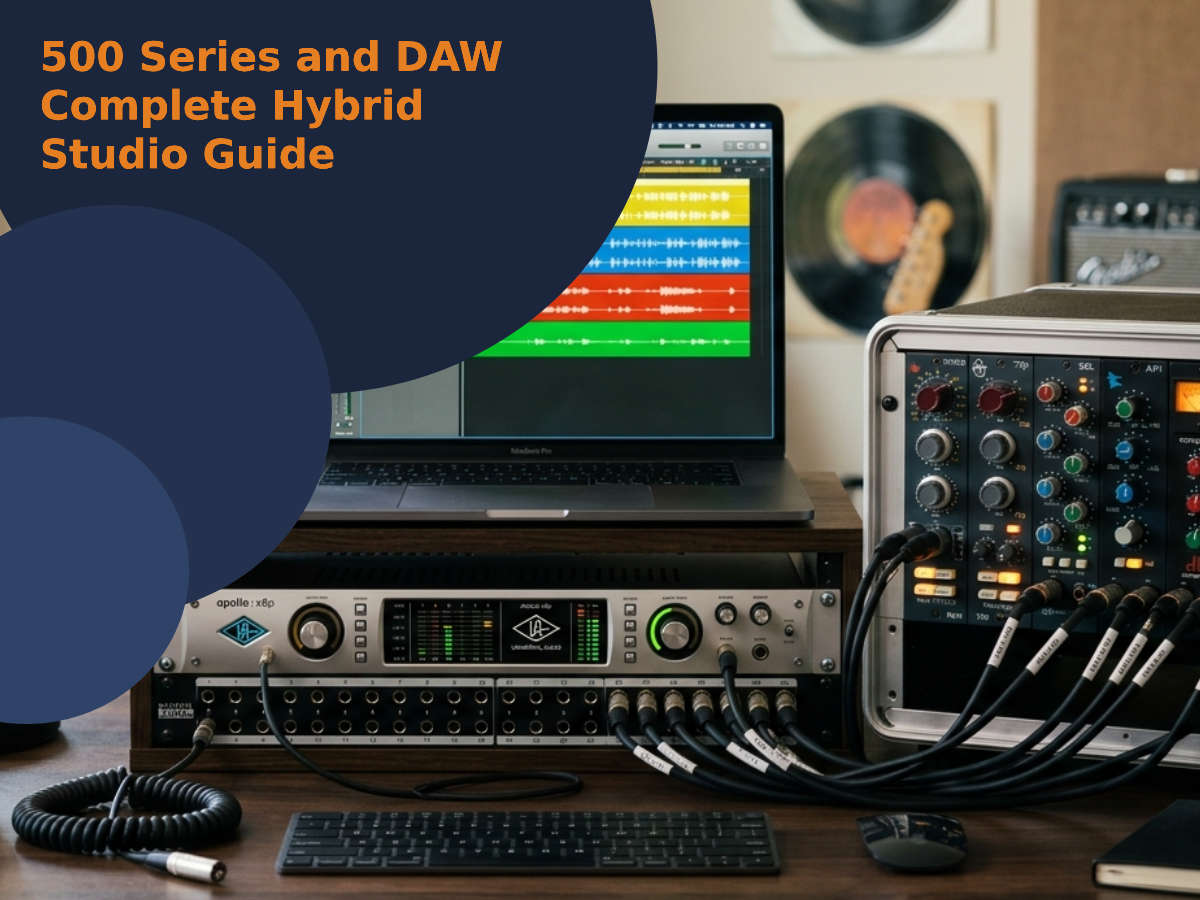
A: Although integrating 500-series with home studio interfaces might seem complicated, we can achieve excellent results with the right connections and a bit of planning.
First, let’s confirm module compatibility with our interface’s input and output levels. Signal routing demands creativity; patch bays or dedicated cables let’s sculpt unique processing chains.
Finally, we shouldn’t overlook aesthetic considerations. A thoughtfully arranged rack not only inspires creativity but also helps our workflow, blending professional-grade sound with the innovative edge of a modern home studio.
Q: Why lack features like side-chain on compressors?
A: Because 500-series modules prioritize compactness, we often see compressor designs that omit features like external side-chain inputs. These side chain limitations arise from strict space and signal routing constraints intrinsic to the 500-series format.
We notice compressor feature gaps compared to their full-sized rack counterparts. Routing additional controls or connections simply isn’t always feasible within such a small footprint.
Q: Is installation of modules finicky?
A: Even with the clear appeal of the 500-series format, installing modules into a chassis isn’t always a seamless process. We often encounter installation challenges, particularly when module compatibility falls short, sometimes, a module’s physical or electrical specs don’t quite match the chassis.
This can affect everything from module calibration to the overall user interface experience. Those of us keen to experiment might find ourselves troubleshooting unexpected issues, like aligning power connections or securing modules properly.
While most manufacturers aim for standardization, occasional variances remind us to double-check compatibility and prep for a bit of hands-on problem solving during setup.
Q: Why no output trim on some modules?
A: While exploring 500-series modules, we quickly notice that some lack an output trim control. Why is that? Many designers prioritize simplicity and signal purity, letting us manage output level elsewhere in the chain.
When module gain is precisely set, extra trims can introduce unwanted coloration or intricacy. In modern setups, creative signal routing often allows control via other hardware or within our DAW.
Manufacturers sometimes perform strict calibration procedures to guarantee ideal output, making a trim redundant. Ultimately, omitting output trim encourages us to think innovatively about gain staging, trusting both the module design and our broader workflow.
Conclusion
When we peer inside a 500-series module, we’re drawn into a world where every component has a purpose , and a secret to reveal. The elegant dance of signal and circuitry is almost invisible, yet it shapes every sound we create.
As we slot a module into our rack, we understand there’s more to discover with every patch and tweak. The next time you reach for that knob, ask yourself: what sonic marvels might be waiting just beneath the surface?