Introduction
While the big variety of 500 Series modules might seem overwhelming at first, we can break down the essentials to make smart decisions for our studio. Each module type: preamps, EQs, compressors, and effects serves a distinct purpose, from boosting signal clarity to shaping tone and controlling dynamics.
By understanding how each fits into a signal chain, we’ll see how to craft versatile setups crafted for our workflow. Let’s see which modules truly define the 500 Series terrain. In the article below, we are going to go over the common 500 series module types and we will try to offer you some guidance what you need to buy to get you started into this 500 series journey!
Key Takeaways
- Mic preamps amplify low-level signals and are fundamental for gain staging and sonic character in 500 Series setups.
- Equalizer (EQ) modules shape frequency content with parametric or graphic controls for precise or broad tonal adjustments.
- Compressor and dynamics modules manage audio signal dynamics, offering control over peaks, transients, and overall mix consistency.
- Effects modules include reverb, delay, and modulation units to add space, depth, and creative textures to audio tracks.
- Utility modules, such as filters, de-essers, and patchbays, provide workflow enhancements and specialized signal control.
Main Types Of 500 Series Modules
When exploring 500 Series modules, we typically encounter four primary categories: preamps, equalizers, compressors, and effect processors. Each type serves a distinct function in signal processing.
Preamps boost low-level signals, often using discrete circuitry for sonic character and low noise.
Compressors manage dynamics, ensuring consistent levels and punch in a mix, and can be found in both mono and stereo formats for bus processing.
EQ modules sculpt frequency content, offering parametric or graphic bands for precision shaping.
Effect processors include reverb units, transient shapers, or stereo image enhancers, which push creative boundaries.
Mic Preamp Modules
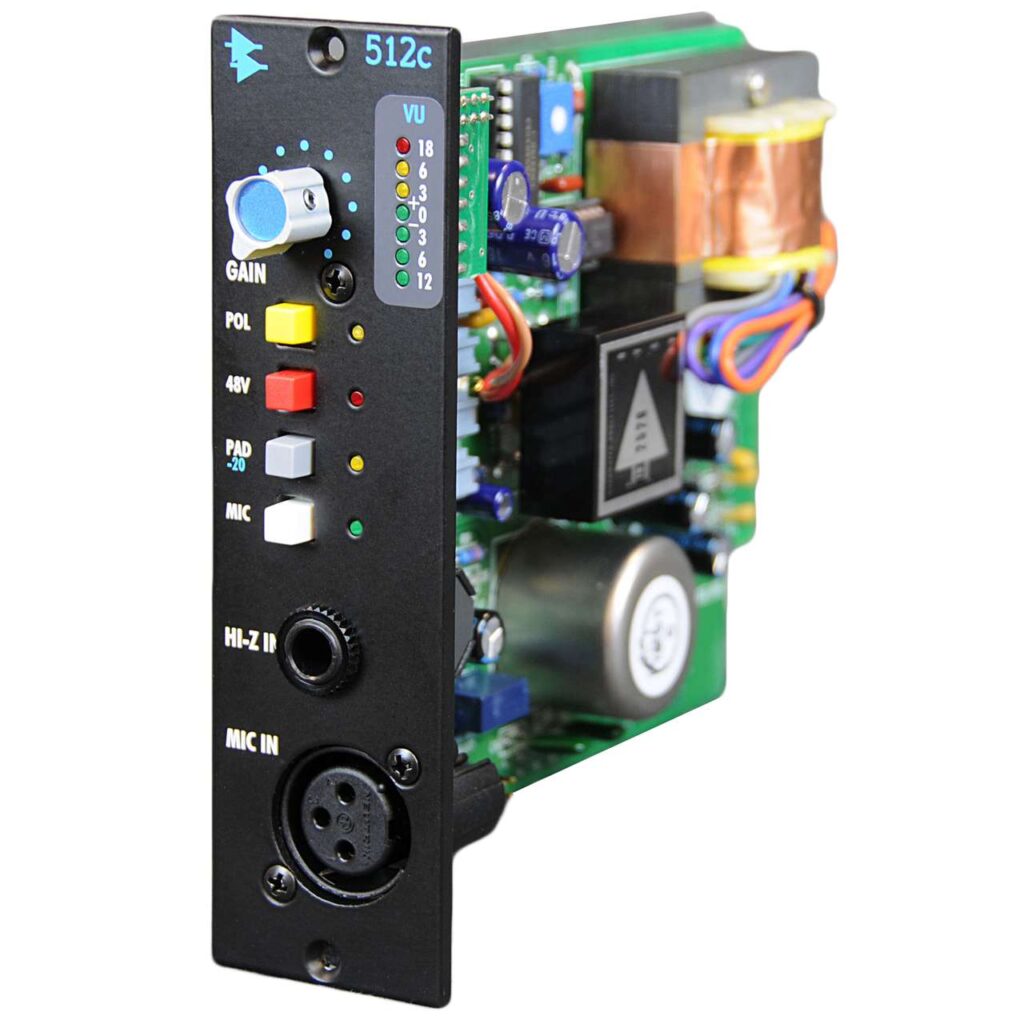
Among the core 500 Series modules, mic preamps form the foundation of any signal chain by elevating microphone-level signals to line level with ideal gain staging. In the 500 series format, we find mic preamp modules that deliver pristine or characterful amplification, often drawing inspiration from scaled-down versions of classic preamps.
Notable options include the API 512c, revered for its tight, aggressive punch, and Rupert Neve Designs 511, known for silkiness and transformer warmth. With onboard phantom power, these 500 series preamps are versatile for dynamic, ribbon, and condenser mics.
We can swap modules to match sources, from vocals to drums, and sculpt sonic texture with transformer saturation or transparent gain. Modern microphone preamp modules blend heritage and innovation, easing the workflow and maximizing creative potential.
Compressor And Dynamics Modules
While mic preamps shape the initial gain and tone, compressor and dynamics modules in the 500 series format give us precise control over a signal’s dynamic range and transient response.
Selecting the right 500 series compressors, no matter if it is a VCA or FET based, lets us sculpt punch, sustain, and energy with fine granularity. VCA designs offer transparent, fast dynamics control, ideal for tight drum busses, while FET compressors inject color and character, perfect for vocals or bass.
Many 500 series dynamics modules include versatile sidechain options, enabling frequency-dependent compression or creative ducking effects. By integrating these modules, we can tame peaks, highlight groove, and maintain clarity in dense mixes.
The modularity of 500 series dynamics enables us to experiment and innovate with signal shaping at every stage.
Equalizer (EQ) Modules
Although compressors manage dynamics, it’s the 500 series EQ modules that let’s sculpt the frequency spectrum with surgical precision or broad musicality.
When we reach for a 500 series equalizer, we’re usually choosing between parametric EQs and graphic EQs. Parametric EQs offer control over frequency, bandwidth, and gain, essential for notching out harsh resonances or enhancing vocal presence. The legendary 550a, a staple 500 series module, delivers discrete, three-band EQ with selectable frequencies and musical curves.
Graphic EQs, with their array of fixed frequency bands, excel at shaping the overall tonal contour. The compact form factor and intuitive front panel layouts make these modules perfect for hybrid and mobile rigs. We can stack multiple EQs to tailor each track’s character, fueling sonic innovation.
Channel Strip Modules
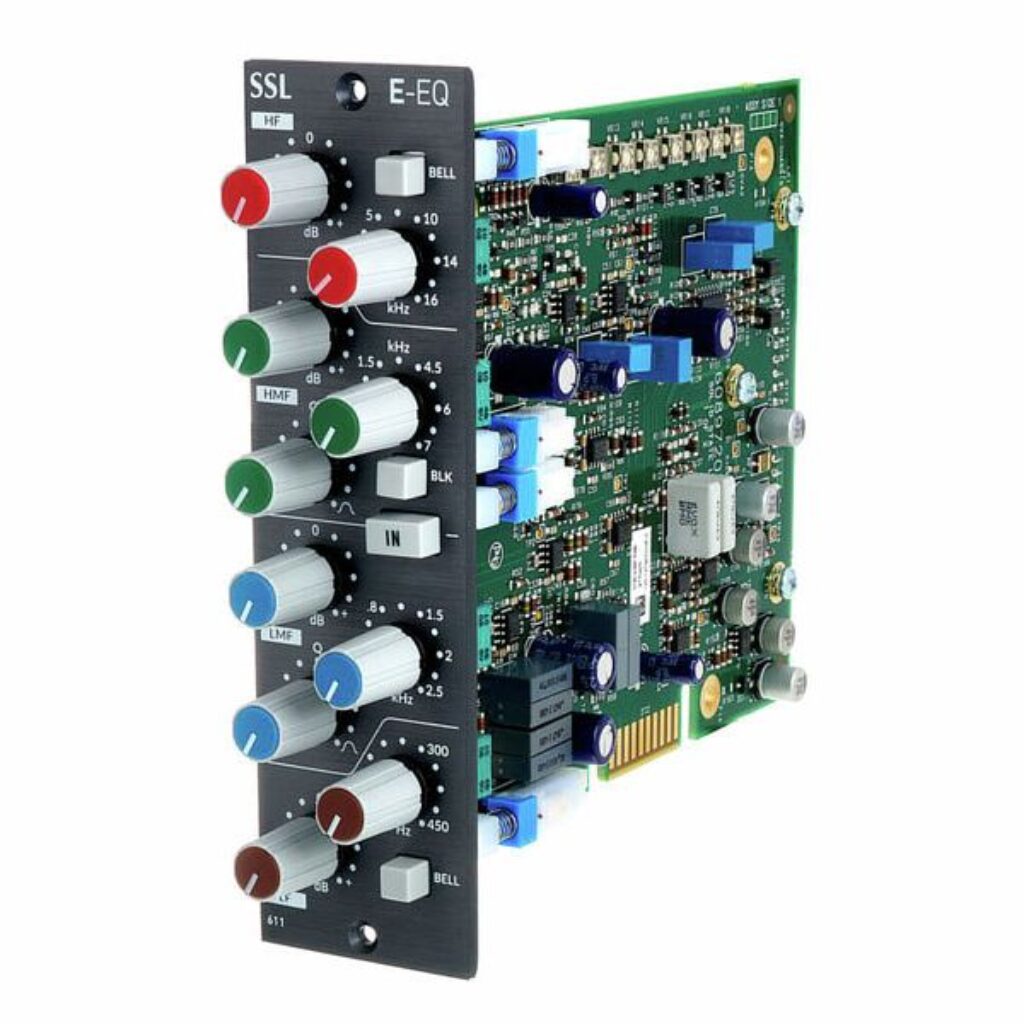
How do we create our signal path without sacrificing flexibility? Channel strip modules in the 500 series format answer this by integrating critical studio tools, such as preamps, EQs, and sometimes compressors into a single, compact unit. By combining these elements, we maintain a clean, efficient signal chain, perfect for both tracking and mixing in modern hybrid studios.
A 500 series preamp with phantom power, followed by a sculptable EQ section, can deliver pro-level control in a small footprint.
1. Integrated Design: Channel strips merge preamps, EQs, and sometimes dynamics, streamlining workflow.
2. Precision Signal Chain: Tightly-controlled gain staging and impedance matching.
3. Example Application: Capture vocals using a single channel strip module; preamp, EQ, and phantom power minimizing patching and noise.
Saturation, Color, And Harmonic Enhancer Modules
Since digital recording often yields pristine but sometimes sterile results, many engineers turn to 500 series saturation, color, and harmonic amplifier modules to inject warmth and character into their tracks.
By leveraging solid-state circuits or vintage tube designs, these modules introduce controlled amounts of harmonic distortion and subtle saturation, allowing us to emulate the pleasing nonlinearities of analog gear. For instance, a transformer-coupled 500 series module delivers low-frequency heft, while a tube-based harmonic enhancer can add shimmering top-end detail.
We use these modules to tastefully drive signals, sculpting everything from drum bus transients to vocal harmonics. Innovative options even let’s blend clean and colored paths for precise control over sonic coloration.
Ultimately, these modules raise sterile tracks into vibrant, emotionally resonant recordings.
Filter, De‑Esser, And Utility Dynamics Modules
While saturation and harmonic improvement lend musical color to our tracks, precise signal control often demands dedicated filter, de-esser, and utility dynamics modules in our 500 series arsenal. These modules let’s sculpt our signal flow with surgical precision, refining tone and dynamic structure without compromising workflow.
For innovators, modular integration of such tools liberates rapid adaptation to any session’s demands. Let’s examine their practical applications:
1. Filter modules: Shape frequency content, eliminate unwanted rumble, or tame harshness pre-EQ for a cleaner mix foundation.
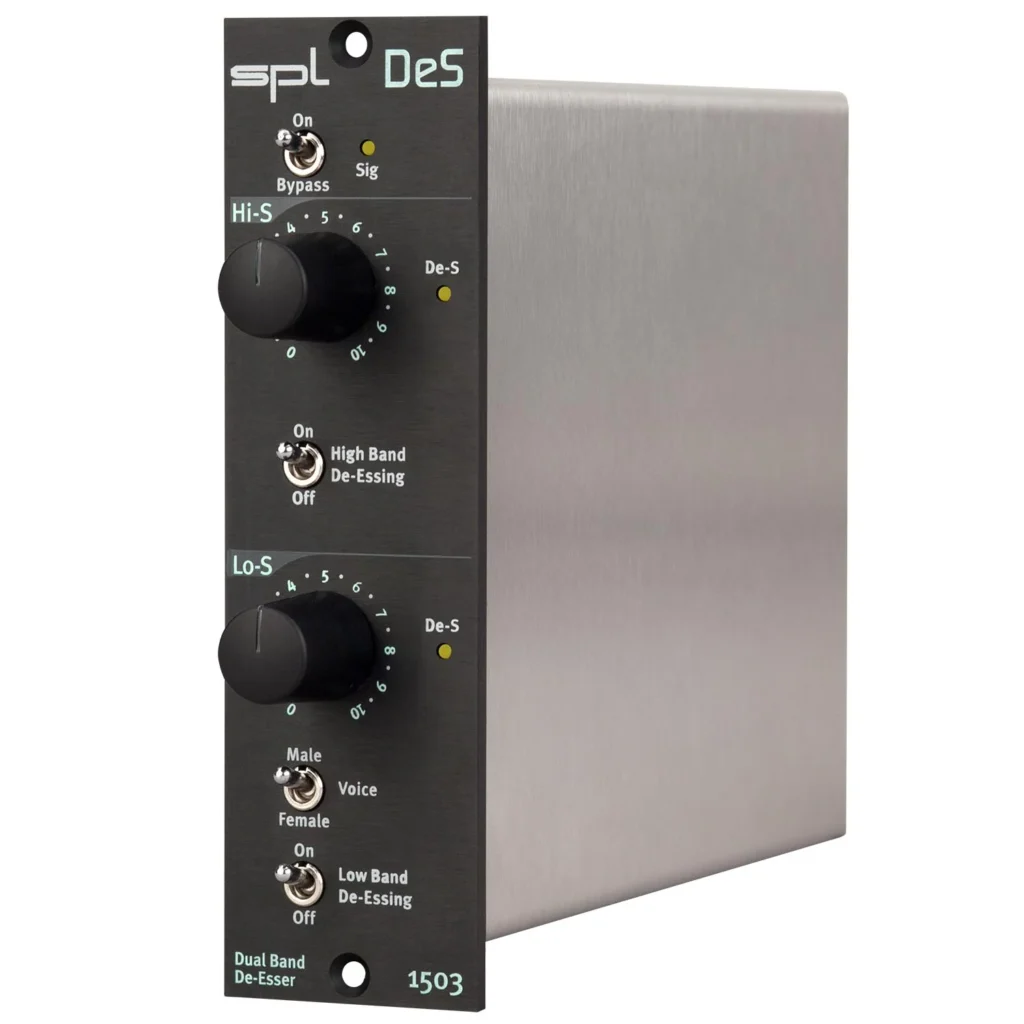
2. De-esser modules: Precisely attenuate sibilance or high-frequency resonances, essential for modern vocal clarity.
3. Utility dynamics modules: Add gain control, polarity reversal, or simple level adjustments with minimal coloration.
4. Workflow optimization: Modular 500 series module choices facilitate efficient routing and customize for evolving production needs.
Stereo, Bus, And Mastering‑Oriented Modules
Although individual channel processing is essential, stereo, bus, and mastering-oriented 500 series modules enable us to shape the overall character and cohesion of a mix with exceptional precision.
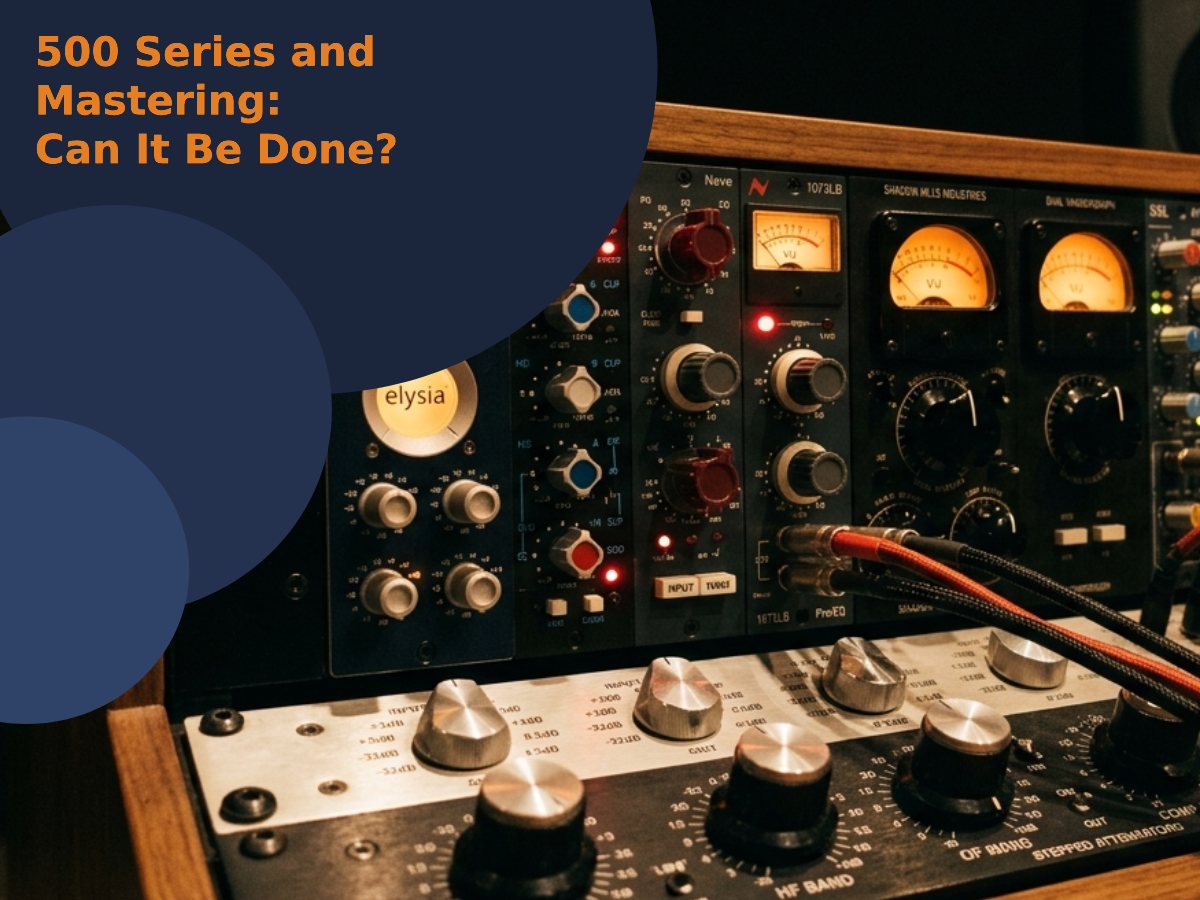
When we work with 500 series stereo bus compressors such as the Elysia Xpressor, we gain transparent dynamic control across the entire mix, preserving punch and clarity.
Mastering-grade parametric EQs in this format allow for detailed tonal sculpting, with precise frequency targeting and minimal phase shift.
Integrating analog summing modules, we achieve richer audio summing, imparting harmonics and dimension that digital platforms often lack.
These mastering-oriented modules give us tools for subtle width augmentation, transient shaping, and final sonic polish, allowing our mixes to stand out with a professional, cohesive finish before heading to distribution.
Routing, Summing, And Monitor Controller Modules
Beyond shaping the overall mix with stereo and mastering modules, we also rely on 500 series modules for efficient routing, analog summing, and monitor control within our studio workflow. These modules streamline our signal flow, enable hybrid setups, and offer tactile integration with DAWs and outboard gear.
For instance, routing and internal patching capabilities empower us to use db-25 and TRS jacks for seamless connectivity. Radial Engineering’s modules are well-known for their flexibility in these areas.
Here are primary roles these modules serve:
1. Routing Modules: Enable fast signal redirection between preamps, EQs, and compressors.
2. Summing Modules: Allow us to sum multiple channels for a cohesive analog mix.
3. Monitor Controllers: Provide hands-on speaker switching and volume control.
4. Patchbays: Centralize internal patching for efficient workflow.
500 Series Effects: Reverb, Delay, And Modulation
How do we introduce space, dimension, and movement into our tracks with the 500 series format? We utilize specialized 500 series effects modules; digital reverb modules, delays, and modulation units designed to process line level signals within our lunchbox or rack gear setup.
For instance, the AMS RMX16 500 series module offers the classic digital reverb textures that defined countless records, now in a compact form. Modulation modules like chorus or flanger units allow us to impart width and motion to vocals, synths, or guitars, all while maintaining the flexibility and recallability of our 500 series workflow.
Creative And Specialty 500 Series Modules
When we investigate creative and specialty 500 series modules, we open tools that go far beyond classic dynamics or EQ processing. These specialty modules unlock innovative workflows and sonic experimentation, enabling us to craft unique textures and signal paths.
Let’s highlight a few standout options:
1. Radial EXTC: This specialty module integrates guitar pedals into the 500 series environment using discrete balanced circuitry for ideal bandwidth and low noise.
2. IGS Audio Rubber Bands: A flexible multiband processor that shapes frequency bands independently, ideal for parallel processing or spectral manipulation.
3. Cranborne Audio Carnaby 500: Employs analog saturation algorithms, offering variable harmonic coloration and tone refinement.
These modules redefine what’s possible in modular signal chains.
How To Build A Balanced 500 Series Chain
Although the flexibility of the 500 series ecosystem encourages experimentation, building a balanced signal chain requires deliberate module selection and thoughtful routing. We start by placing a high-quality microphone preamplifier in the first slot of our 500 series rack to guarantee pristine gain staging.
Next, we can mix and match EQ and compressor modules, arranging them to complement the source and musical context. To maintain a complete signal flow, we pay attention to each module’s input and output impedance, confirming compatibility.
Managing the rack’s power supply is vital, overloading can introduce noise or instability. By carefully sequencing our modules and using patch bays or internal linking, we craft a versatile, low-noise signal path optimized for both tracking and mixing innovation.
Tips For Choosing Your First 500 Series Modules
Many engineers find their entry into the 500 series world both exciting and overwhelming due to the big variety of available modules. To navigate this realm, let’s focus on the essentials.
Whether we’re building a compact lunchbox or filling a full rack unit, our choices should align with our workflow and sonic objectives. Here’s a concise buying guide:
1. Start with a versatile preamp: Modules like the API 512c offer classic console sound and adapt to any microphone, ideal for broad applications.
2. Prioritize core signal path components: Consider a high-quality EQ or compressor as your next investment, ensuring flexibility for tracking and mixing.
3. Evaluate connectivity: Confirm module compatibility with your rack unit or lunchbox to prevent power and space issues.
4. Assess upgrade paths: Choose modules that integrate well as your 500 series collection expands.
Conclusion
As we’ve examined, the world of 500 Series modules is a toolbox brimming with sonic possibilities. Whether we’re reaching for a punchy preamp, a finely-tuned EQ, or creative effects, each module serves a unique purpose. Just like instruments in a well-rehearsed orchestra.
By understanding their roles and combining them thoughtfully, we can shape our ideal signal chains for any studio scenario. Let’s delve in, experiment, and let these modules raise our productions to professional heights.