Introduction
When we consider integrating the 500 Series into our home studios, we’re weighing modularity against workflow constraints and sonic expectations. The format lets us curate robust signal chains like swapping preamps, EQs, and compressors to fit each session’s needs.
With careful attention to gain staging and signal integrity, we can rival commercial studio setups. But the real advantage lies in how we approach module selection and chassis configuration,choices that can make or break our setup.
In this article we are going to go over some details on how you can use 500 series for home studios to your advantage and actually improve your sonic quality and workflow.
Key Takeaways
– 500 Series modules offer modular, customizable signal chains ideal for enhancing sound quality and flexibility in home studios.
– Choosing a high-quality chassis with robust power regulation and room for expansion is crucial for reliable operation and future growth.
– Select preamps, EQs, and compressors based on desired tonal character, balancing vintage color with modern reliability and cost.
– Proper setup: including clean power, patchbays, and careful gain staging that ensures optimal performance and minimal noise.
– The modular format allows for creative signal routing, quick experimentation, and tailored processing chains to suit any recording or mixing need.
500 Series and the Home Studio
Although many home studios rely on digital plugins and all-in-one audio interfaces, integrating 500 Series modules enhances signal integrity and routing flexibility.
When we introduce 500 Series equipment to our home studio setup, we enable modular control over the signal chain. Rather than depending solely on generic channel strips, we can choose specific preamps, EQs, or dynamics processors for each recording task.
This modular approach means we’re optimizing gain staging and minimizing noise resulting in cleaner, more detailed tracks. By customizing our channel strip with boutique preamp modules or specialized processors, we’re not just emulating analog coloration, we’re achieving it at the source.
It’s this precise, tactile manipulation of signal flow that lets us push for innovation in our home studio productions, elevating both workflow and sonic quality.
Choosing the Right 500 Series Chassis for Your Space
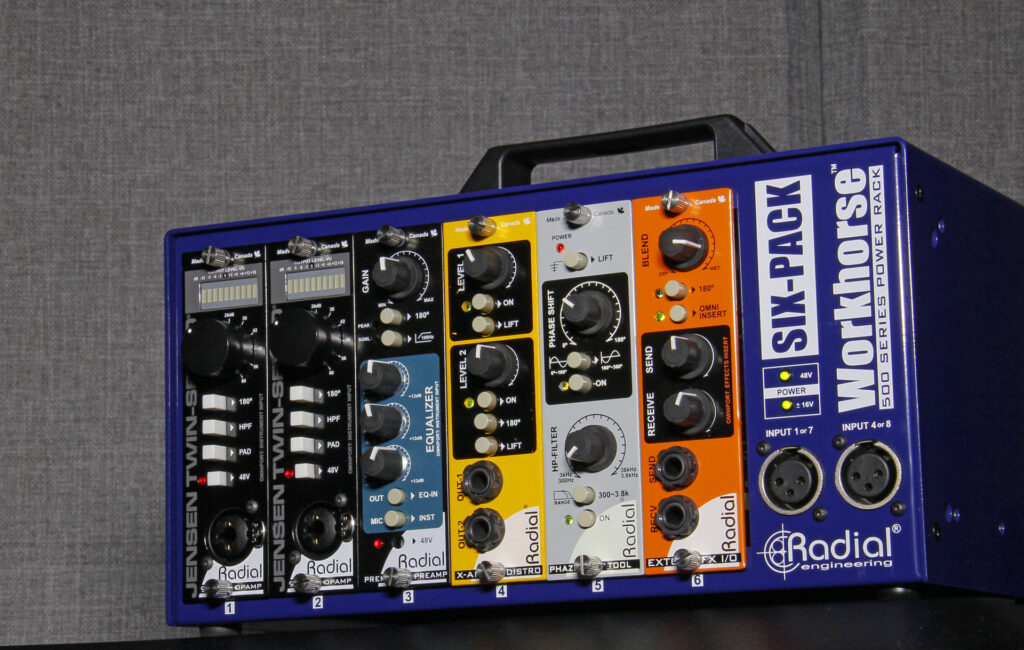
When we select a 500 Series chassis for our studio, we’re laying the foundation for every module’s performance and the overall reliability of our signal chain. The chassis isn’t just a rack; it’s the essential backbone that integrates each slot, ensuring consistent power delivery and minimizing interference.
We must analyze the power supply, prioritizing isolated power regulation to prevent crosstalk and noise between modules. A high-quality 500 series chassis with robust connectors and well-shielded backplanes directly impacts signal integrity.
Additionally, considering how many slots we need now and in the future is vital; over-committing space might require blank rack panels to maintain airflow and reduce EMI.
Ultimately, the right chassis lets us innovate confidently and build a modular, scalable workflow that adjusts to our creative vision.
Selecting Core Modules: Preamps, EQs, and Compressors
With a reliable chassis in place, our focus shifts to the core modules that will define our studio’s sonic character; preamps, EQs, and compressors.
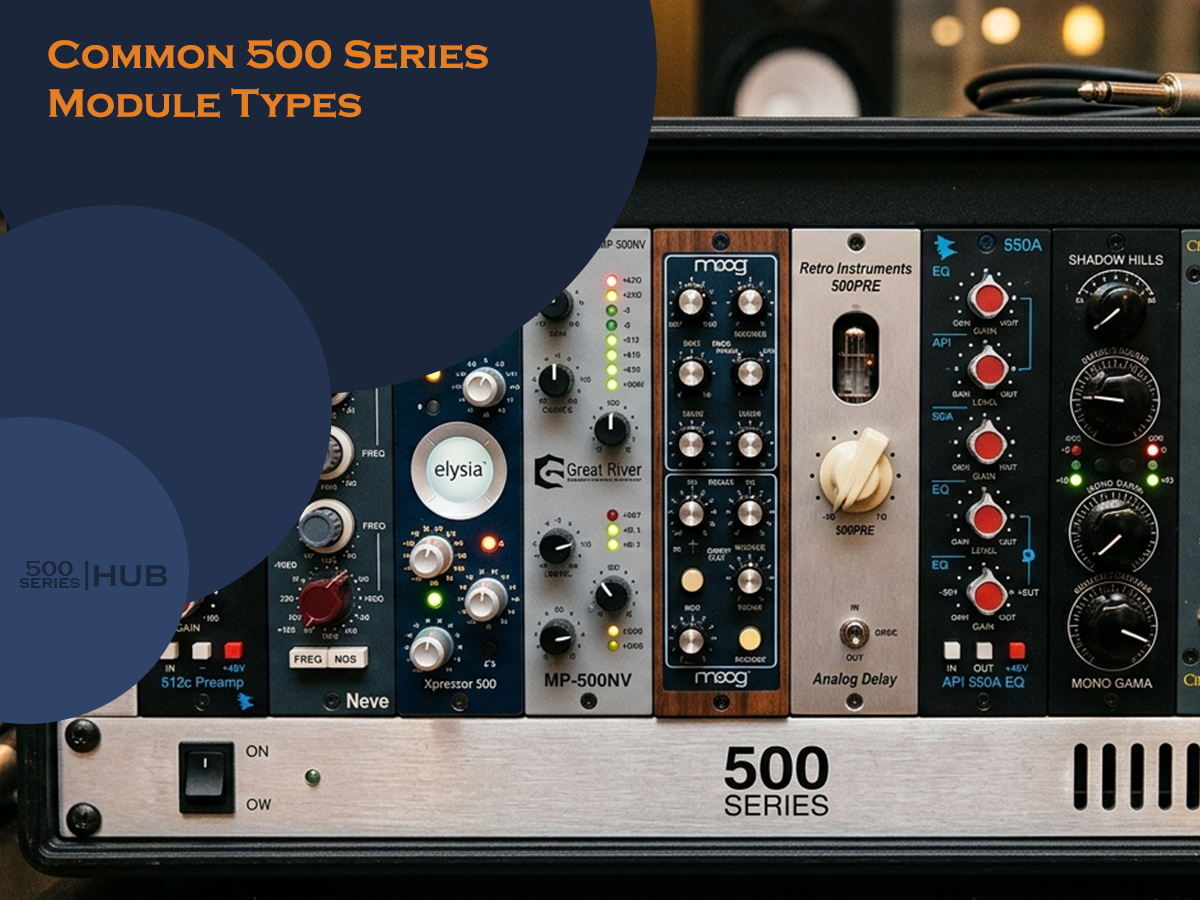
When selecting 500 series units, we prioritize preamps that impart distinct tonal coloration or transparency. Neve and API preamps remain benchmarks, with Neve offering rich, harmonically complex saturation and API delivering punch and clarity, both foundational for shaping input signal.
For EQ, we evaluate parametric versus graphic designs, considering flexibility in tone-sculpting and recall. API’s 550A is legendary for its musical curves, while modern EQs offer surgical precision.
Compressors in 500 series format, such as FET or VCA types, allow us to control dynamics at tracking or mix. Integrating these modules maximizes signal flow and opens creative possibilities.
Budgeting, Value, and When to Buy Vintage vs. Modern
While assembling a 500 series setup, we must critically assess how budget constraints align with our sonic ambitions and workflow requirements. High-end vintage modules often deliver a revered character but come with a pricey tag and potential maintenance costs.
Modern modules, on the other hand, frequently offer cost-effective solutions with innovative features, improved reliability, and easier integration into a hybrid workflow. Let’s identify our specific needs: do we require the color and saturation unique to classic hardware, or will a modern design with transparent circuitry suffice for our signal flow?
Sometimes, a strategic upgrade to a single boutique module can transform our chain without overspending. Ultimately, guarantee a balance between vintage allure and modern efficiency ensures our 500 series investment maximizes flexibility, value, and creative potential.
Practical Setup: Power, Patchbays, and Gain Staging
Although a 500 series system promises modular flexibility, its performance hinges on meticulous attention to power distribution, patching strategy, and gain staging.
First, we must guarantee our rackmount chassis delivers clean, stable power. Exceeding the current demands of all installed modules to prevent noise or voltage sag.
Next, integrating patchbays allows us to streamline our signal flow, enabling rapid reconfiguration between modules and our audio interface without cable clutter. Proper labeling and normalization in the patchbay protect us from accidental routing errors.
Finally, precise gain staging across the 500 series format is critical; each module must receive ideal input levels for maximum headroom and minimal distortion.
Creative Uses: Sound Design, Mixing, and Live Tracking
Once power distribution, patching, and gain staging are optimized, we can exploit the 500 series system’s modular capabilities for creative applications across sound design, mixing, and live tracking.
Signal routing flexibility lets us chain processors: compressors, harmonic enhancers, or a stereo EQ for tonal shaping. In sound design, we can sequence unconventional modules, such as distortion followed by a reverb, to craft unique timbres and space.
During mixing, instant module swaps or parallel signal paths allow us to A/B processor choices or commit to bold processing decisions quickly.
For live tracking, engaging discrete preamps and outboard dynamics on individual sources ensures analog coloration and precise control at the source. This workflow enables us to push creative boundaries and tailor our sonic signature.
Workflow and Signal-Chain Tips for a Hybrid Home Setup
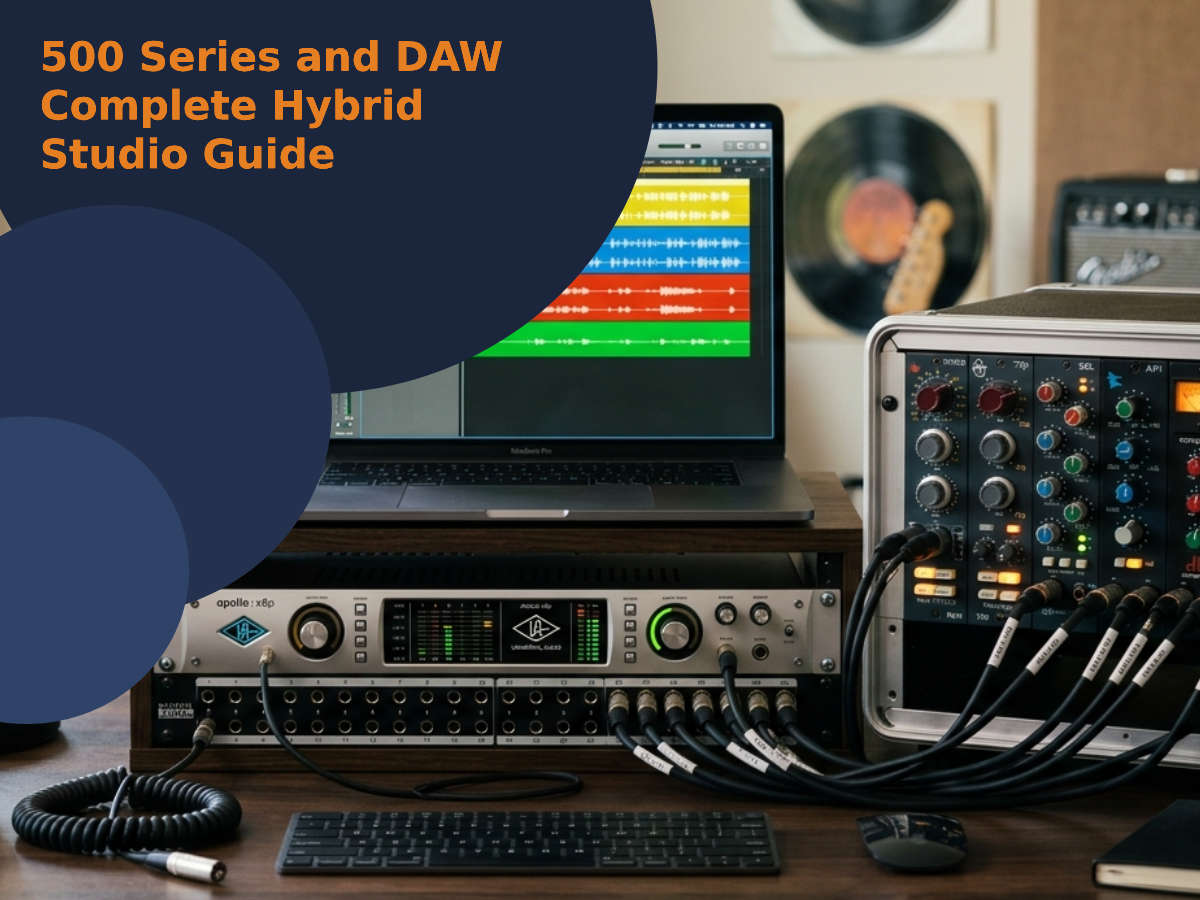
Although hybrid home studios present unique routing challenges, we can streamline our workflow by planning efficient signal chains that utilize both 500 series modules and in-the-box tools.
Let’s begin at the source: after connecting our microphone to a preamp in the 500 series rack ensuring phantom power is engaged when necessary, we can route the signal through analog EQs or compressors for immediate tonal shaping.
Next, we send the analog output to our audio interface, carefully matching gain stages to prevent clipping or unwanted noise. Once digitized, we use DAW-based processing for recall and automation.
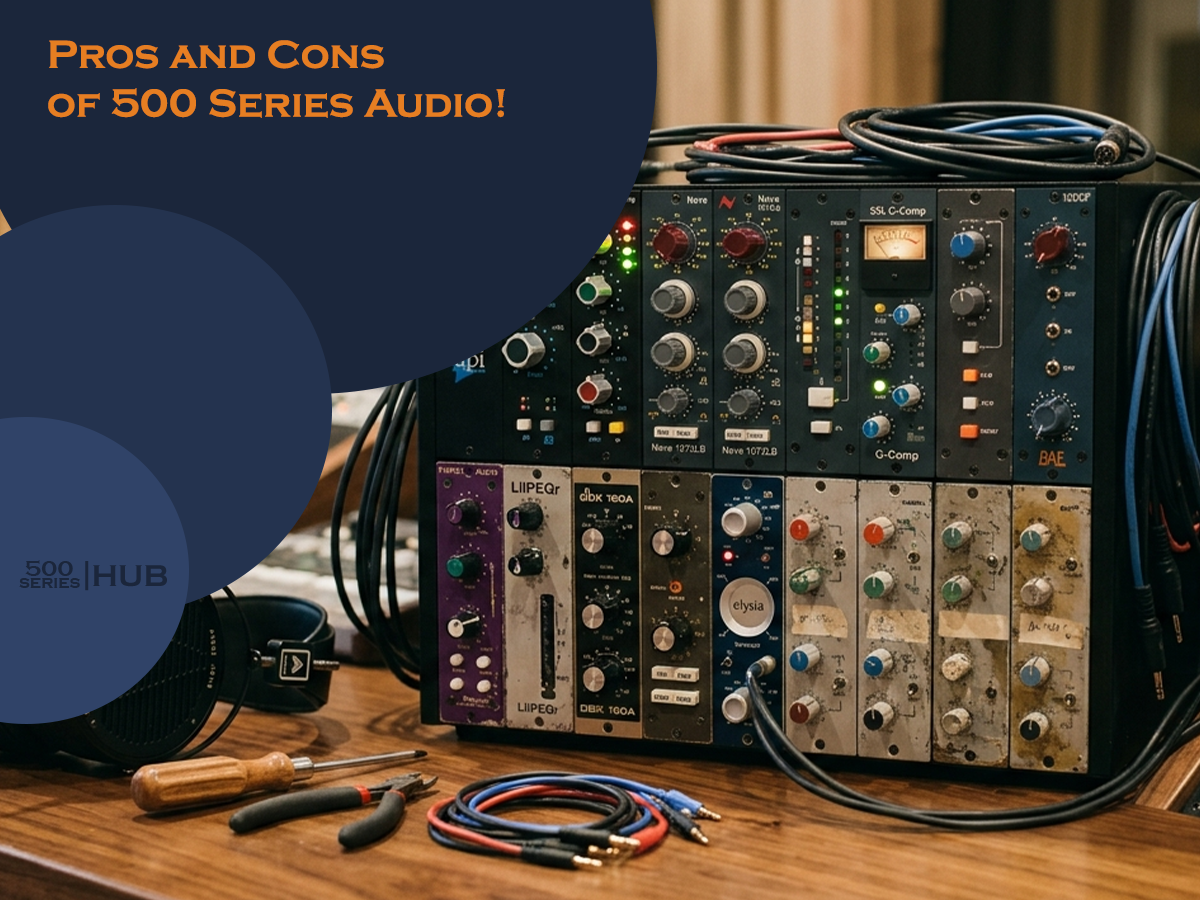
Advantages of 500 Series Gear
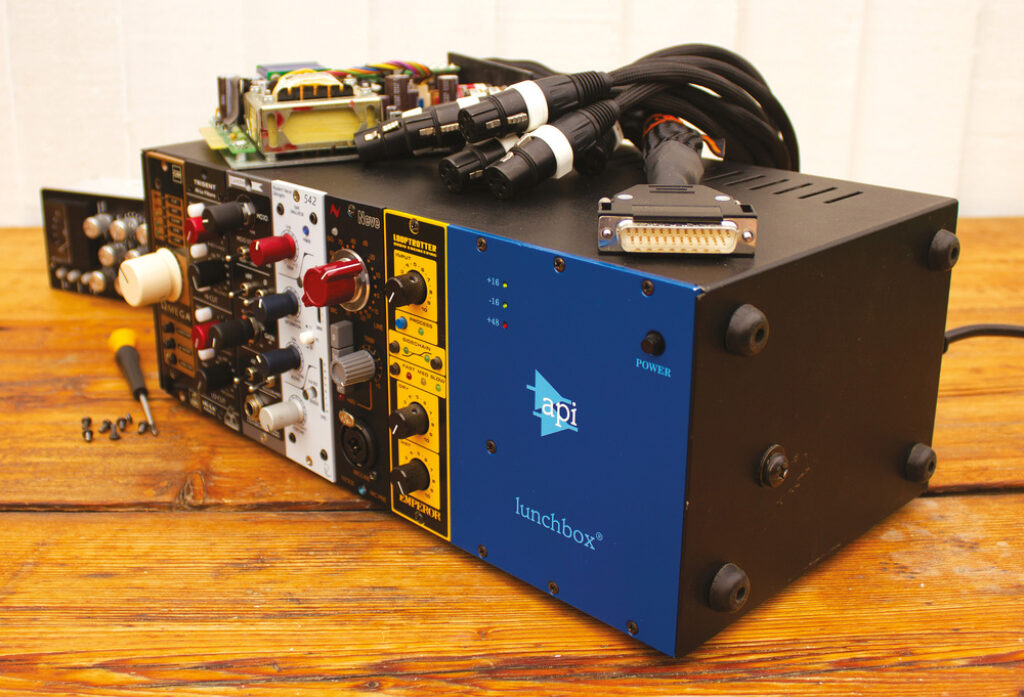
Because the 500 series format consolidates multiple modules into a single chassis, we gain maximum flexibility and efficiency in a compact footprint. With 500 series gear, we can tailor our signal flow by swapping modules like an analog equalizer or stereo compressor without rewiring the studio or expanding our hardware rack.
This modularity lets us experiment with different signal processing chains, optimizing tone and workflow for each session. Compared to traditional rack units, 500 series modules save both space and cost, making high-end analog processing more accessible to home studios.
We’re able to integrate boutique hardware into our setup, customizing our sonic palette and achieving a level of innovation previously reserved for larger studios. Ultimately, the 500 series encourages creative engineering through superior flexibility.
Disadvantages of 500 Series Gear
Despite the modular appeal of 500 series gear, we encounter notable limitations that can impact our signal flow and workflow. Integrating 500 series modules with a digital console or DAW-based hybrid setup isn’t seamless; routing often involves extra patching and conversion, which can introduce latency or noise.
Unlike plugins, 500 series units lack total recall and automation, hindering rapid session changes and repeatability. The standalone nature of each module may also complicate complex chains compared to integrated recording gear.
Additionally, slot and power constraints in a chassis can restrict expansion or force compromise in signal path design. While innovation drives us to combine analog and digital tools, these routing and workflow constraints mean 500 series gear may not always offer ideal efficiency for every studio scenario.
Conclusion
As we’ve seen, the 500 Series supplies serious sonic sculpting for savvy studio setups. By blending classic character with compact convenience, we can craft custom chains that enhance our signal flow. Whether we’re dialing in dynamic depth or exploring experimental EQ, these modules maximize mix flexibility while minimizing footprint.
With careful consideration: balancing budget, build, and bandwidth we can access professional processing potential, ensuring our home studio’s workflow remains fluid, focused, and future-proof. Here we went briefly over the basics and the usage of the 500 series system in your home studio. Later on in the future articles, we will cover each step in depth and give you much more details about the whole process.
Hopefully, we will also be able to share a videos of a tutorial how to use the 500 series in a home recording setup, matching the ones like in a professional studio, but more on that in the near future!