Introduction
When we set up a modern studio, the 500 Series chassis often becomes the backbone of our workflow. It’s more than just a rack; it lets us customize and expand our signal chain with preamps, EQs, and compressors that suit each project. In this article you will learn how to pick and ease the way to understanding 500 series chassis for good!
But with so many options, power specs, and brands to evaluate, we need to make informed choices. Let’s start by clarifying what a 500-Series chassis actually is and why it matters.
Key Takeaways
- 500-Series chassis are modular racks that house multiple audio processing modules like preamps, EQs, and compressors in a compact format.
- Power delivery is crucial; always check the chassis’s voltage, current ratings, and VPR standard compliance for reliable module operation.
- Slot count and physical size affect portability, studio fit, and future expansion options. Choose a chassis based on your workflow needs.
- Premium chassis offer better power stability, build quality, and features compared to budget models, supporting high-demand and stereo modules reliably.
- Top brands like Neve and Cranborne are recognized for clean power, modular flexibility, and durable construction, ensuring optimal performance.
What Is a 500-Series Chassis?
So, what exactly is a 500-series chassis? At its core, a 500-series chassis is a specialized rack that houses multiple audio modules in a compact, modular format. Instead of relying on bulky standalone gear, we can slot various modules, like preamps, EQs, or compressors into a single chassis.
This setup instantly streamlines our workflow and workspace, letting us customize our signal chain and adjust to new technologies as they emerge.
Each chassis features a built-in power supply, distributing the necessary power to every module from one central source. This not only ensures stability but also keeps our system organized.
With innovation in mind, the 500 series enables us to experiment, expand, and upgrade our audio toolkit without overhauling our entire rack setup.
Choosing A 500-series Chassis
How do we pick the right 500-series chassis for our needs? First, we should consider how many modules we want to use simultaneously. Slot racks come in various sizes, from compact two-slot options to full-blown ten-slot racks.
If we’re aiming for portability, a smaller chassis is easier to transport between studios or gigs. Next, let’s think about connectivity. Some 500-series chassis offer advanced I/O, direct outs, or even digital options, making integration into modern setups seamless.
Rack space is another factor; we’ll want a design that fits our current studio configuration without wasting precious real estate. Finally, let’s make sure that the chassis delivers reliable power to the modules we choose, so we’re not held back when pushing creative boundaries.
Must-Know 500-Series Chassis Power Specs Before Buying
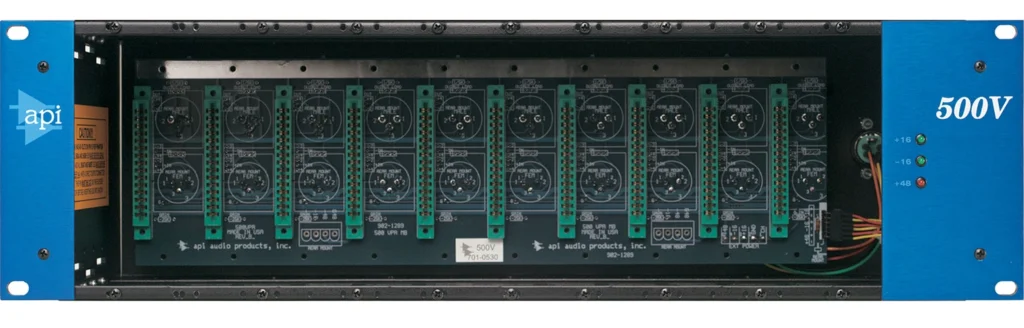
Before we pick a 500-series chassis, we need to get clear on key power specs like the VPR power standard and how much power each slot can really deliver.
Let’s spot red flags in power ratings and learn a quick way to check if a chassis can handle our planned build. This will help us avoid headaches and protect our gear.
VPR Power Standard Breakdown
When shopping for a 500-series chassis, understanding the VPR power standard is essential to avoid compatibility headaches and guarantee reliable performance. The VPR (Voltage Per Rail) power standard, established by API, defines the minimum and maximum voltage and current that each 500 series rack slot must supply.
This ensures every module receives the correct power, preventing underpowered modules and unpredictable operation.
We need to confirm that our chassis meets the VPR power standard, especially when considering innovative, high-draw modules or future upgrades.
Pay close attention to the per slot power ratings. Modern gear often demands more than vintage designs.
Also, check if the chassis uses an external power supply, as this can influence both noise performance and available voltage. Let’s prioritize these specs for a reliable, forward-thinking setup.
Slot Power Allocation Realities
Although the 500-series format offers incredible flexibility, we can’t ignore the strict power requirements each slot demands. When selecting a 500 rack, it’s essential we check the power specs per channel, not just the total output.
Each slot in a 500-series chassis draws current from shared power rails—often +16V, -16V, and +48V for phantom power. If we overload these rails, modules may underperform or malfunction, stifling the innovative workflows we want.
Manufacturers list power ratings per slot, but we should look deeper: will the rack deliver consistent power across all slots, even when fully loaded with demanding modules?
Red Flags in Power Ratings
Even with all the excitement of building a 500-series setup, we can’t afford to gloss over suspicious power specs. When we evaluate chassis options, any vague or incomplete power specification should raise a red flag. If the manufacturer only lists total power without detailing per-slot output, that’s a sign to dig deeper.
Some 500 series modules, especially complex designs like Rupert Neve’s demand more current than basic circuits. If a chassis doesn’t specify clear output per slot, we risk starving modules and introducing noise or reliability issues.
Let’s be wary of specs that seem too optimistic for the chassis size, or omit current ratings for the ±16V rails. Reliable innovation starts with honest, granular power information. Don’t let ambiguous specs bottleneck your creative potential.
Quick Power Calc for Your Build
Spotting vague power ratings is only half the battle, now we need to make certain our 500-series chassis can actually support our chosen modules.
When planning a build, let’s sum the power requirements for all 500 series units we want to use. Most manufacturers list module consumption in milliamps (mA); add those up, then compare the total to the chassis’s available power per rail.
For example, if we’re eyeing an 8-slot chassis, check if it can deliver enough juice for every slot loaded with high-draw outboard modules. Always leave headroom, don’t run the chassis at its absolute max.
This quick power calc ensures our system runs reliably, even with innovative, power-hungry modules, and saves us headaches down the road when expanding our creative toolkit.
Slots & Connectivity
When we look at a 500 series chassis, the number and arrangement of slots play an essential role in determining how many modules we can install and how they interact. Each slot represents a potential for innovation; housing a preamp, EQ, or compressor that expands our creative toolkit.
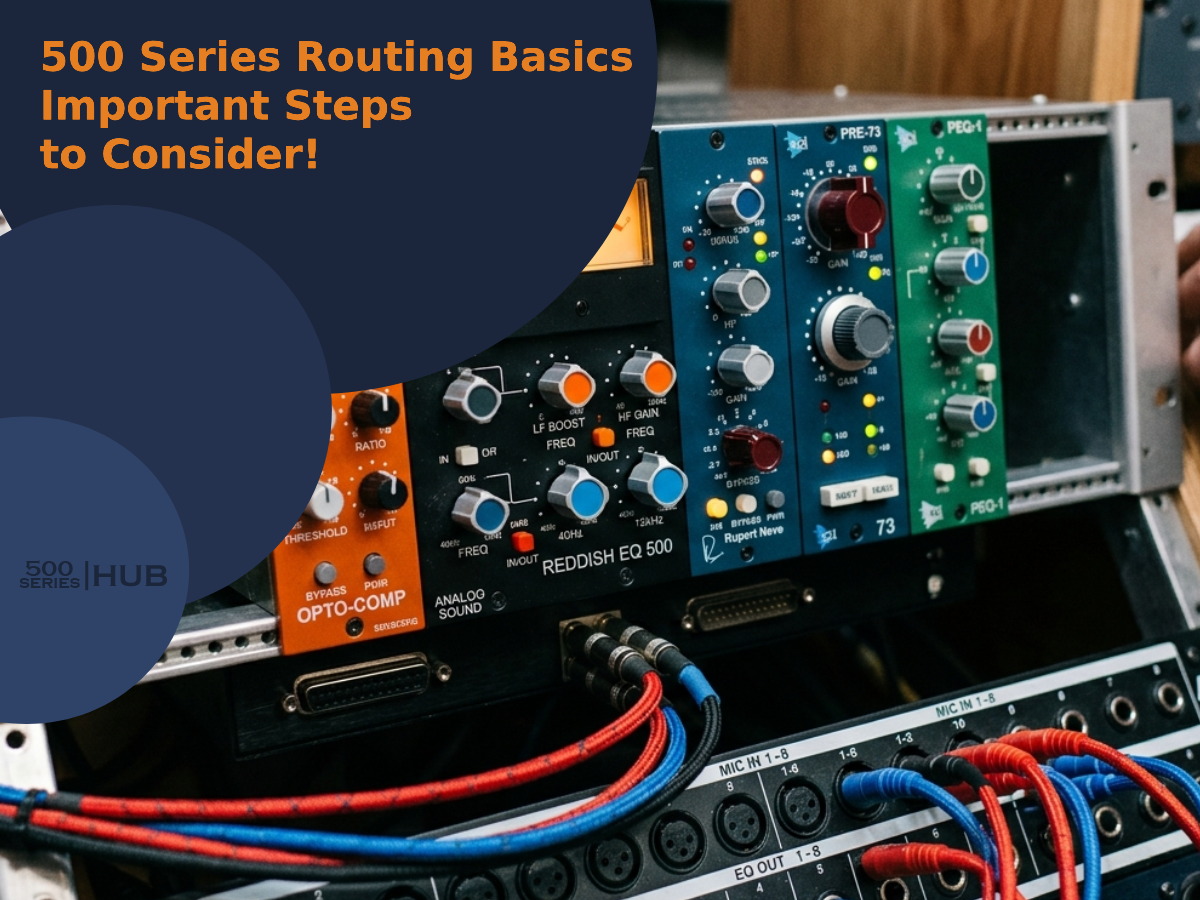
Connectivity is just as crucial; we want seamless input and output options to route signals efficiently between modules. Modern chassis often offer advanced routing features, letting us experiment with unique signal paths without endless patch cables.
Power distribution to each slot is another critical factor, ensuring every module runs reliably even in complex builds. Thoughtful design around slots and connectivity empowers us to push boundaries, streamline our workflow, and realize the full potential of our 500 series system.
Heat Management in Racks
While building out our 500 series setup, we can’t ignore the importance of heat management in the rack. As we innovate with new rack gear and push for more dynamic headroom, efficient heat management becomes critical.
When modules draw more power, they generate more heat, which can degrade performance and shorten the life of sensitive components. The chassis acts as a shield, protecting our gear, but the size means airflow and ventilation must be carefully considered.
Compact racks save space, yet they often trap heat, so we should prioritize designs with proper venting or even active cooling.
Paying attention to thermal aspects guarantees consistent headroom, stable power delivery, and reliable operation, allowing us to create boldly without worrying about excessive rack temperatures.
Integrating with DAW Interfaces
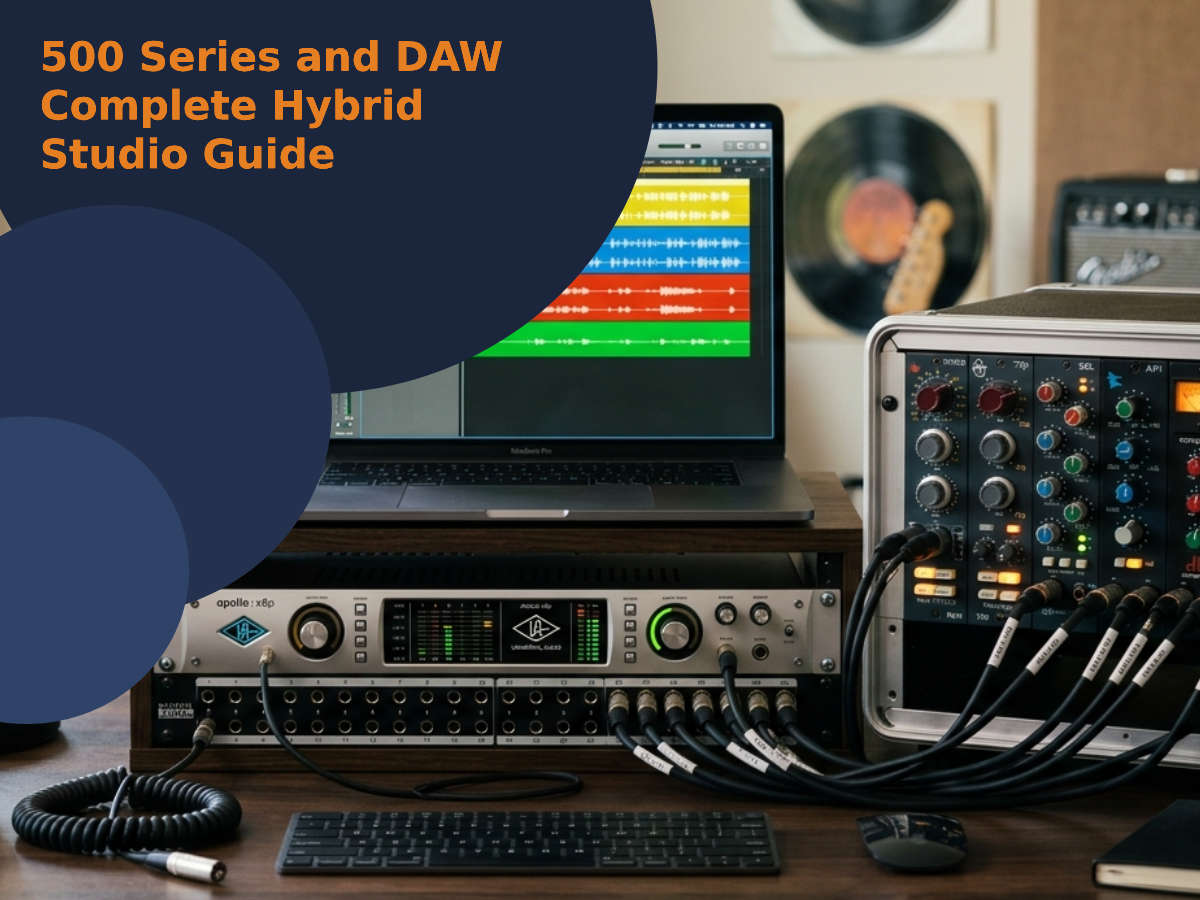
How do we seamlessly bridge the gap between our analog 500 series modules and the digital world of DAWs? The answer lies in the smart integration of interfaces.
We connect our outboard gear to an interface with enough recording channels, ideally featuring ADAT or USB audio capabilities. Using ADAT, we can expand our input count without compromising audio quality, which is essential when summing multiple analog sources.
USB audio interfaces provide plug-and-play flexibility for modern setups, translating analog signals for direct DAW capture.
Budget vs. Premium Racks
Although it’s tempting to save money by choosing a budget 500 series rack, let’s weigh what we actually get for the price. A budget lunchbox often delivers a lower price per slot, but we may sacrifice robust power supplies or consistent phantom power, both essential for modern, high-performance modules.
Premium racks tend to offer improved power handling, ensuring every module receives clean power, even when running stereo pairs or demanding chains. They also streamline workflow with better build quality, user-friendly layouts, and sometimes advanced features like linking or metering.
For those of us pushing the boundaries of innovation, investing in a premium chassis can be worth it. After all, its better to save up for a better chassis then getting one that will fry out modules or break down fast.
Top Chassis Brands Compared
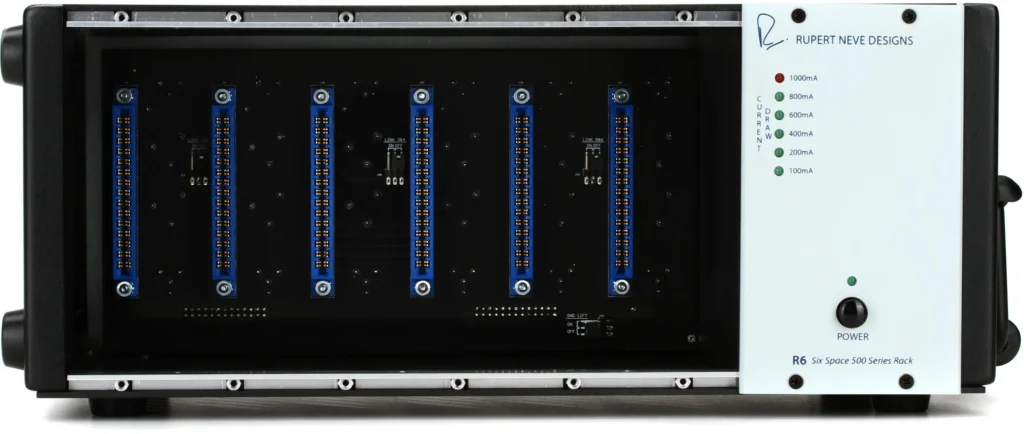
After weighing the trade-offs between budget and premium 500 series racks, it makes sense to look at the brands that set the standard in this space. When we talk innovation, Neve instantly comes to mind. Its chassis offer rock-solid power delivery and legendary reliability.
For those who want modular flexibility, Cranborne’s racks stand out, providing advanced power distribution and clever routing options, even for standalone or single module setups. If space is tight, their desktop brackets make integrating a single module easy without sacrificing quality.
Other brands compete, but few match the engineering finesse Neve and Cranborne bring. As we evaluate chassis options, let’s prioritize clean power, robust build, and thoughtful features. These brands push boundaries, ensuring our creative tools always perform at their peak.
Also, do not forget the brand that set the staple for this type of gear. API is one of the leading manufacturers for both chassis and modules, to take into consideration this brand as well.
Frequently Asked Questions
Q: Why does my 500 series chassis have noise or oscillation?
A: Although 500 series chassis are designed for reliable performance, we might still encounter noise or oscillation issues from time to time. These problems often stem from power supply limitations, grounding inconsistencies, or electromagnetic interference within our studio environment.
Q: Will all modules fit and work in my chassis?
A: So, can we expect every 500 series module to fit and work seamlessly in any chassis? While the 500 series format encourages interoperability, not all modules are guaranteed to fit or function perfectly in every chassis.
Manufacturers innovate, but slight differences in physical dimensions or connector alignment can cause issues. We should always check compatibility between modules and chassis before investing, ensuring our setup supports creative exploration without unexpected obstacles.
Q: What about current draw exceeding limits?
A: Many 500 series enthusiasts overlook an essential detail: the total current draw of their modules. When we push boundaries and create unique module combinations, it’s easy to exceed the chassis’s current limits.
If we ignore this, modules may underperform, distort, or even fail. Let’s check each module’s specs and calculate our total current draw to guarantee our setup runs reliably and delivers innovative results.
Q: Does the chassis provide enough clean power?
A: Keeping an eye on current draw is only part of the story; we also need to take into account the quality of power our chassis delivers.
Clean, stable power is essential for extracting the best performance from our modules and avoiding unwanted noise or artifacts.
Let’s guarantee our chassis features robust regulation and low-noise circuitry, enabling us to pursue bold sonic innovation without compromise or technical limitations.
Q: Does heat build up in a full 500 series rack?
A: How much heat actually accumulates when we fill every slot in a 500 series rack? We notice that with all modules powered, heat buildup can become considerable, especially in compact chassis with minimal ventilation.
Forward-thinking designs now integrate cooling solutions or improved airflow. Let’s remember, managing temperature isn’t just about comfort. It’s essential for maintaining peak performance and longevity of our modules as we push for sonic innovation.
Q: Do contacts wear from inserting/removing modules?
A: While we’re careful to manage heat in a packed 500 series rack, it’s worth considering the physical wear that comes from inserting and removing modules.
Each time we swap modules, the gold-plated contacts inside the chassis endure friction. Over time, repeated insertions can cause minor wear, potentially leading to connectivity issues.
Let’s stay proactive by handling modules gently and ensuring contacts remain clean for maximum reliability.
Q: Does the chassis affect module sound quality?
A: Although every 500 series module carries its own character, the chassis plays a subtle yet vital role in shaping overall sound quality. Power supply stability, grounding, and internal shielding all influence a module’s performance.
When we innovate or upgrade our setup, it’s essential to acknowledge that a well-designed chassis can minimize noise, improve headroom, and help each module deliver its best, most transparent sound.
Conclusion
Choosing the right 500 series chassis is like laying the foundation for a rock-solid studio – every detail matters. If we take the time to match our needs with the right size, power specs, and trusted brands, we’re setting ourselves up for smooth sessions and great sound.
Whether you’re building a modest setup or aiming for pro-level flexibility, investing wisely now pays off down the road. Let’s make our gear work as hard as we do!