Rupert Neve 542 Review
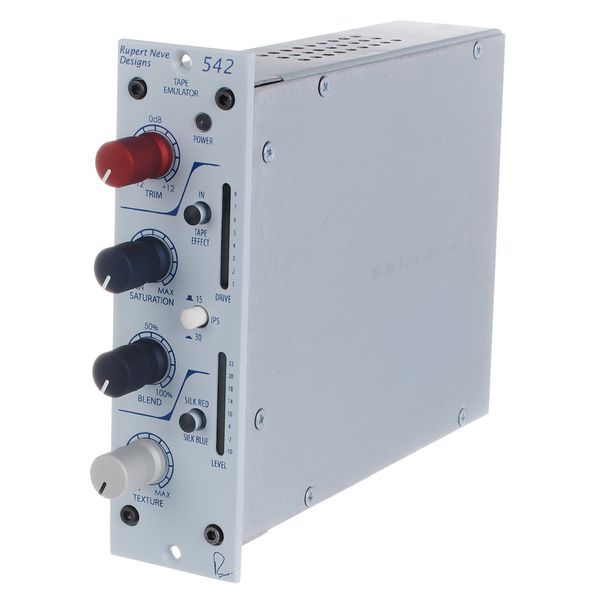
- Tape saturation emulator
- Trim control (+/-12 dB PreTape Level Control)
- Tape saturation effect can be set in a stepless manner
- Silk function (Silk Red & Silk Blue) can be set in a ·stepless manner
If you’re searching for authentic analog warmth in your productions, the Neve 542 Tape Emulator stands out with its precise drive, blend, and Silk controls. You’ll find its true analog saturation and soft clipping distinctly improve harmonic richness, offering a musical compression that outperforms digital imitations.
Before you consider integrating it into your setup or weighing it against other tape emulators, it’s essential to analyze how it shapes your mixes and if its features fit your workflow.

What Is the Neve 542 Tape Emulator?
While digital recording has become the industry standard, the Neve 542 Tape Emulator offers a hardware solution for capturing the warmth and saturation characteristics of analog tape.
When you integrate the Rupert Neve Designs 542 into your 500 series rack, you’re leveraging a true analog tape emulation circuit derived from the acclaimed Portico 542.
This 500 series tape emulator provides variable controls for drive and blend, letting you fine-tune the amount of tape saturation and harmonic refinement.
The addition of the Silk circuit introduces enriched harmonic content and subtle coloration, further emulating the detailed response of vintage tape machines.
How Does the Neve 542 Sound in a Real Mix?
Once you understand the circuitry and control options of the Neve 542, its impact in a real mix becomes apparent through its ability to impart authentic analog tape saturation.
When you insert the 542 on a drum bus, for example, you’ll notice immediate improvement of harmonic richness and transient shaping. The blend control lets you dial in parallel saturation, preserving punch while adding warmth.
Low frequency compensation ensures that bass content retains clarity and depth without excessive muddiness, essential for modern, bass-forward productions.
The soft clipping circuit allows you to push the output level, achieving pleasing compression artifacts and heightened perceived loudness.
As an analog tape emulator, the 542 integrates seamlessly, delivering subtle coloration and dynamic control, all while maintaining the integrity and energy of your mix.
Key Features and Benefits of the Neve 542
Because the Neve 542 packs a sophisticated analog tape emulation circuit into a compact 500-series module, it stands out with features tailored for modern production needs. You get true analog tape effect, delivering authentic saturation and soft clipping that improve harmonic content without digital artifacts.
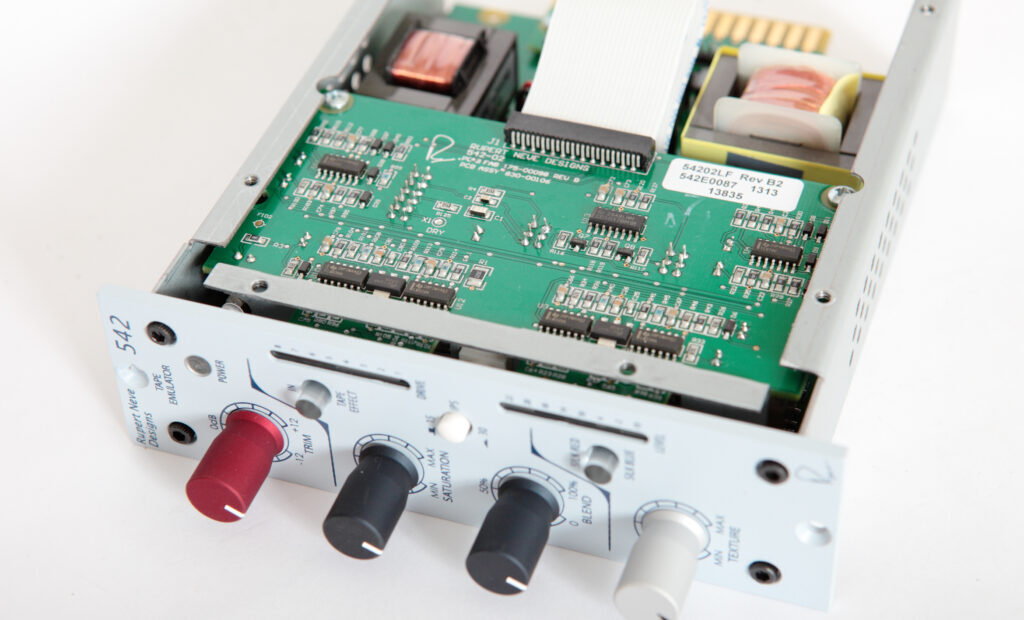
The 542 tape emulator features a variable “Drive” control, letting you dial in precise tape-style coloration, while “Low Frequency Compensation” ensures bass integrity even under heavy processing.
Engage the Silk circuit to further sculpt harmonic richness and transient response, opening creative avenues for tonal shaping.
The blend control allows you to mix dry and processed signals for parallel tape textures. With these innovations, you achieve subtle, flexible tape emulation that boosts your audio production workflow.
How Does the Neve 542 Compare to Other Tape Emulators?
Building on its robust feature set, the Neve 542 stands apart from other tape emulators through its meticulous analog circuitry and versatile controls.
When you compare the 542 500 Series tape emulator to software-based emulation or less sophisticated analog modules, you’ll notice Rupert Neve Designs has engineered an authentic analog signal path that’s difficult to match.
The module excels in delivering natural tape saturation, imparting the harmonic intricacy and low-frequency thickness associated with revered tape machines.
Its “Silk” and “Texture” controls allow you to tailor the saturation character, giving you subtle control absent in many digital emulation plugins.
This level of flexibility, combined with the unmistakable analog warmth, positions the Neve 542 as a premium choice for those demanding uncompromising sonic integrity.
Who Is the Neve 542 Tape Emulator Best For?
Whether you’re an experienced audio engineer seeking precise tape coloration or a producer aiming for authentic analog warmth, the Neve 542 excels in scenarios where sonic character and control are essential. This tape emulator is ideal if you demand the distinct attributes of the Rupert Neve Designs 542 tape within a 500 series rack, offering both vintage tone and modern flexibility.
If you value tape compression, saturation and soft clipping, and want to improve detail and transparency without sacrificing clarity, this unit targets your workflow perfectly.
Consider the 542 if you’re driven by:
- Crafting mixes with subtle tape saturation while maintaining transient integrity
- Achieving classic, vintage tone in hybrid or fully digital setups
- Harnessing precise tape compression and soft clipping for enhanced sonic depth a forward-thinking choice for innovative DJs.
- Add the rich, musical sound of tape to your digital tracks
- True Tape circuitry uses real tape heads to emulate the characteristics of tape recording
- ersatile Silk/Texture circuit gives you additional sonic-sculpting potential
- Wet/dry control lets you fine-tune the amount of tape saturation
- Soft-clip circuit helps you tame the sound of harsh, transient signals
Why You Need The Neve 542
How often do you find yourself searching for a tape emulator that doesn’t compromise on sonic authenticity or workflow efficiency? The Neve 542 answers this demand with its meticulous analog tape emulator design, delivering a genuine reel-to-reel character in a compact tape emulator module.
Unlike digital emulations, the Portico 542 tape emulator imparts true harmonic richness, letting you tailor the amount of saturation with precise control. You’ll appreciate the ability to engage Silk Red for enhanced harmonic content and that coveted, saturated low end, ideal for mixes craving depth and warmth.
The Neve 542 streamlines your signal path, integrates seamlessly with modern setups, and preserves the analog integrity you crave. If innovation and classic tone matter, this module is essential.
Frequently Asked Questions
Q: Why does the 542 sometimes add hum or noise when I engage the tape circuit?
A: Although the Neve 542 is prized for its authentic tape emulation, you might notice it occasionally introduces hum or noise when you engage the tape circuit. This typically stems from imperfect tape calibration, which mimics the quirks of real analog gear.
To minimize unwanted noise, you’ll want to use proper noise reduction techniques and guarantee your gain staging is set correctly before driving the tape circuit.
Q: How do I avoid the 542 sounding too fizzy or harsh when I push saturation?
A: Once you’ve tamed unwanted noise, you might notice the 542 can sound fizzy or harsh when you push the saturation harder. To avoid this, carefully adjust the tape calibration settings and monitor the harmonic distortion.
Back off on the saturation knob if you hear fizz, and experiment with the LF and HF emphasis controls. Dialing in subtle changes prevents the top end from becoming overly aggressive.
Q: What’s the best gain staging into the 542 for vocals and mix bus?
A: When dialing in the Neve 542 for vocals or your mix bus, you’ll get the best results by setting a healthy input level that lights up the LED meters without constantly pushing into the red.
Use the drive control to add analog warmth, but pull back if you lose signal clarity. Finally, adjust the trim to maintain unity gain so your mix remains balanced and punchy.
Q: Is the wet/dry blend on the 542 actually useful?
A: The wet/dry blend knob becomes an immediate tool for shaping your results. You’ll notice how easily you can dial in just the right amount of analog warmth without compromising frequency response.
Unlike parallel routing, the onboard blend keeps your signal phase-coherent and simple.
Q: Which sources does the 542 help most with?
A: Although the Neve 542 can add character to nearly any source, you’ll notice its strengths shine most on material that benefits from extra warmth and harmonic richness.
Drums gain punch and body, guitars develop pleasing grit, and vocals sound thicker and more present. On the mix buss, it ties everything together.
Q: How different do the 15 IPS and 30 IPS settings sound?
A: At 15 IPS, you’ll experience pronounced analog warmth and a thicker vibe. Switch to 30 IPS for improved digital clarity and tighter transients.
Use 15 IPS for vintage color on instruments; choose 30 IPS when you need more precision and detail.
Q: Does the Silk/Texture control make the sound too coloured for mastering?
A: If you’re mastering, you might’ve coloration concerns, especially if tonal purity is your goal. Silk/Texture can definitely add a noticeable character, so you’ll want to use it sparingly.
It’s powerful, but for mastering, subtle adjustments are key to avoid overly colored results.
Conclusion
If you’re worried about the Neve 542 being just another color box, rest assured, it’s so much more. You get genuine analog tape saturation, versatile Silk modes, and precise control over harmonics that digital plugins simply can’t replicate.
Whether you’re mixing ITB or on a console, the 542 injects unmistakable warmth and musicality. Investing in the Neve 542 isn’t just about nostalgia, it’s about elevating your sound with true analog depth and detail.